Technical floor penetrations
Le problème
Drains, supplies, high and low voltage routing through the slab.
Sept Tools
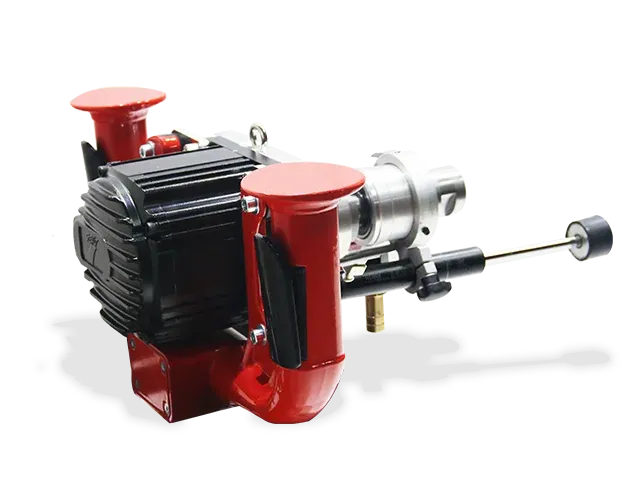
Brushless Pic Epeiche: diameter accuracy for sleeve installation and sealing.
Floor drilling and coring solutions for technical penetrations, anchors and fixings on reinforced concrete slabs.
Concrete floor drilling intervenes at every stage of structural and finishing work: fluid penetrations through floors, post and railing anchors, industrial machinery fixings, or core sampling for inspection. Each case carries its own diameter, accuracy and cleanliness constraints. The Sept Tools range of brushless floor drills is sized to address these uses with durable French tooling and a national service network.
Drilling on sensitive sites and inhabited areas without excessive nuisance.
Very low compared to the 5 m/s² ELV: full day with no risk.
Pic Epeiche: heavy drilling for industrial anchoring.
Fast brushless cutoff on bit blockage: operator protected.
Reinforced concrete, diamond or tungsten bits: nominal torque preserved.
Pic Epeiche on base: absolute perpendicularity for certified anchors.
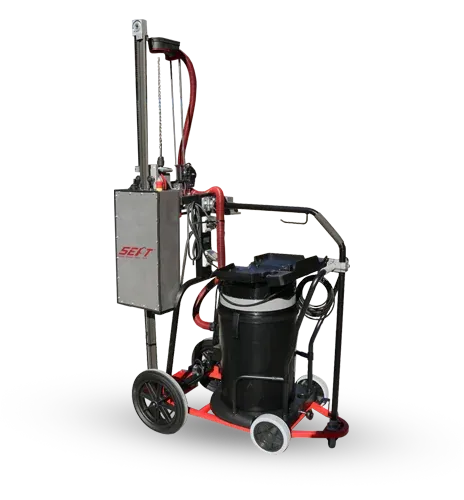
IU33 Longopac, Turbo7 or RU80 connection: clean hole ready for resin.
100 ms detection: operator and mechanical protection in the material.
Radar detector to locate steel and adapt the trajectory.
Pic Epeiche on base for verticality and reproducible depth.
IU33 Longopac or Turbo7 connected: zero fines on the floor.
Diameter, depth, cleanliness: ETA compliance validated.
Chemical cartridge injected into a clean calibrated hole.
Radar detector to locate steel and adapt the trajectory.
Pic Epeiche on base for verticality and reproducible depth.
IU33 Longopac or Turbo7 connected: zero fines on the floor.
Diameter, depth, cleanliness: ETA compliance validated.
Chemical cartridge injected into a clean calibrated hole.
Drains, supplies, high and low voltage routing through the slab.
Brushless Pic Epeiche: diameter accuracy for sleeve installation and sealing.
Machine bases, robots, racks, handrails: ETA requirements non-negotiable.
Drill plus IU33 combination: technical approval respected, durable anchor.
Large rectangular openings without wet diamond saw or slurry.
Perimeter Drill: aligned contiguous holes, clean cutting line.
Geotechnical studies, quality controls, expertise: intact sample mandatory.
Brushless torque control: no peripheral chipping, usable core.
Silica or decommissioning sites: cleanliness and equipment traceability requirements.
IP65 plus certifiable brushless: sensitive site compliance, documentation provided.
Imposed pace on logistics and industrial halls: no margin for error.
Pic Epeiche base plus vacuum cleaning: fast install, ETA compliance.
Notre équipe commerciale vous accompagne dans le choix de vos outils professionnels.