Carbon fibre structural strengthening: perfect prep, durable bonding

The success of carbon plate bonding depends entirely on substrate preparation. Our brushless ceiling grinders and multi-head drills secure every step.

Key figures
1.5MPa
Minimum surface cohesion

Standard threshold above which carbon bonding becomes durable. Measured by pull-off test.

45-60m²/day
Ceiling prepared per operator

With the Fouine + Eland Arm + class H aspirator chain. Traditional method: 15 to 20 m².

x6
Simultaneous drilling

6-head multiple drill: 1,800 holes/day versus 320 with the classic method.

0.35m/s²
Hand-arm vibration

Regulatory ELV 5 m/s². Sept Tools brushless: 14 times below the legal limit.

Traditional method vs Sept Tools

×

Traditional method

  • 15 to 20 m² of ceiling prepared per day
  • Arms overhead 5 hours, extreme muscle fatigue
  • 320 anchor holes drilled per day
  • Hand-arm vibration above 7 m/s²
  • Diffuse dust, uncertain silica compliance

With Sept Tools

  • 45 to 60 m² of ceiling prepared per day
  • Zero shoulder load thanks to the Eland Arm
  • 1,800 holes per day with the 6-head drill
  • Vibration 0.35 m/s² (brushless)
  • Class H extraction and Longopac sealed bagging
The trade

The carbon process: a bond that depends on the substrate

Carbon fibre structural strengthening has become a standard technique to increase the load-bearing capacity of an existing structure without demolishing it. Carbon plates (prefabricated laminates) or CFRP fabric (carbon fibre fabric) are bonded with epoxy resin onto the reinforced concrete elements you want to strengthen. Applications are many: bridges and infrastructure, parking deck slabs, balconies, building floors, beams and columns. The benefit is huge when you want to avoid demolition.

But success depends entirely on one thing: the quality of the bond between resin and concrete. If the surface cohesion of the concrete is below 1.5 MPa, the carbon composite peels off under load and failure occurs at the interface, not in the composite itself. The strengthening becomes ineffective, even dangerous. That is why engineers require a pull-off cohesion test before any bonding operation.

Preparation: the critical phase

To achieve cohesion above 1.5 MPa, you have to remove the surface laitance, open the concrete pores and expose the aggregates. This is done by grinding with a metal-bond diamond disc, grit 30 to 60 depending on concrete hardness. The resulting profile is typically CSP 3 (Concrete Surface Profile per ICRI), an open but non-aggressive roughness ideal for epoxy resin.

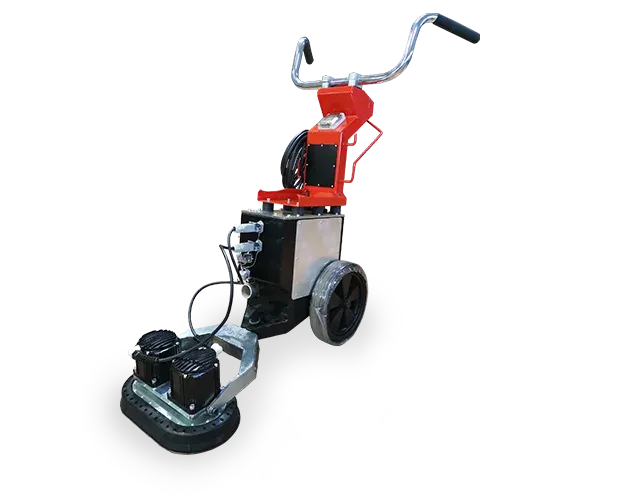
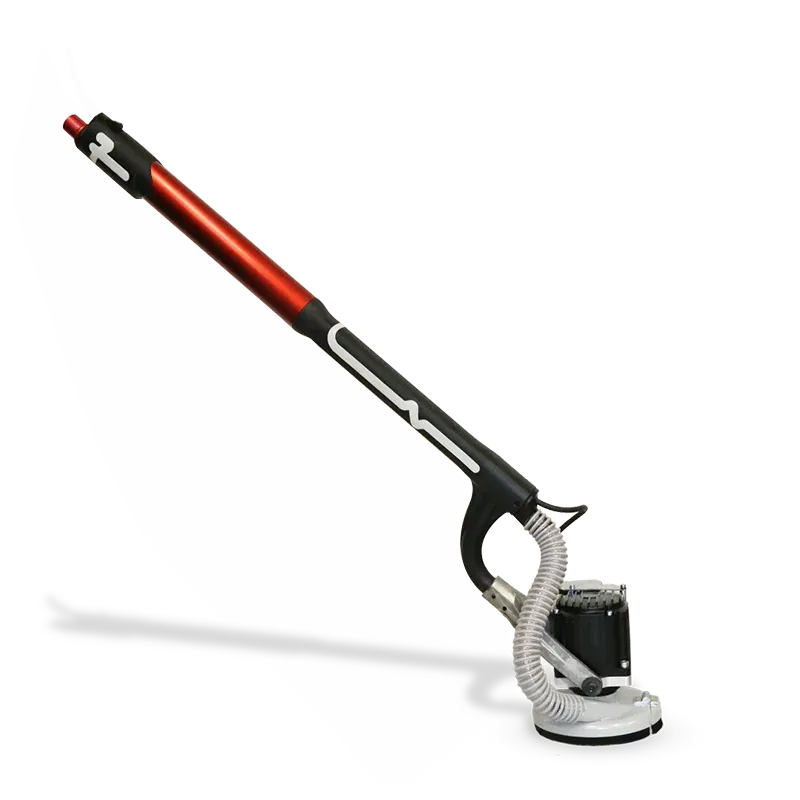
On upper horizontal elements (screeds, slabs), the work is done with a classic floor grinder. But most carbon strengthening concerns underside elements: main beams, floor slabs, balconies. And there, grinding becomes a physical nightmare. Holding a grinder overhead for hours is not sustainable, even for a trained operator. This is precisely the problem Sept Tools solved with its anti-fatigue tool chain dedicated to ceiling grinding.

Why ceiling grinding changes everything

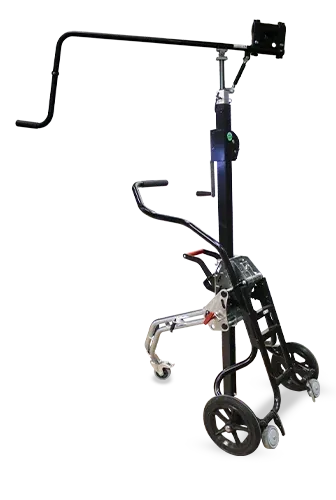
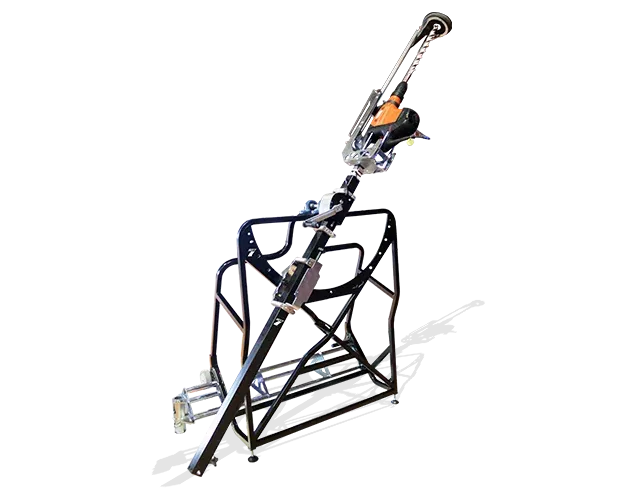
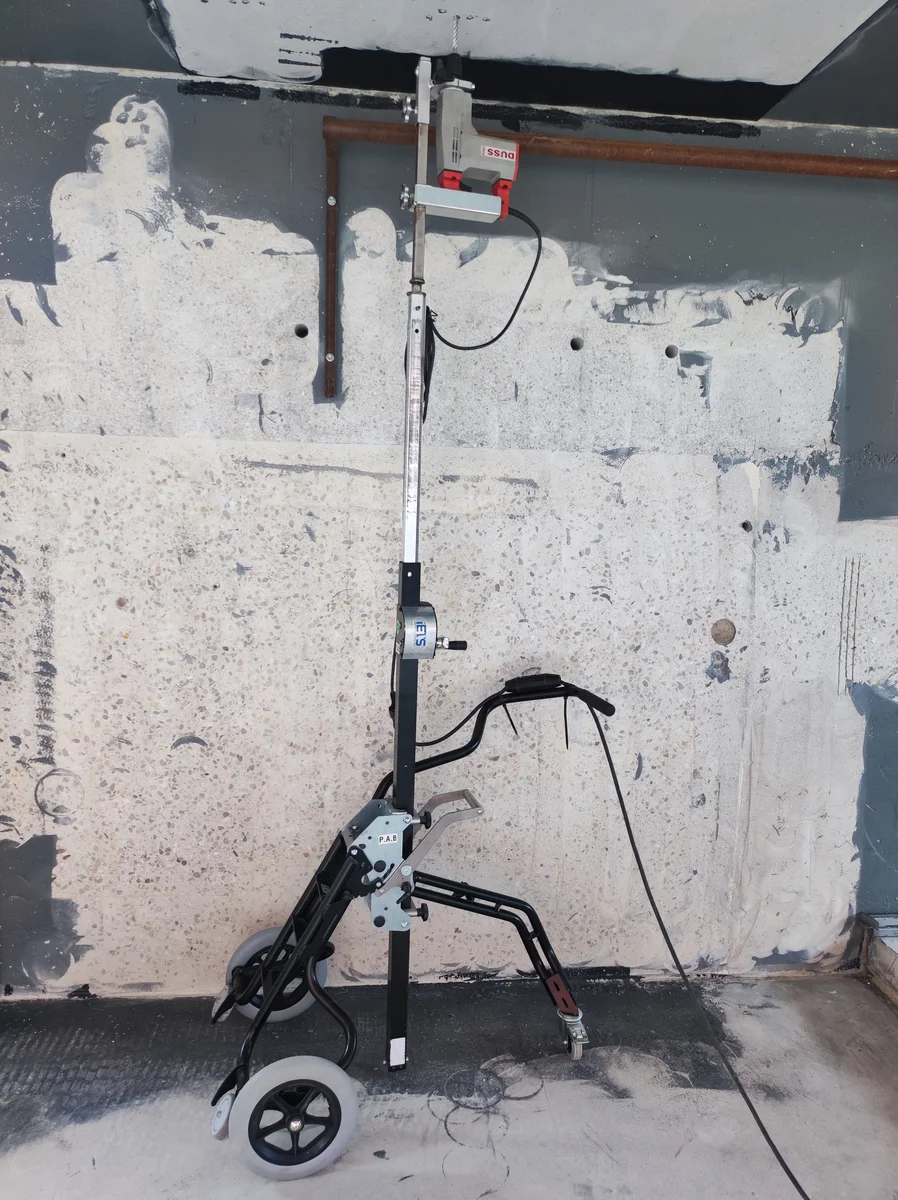
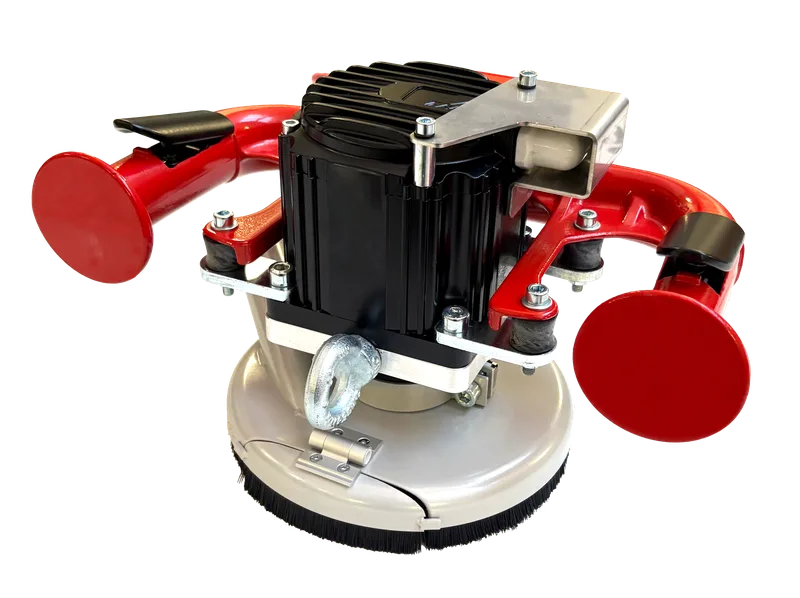
The Fouine XB165, with its 1600 W brushless motor and 165 mm disc, weighs 3.9 kg, the absolute minimum for this type of machine. But 3.9 kg multiplied by 5 hours of overhead work is the energy equivalent of a 30-minute sprint for the shoulders. The Eland Grinding Arm takes over this load: an articulated arm mounted on a tripod carries the Fouine and keeps it pressed against the ceiling. The operator only guides it.

On large continuous areas, we move to the Gazelle, a lift support that holds the grinder against the ceiling without muscle effort. The operator only controls the feed. With these two tools combined, a single operator prepares 45 to 60 m² of ceiling per day, against 15 to 20 m² with a traditional solution. On an 800 m² motorway bridge strengthening job, the saving is several weeks.

Anchors: the second revolution

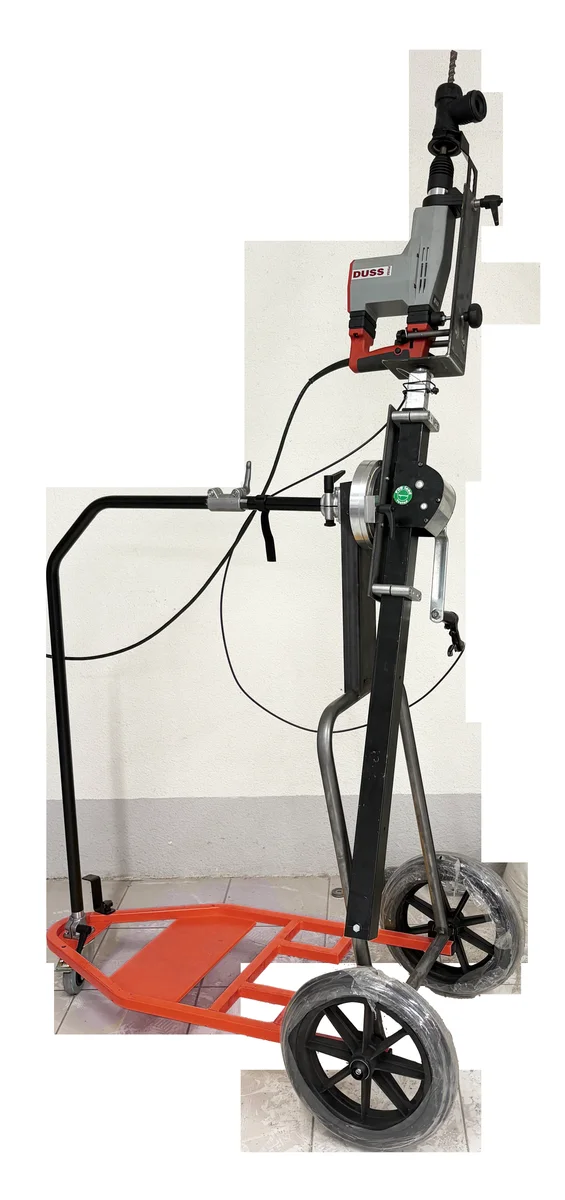
Once the surface is prepared, mechanical anchors are often added to complement the bonding. On a strengthened slab or beam, this can mean dozens or hundreds of drilled holes, with precise spacings dictated by the engineer. The traditional method (handheld hammer drill, hole by hole) is demoralisingly slow.

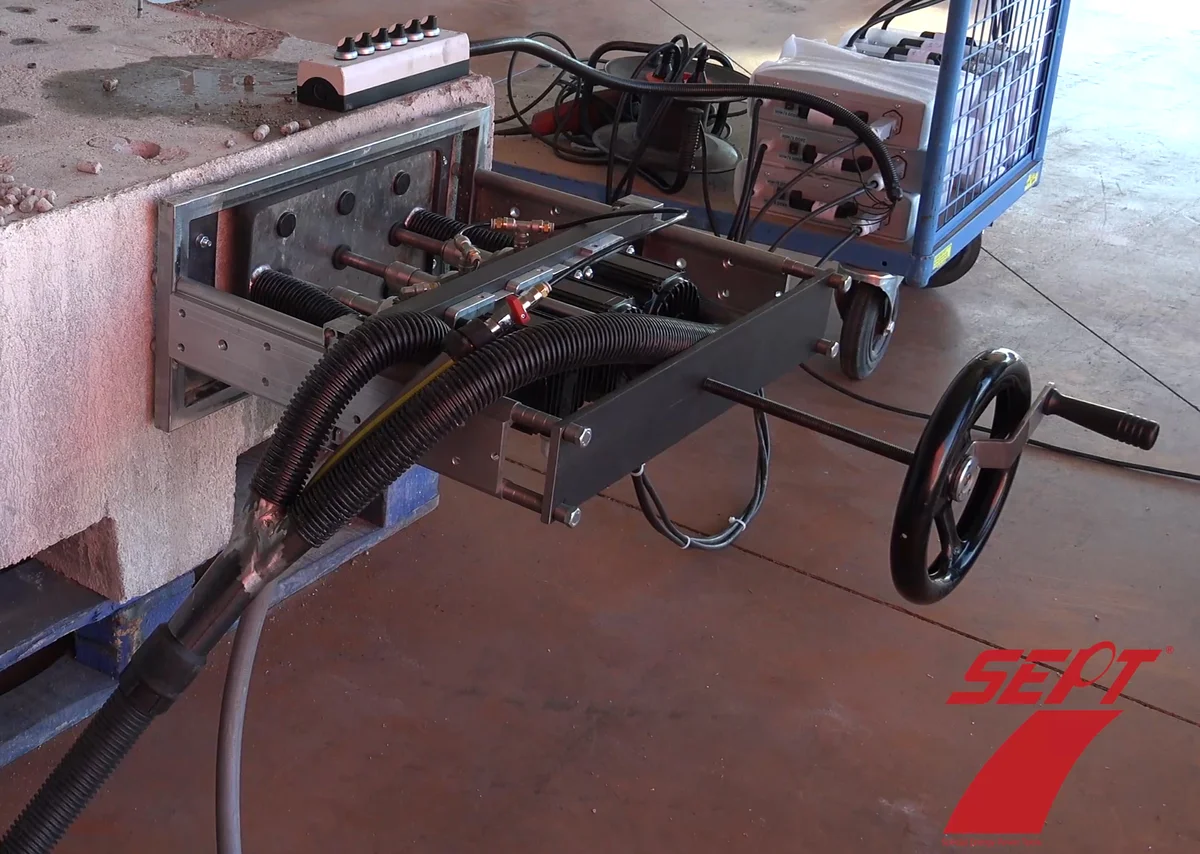
The Sept Tools 6-head multiple drill changes the game. Six simultaneous holes, perfect alignment, constant torque from the brushless motor. On a parking deck strengthening project, we went from 320 holes per day to over 1,800 holes per day with this machine. And on edge areas where the multiple drill cannot fit, the perimeter drill takes over with similar logic: precision drilling, high productivity, fatigue divided.

Extraction and silica compliance

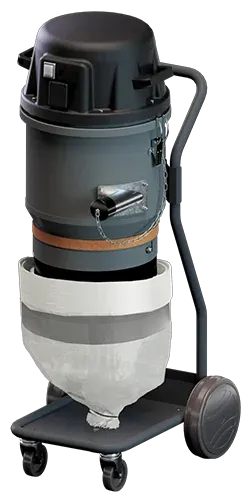
Grinding and drilling reinforced concrete release crystalline silica. Since 2017 the OSHA permissible exposure limit is 0.05 mg/m³ over 8 hours, and the EU directive 2017/2398 sets a binding limit of 0.1 mg/m³. No carbon strengthening jobsite can be considered without class M extraction minimum, class H for long operations. The IU33 Longopac covers all needs, with sealed bagging that avoids any operator contact during disposal.

Sept Tools as a technical partner

Beyond the equipment, Sept Tools intervenes upstream of carbon strengthening jobsites. Our engineers support engineering offices and specialist contractors on the definition of the preparation method, the choice of diamond discs adapted to concrete hardness, the surface cohesion measurement after grinding and the supply of technical sheets for inspection bodies. This service approach is what makes the difference on jobsites where every error costs tens of thousands of euros in remedial work.
Our carbon strengthening process

  1. 1

    Diagnosis & survey

    Concrete hardness measurement and choice of the right diamond disc.

  2. 2

    CSP3 grinding

    Removing laitance, opening pores, ICRI CSP3 profile.

  3. 3

    Cohesion check

    Pull-off test with dynamometer. Validation > 1.5 MPa.

  4. 4

    Anchor drilling

    6-head multiple drill, perfect alignment, constant brushless torque.

  5. 5

    Carbon plate bonding

    Application of epoxy resin and bonding of laminates.

Your daily challenges

Cohesion above 1.5 MPa

Le problème

Without rigorous preparation, the carbon composite peels off under load and the strengthening becomes ineffective.

Sept Tools

Diamond discs grit 30-60 and brushless method that consistently reach above 1.8 MPa.

Ceiling productivity

Le problème

Grinding hundreds of m² of concrete ceiling overhead is physically untenable.

Sept Tools

The Fouine XB165 + Eland Grinding Arm + class H aspirator chain fully removes shoulder load.

Aligned anchors overhead

Le problème

Dozens of anchors to drill one by one, with millimetre alignment required by the engineer.

Sept Tools

6-head multiple drill: six simultaneous holes, perfect alignment, constant brushless torque.

Occupied buildings

Le problème

Working in an operating parking deck or infrastructure imposes noise and dust constraints.

Sept Tools

Brushless 60 dB(A) and class H extraction guarantee zero environmental emission.

Inspection body traceability

Le problème

Inspection bodies require documented protocols and pull-off tests before bonding.

Sept Tools

Sept Tools provides technical sheets and control protocols for every jobsite.

Crystalline silica compliance

Le problème

Grinding and drilling concrete release silica: 0.1 mg/m³ EU limit since 2017.

Sept Tools

IU33 Longopac with sealed bagging: zero operator contact during disposal.

Why Sept Tools

1600 W brushless

Constant torque, 0 % loss, 5 times the service life of a brushed motor.

Full anti-fatigue

Eland Grinding Arm and Gazelle remove the muscle load on undersides.

Class H extraction

IU33 Longopac: sealed bagging, zero crystalline silica emission.

Engineering service

Jobsite visits, technical sheets for inspection bodies, engineering office support.

01

Guaranteed surface preparation

Our diamond discs and brushless method consistently achieve a surface cohesion above 1.5 MPa. That is the threshold above which carbon bonding becomes durable.

02

Ceiling grinding solved

Most carbon strengthening happens on undersides. No one but Sept Tools offers a complete chain Fouine + Eland + class H aspirator that fully removes shoulder load.

03

6-head multiple drill

A Sept Tools innovation that divides anchor drilling time by six. On a bridge or parking deck strengthening project, the saving is counted in dozens of hours per phase.

Frequently asked questions

What surface cohesion do you achieve with your grinders?
With a metal disc grit 30 or 40 on standard concrete, dynamometer values are systematically above 1.8 MPa. We provide control protocols for engineering offices.
Are your drills compatible with all anchor diameters?
Yes. The multiple drill accepts heads from Ø10 to Ø25 mm, configurable to the anchor pattern defined by the engineer. A head change takes less than two minutes.
Can you work in an operating parking deck?
Yes. Sept Tools brushless grinders run at 60 dB(A) and class H or M extraction guarantees zero dust dispersion. Co-existence with users is possible in most cases.
Can you support an engineering office at the prescription stage?
Yes. Our technical team visits jobsites, proposes equipment configurations and provides the technical sheets needed for the dossier.
What daily productivity on a ceiling strengthening jobsite?
With Fouine XB165 + Eland Grinding Arm + class H aspirator, we observe between 45 and 60 m² of ceiling prepared per operator per day, against 15 to 20 m² with a traditional solution.

Let's talk about your jobsite

Our engineers build a tailored solution with you, matched to your activity.