Anti-fatigue on construction sites: what does inaction cost?
Hidden cost of MSDs in construction, regulatory framework, ROI calculation and Sept Tools anti-fatigue solutions backed by real-world figures.
Direct + indirect estimated total cost
Indirect costs are 3 to 5x direct costs
With Scourpio passive exoskeleton
EU-OSHA studies, excluding productivity gains
When a construction company director postpones the purchase of anti-fatigue equipment, they are weighing a visible expense against a hidden cost. The problem: that hidden cost is very often higher. This article puts the numbers on the table, drawing from public sources (HSE, EU-OSHA, NIOSH, Bureau of Labor Statistics), and proposes a simple ROI calculation.
MSDs in construction: the scale of the problem
Musculoskeletal disorders (MSDs) represent the majority of recognised occupational diseases in construction across developed economies. The figures are consistent across regions:
- 2 to 3 times more MSDs in construction than the all-industry average,
- millions of workdays lost each year directly attributable to construction MSDs,
- average age at recognition: mid-40s, in the most productive period of a career,
- average duration of leave after recognition: 9 to 12 months.
The most frequent pathologies are:
- chronic low back pain (load handling, constrained postures),
- lateral epicondylitis (repetitive grinding, drilling, screwing),
- carpal tunnel syndrome (hand-arm vibration),
- rotator cuff tears (overhead work).
Direct and indirect costs
Direct costs
For a worker on leave for a recognised MSD, the employer bears:
- higher workers’ compensation premiums the following year, which can add up to 1 or 2 % of payroll,
- complementary indemnities beyond the statutory cap (depending on collective agreements),
- replacement costs (temporary or fixed-term), which average 1.3 to 1.5 times the loaded salary of a permanent worker.
Indirect costs
Far heavier, and systematically underestimated:
- management time spent on medical follow-up, claim filing and replacement coordination,
- productivity loss while training the replacement,
- rhythm disruption on ongoing jobsites,
- risk of contractual delay and associated penalties,
- retraining cost if the worker returns with medical restrictions,
- deterioration of team morale and increased turnover.
EU-OSHA estimates indirect costs represent 3 to 5 times direct costs in construction. An MSD that costs €18,000 visibly may therefore cost €70,000 to €90,000 in reality.
Average cost of recognised low back pain in construction
Cross-referencing recognised statistics:
- direct average cost: €18,000 to £15,000,
- total cost (direct + indirect): €60,000 to £75,000,
- average duration before return to work: 9 to 14 months.
For an SME of 30 employees suffering two recognised low back claims per year, that is €120,000 to £150,000 in annual losses. Without counting permanent disability cases.
Regulatory framework
In the EU, occupational safety is governed by the framework directive 89/391/EEC, transposed into national law in every member state. It imposes:
- a written risk assessment updated regularly,
- a prevention action plan,
- worker training and information,
- health monitoring through occupational medicine.
In the UK, the Management of Health and Safety at Work Regulations 1999 play the equivalent role. In the US, OSHA 29 CFR 1926 (construction safety standard) sets the rules, complemented by NIOSH recommendations on ergonomics.
In all jurisdictions, the absence of a documented risk assessment is sanctioned. Several recent court decisions in construction have led to criminal convictions for endangering others.
Calculating ROI on anti-fatigue investment
The method is simple. Three data points are enough.
Step 1: annual MSD cost in your company
Pull workers’ compensation claims from the past three years. Calculate total direct cost then multiply by 4 to estimate the real cost (EU-OSHA formula).
Step 2: investment cost
List of contemplated equipment:
- anti-fatigue grinding carts,
- passive exoskeletons,
- lifting jacks,
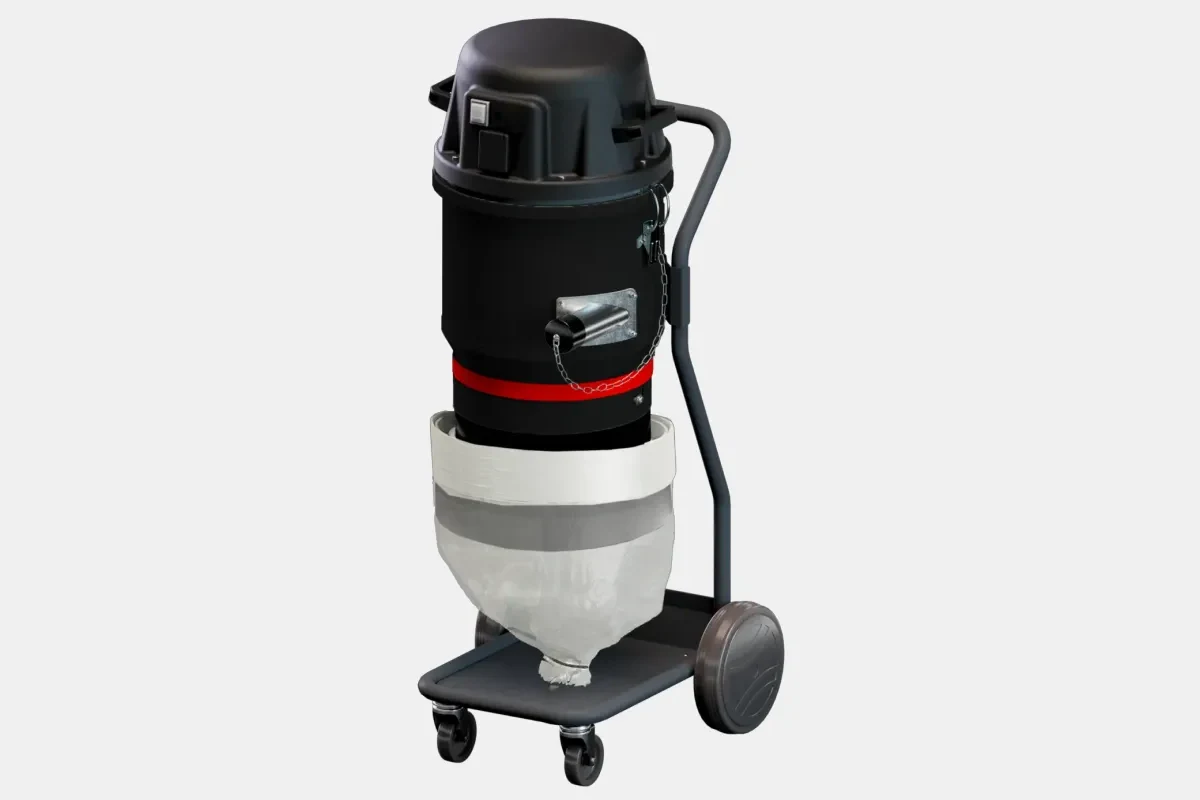
- low-vibration vacuums,
- training and support.
For a 30-employee company covering several trades, expect an initial investment of €15,000 to £30,000.
Step 3: payback period
If the investment prevents a single recognised MSD per year, profitability is immediate: a €30,000 investment is recovered as soon as the first MSD is avoided (€60,000 minimum).
Over three years, EU-OSHA studies show an average ROI of 2.2 € for every euro invested in prevention, excluding productivity gains.
Sept Tools solutions
Sept Tools develops a dedicated range to reduce jobsite fatigue. Here are the key products.
Mygale
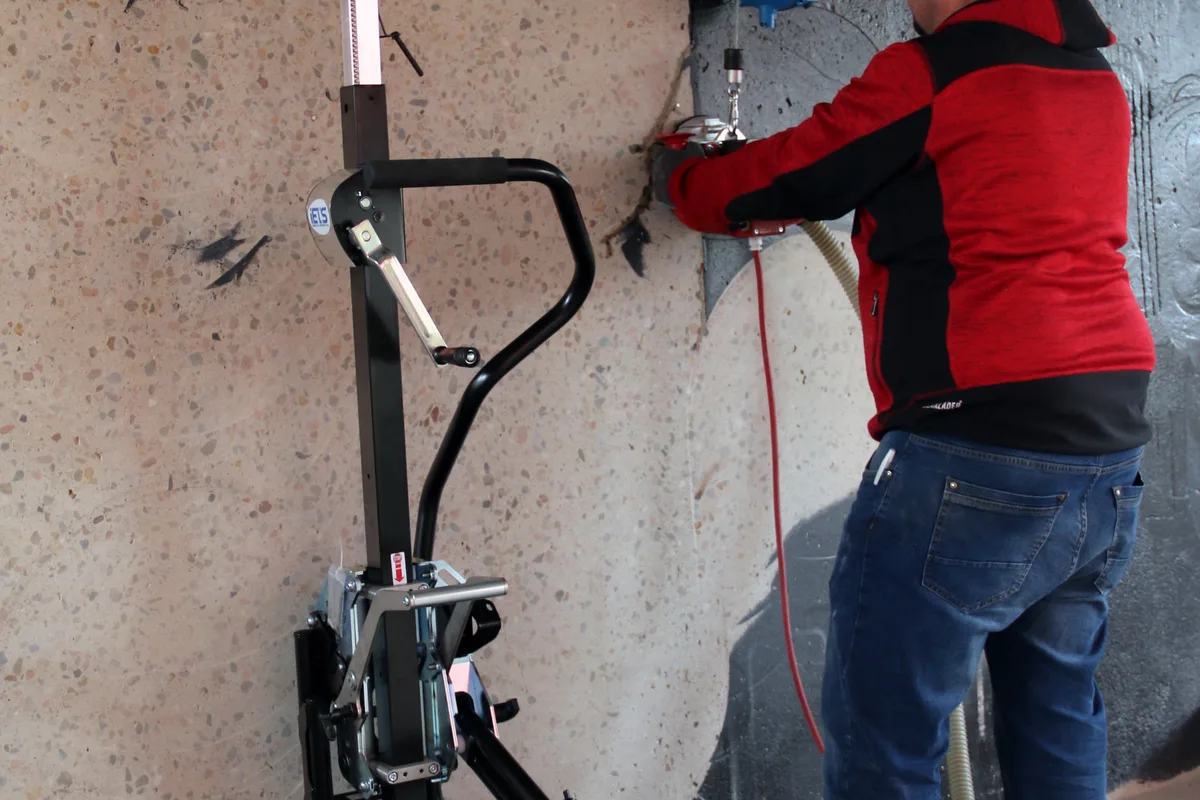
The Mygale is a grinding cart designed for ceiling work. It carries the machine and presses it against the ceiling using a pneumatic ram. The operator no longer has to hold the grinder overhead. Measured benefit: fivefold reduction in RULA score (postural ergonomic assessment method).
Gecko
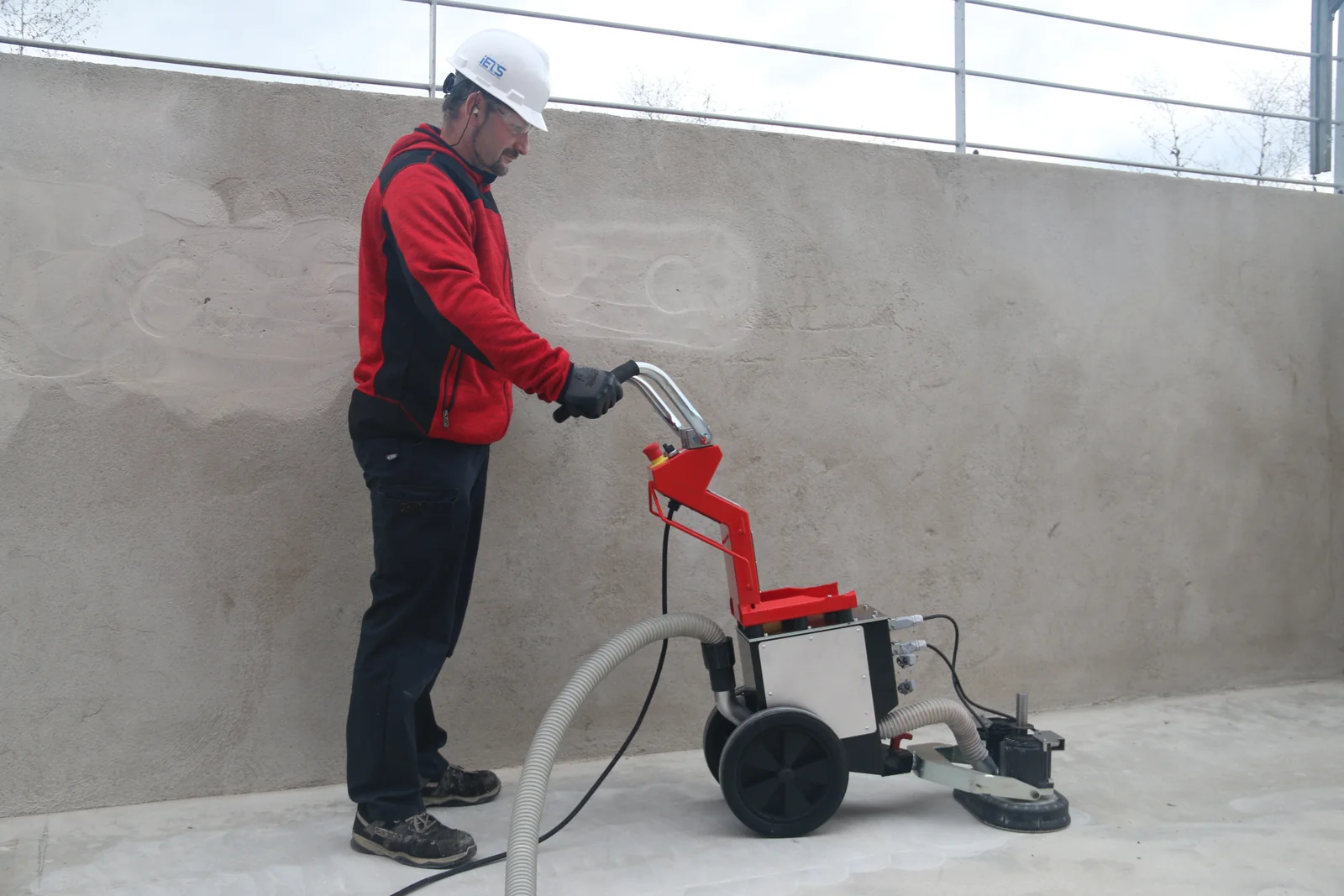
The Gecko is a versatile cart that adapts to several Sept Tools grinders. Ideal for varied jobsites where one machine must serve wall, floor and ceiling work.
Scourpio exoskeleton
The Scourpio passive exoskeleton supports part of the arm weight during overhead work. No motor, no battery: a purely mechanical spring system that relieves the rotator cuff. Measured benefit: 47 % reduction in deltoid muscle activity during ceiling grinding.
Eland lifting jack
The Eland handles tubes, panels and heavy machines without effort. Prevents the acute low back pain associated with asymmetric load handling.
To explore the full range, see the anti-fatigue construction equipment page.
Quantified case study
A 28-employee plastering SME in central France invested in 2023 in a fleet of 4 Mygale carts and 6 Scourpio exoskeletons, for a total of €34,200.
In 2024, the company recorded:
- 0 recognised MSDs (versus an average of 2 per year in 2020-2022),
- 38 % drop in short absences (less than 7 days),
- 12 % productivity gain on ceiling grinding jobsites (internal measurement on 14 comparable sites),
- 0.7 point drop in workers’ compensation premium on 1 January 2025.
12-month ROI calculation:
- avoided cost (MSDs): €124,000 (2 MSDs x €62,000)
- productivity gain: not officially quantified
- workers’ compensation savings: about €9,800 on annual payroll
A return on investment of 3.9 times the initial outlay in less than 12 months.
Conclusion
Inaction on anti-fatigue is not a saving. It is a cost shift to the future, with a multiplier effect. The figures are public and consistent: a recognised MSD in construction costs between €60,000 and £75,000, and every euro invested in prevention generates €2.20 in savings over three years.
Sept Tools offers a complete range of brushless anti-fatigue equipment, designed in France for real construction jobsite conditions. To assess the ROI of your fleet, contact our engineers or use the Sept Tools configurator.
Sept Tools Configurator
Find your ideal set in 2 minutes
Guided questionnaire: grinder, vacuum and anti-fatigue accessories matched to your jobsite.
What operators face on site
Chronic low back pain
Load handling, constrained postures, whole-body vibration: low back pain is the leading cause of long-term leave in construction.
Eland lifting jack to remove risky handling, Scourpio exoskeleton for constrained postures.
Hand-arm vibration
Above 5 m/s² (limit value), confirmed risk of carpal tunnel syndrome and Raynaud's, irreversible by age 50.
Sept Tools brushless range under 0.4 m/s² measured, cumulative exposure outside the regulatory risk zone.
Overhead work
Rotator cuff under static effort, fatigue in less than 90 minutes, lesions after 4 to 5 years of regular exposure.
Mygale cart to transfer machine load, Scourpio exoskeleton to relieve 47 % of deltoid activity.
Underestimated hidden costs
EU-OSHA shows indirect costs (management, productivity, morale) represent 3 to 5x visible direct costs.
Sept Tools ROI method: itemised inventory of current fleet, simulation of avoided MSDs and 36-month modelling.
Before / After Sept Tools
Without anti-fatigue equipment
- 2 recognised MSDs per year on average (30-employee SME)
- €120,000 to €180,000 of hidden annual losses
- Workers' compensation premium rising every year
- High turnover, difficult recruitment
- Unfavourable RULA score on ceiling grinding
- 47 % deltoid muscle activity in overhead work
With Sept Tools range
- 0 recognised MSDs over 12 months (real client case)
- ROI 3.9x in less than 12 months (real client case)
- 0.7 point premium drop on January 1
- Stronger employer brand, operator retention
- RULA score divided by 5 on ceiling grinding
- 47 % less deltoid activity with Scourpio
Equipment featured in this article
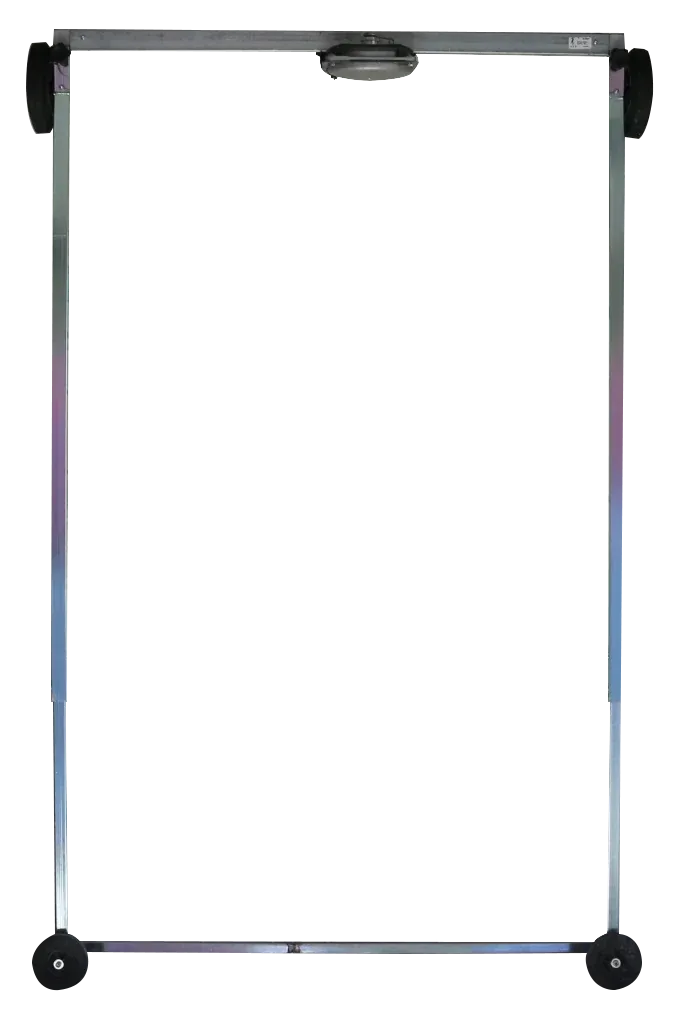
Mygale
Ceiling grinding cart with pneumatic ram, RULA divided by 5
View product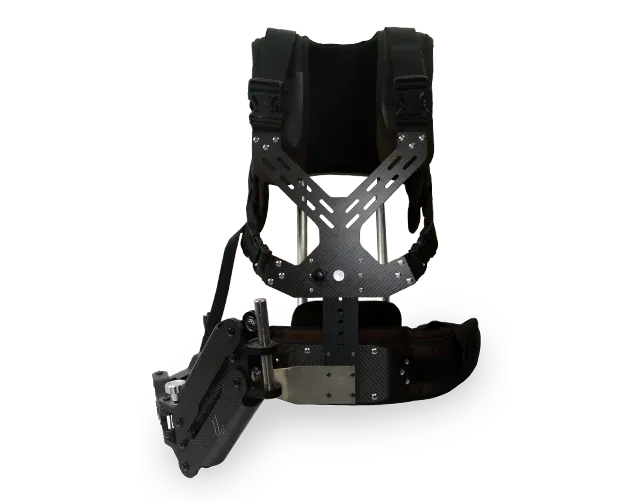
Scourpio
Passive exoskeleton, -47 % deltoid muscle activity
View product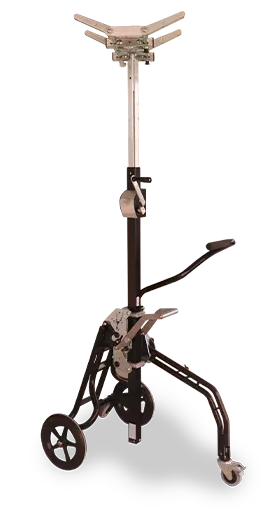
Eland lifting jack
Effortless handling of asymmetric loads
View product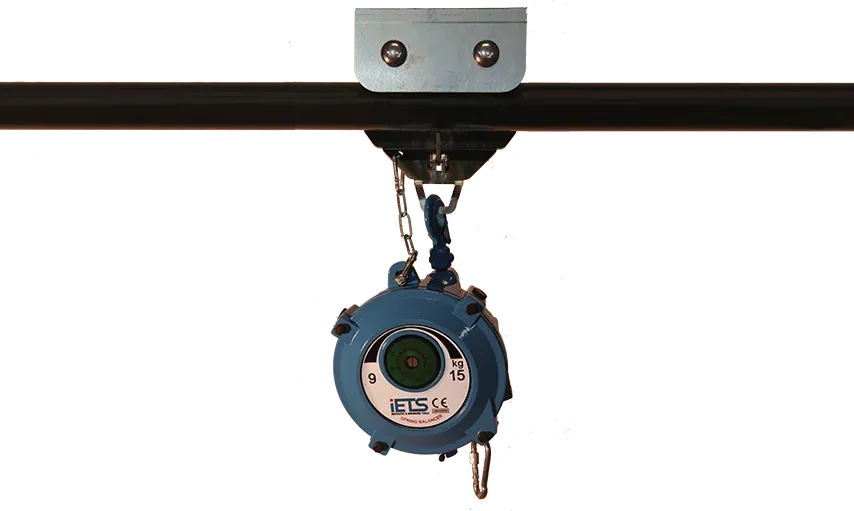
Gecko
Versatile cart compatible with several Sept Tools grinders
View productFree guide: 5 mistakes that shorten the life of your grinder
12 pages of practical tips for your job sites.
Frequently asked questions
Are anti-fatigue measures mandatory?
Is anti-fatigue equipment tax deductible?
How long before an MSD is recognised?
Does an exoskeleton really protect?
Find your ideal set
Configure your machine + ergonomics + vacuum combination in a few clicks.