Asbestos removal: which dust control equipment is mandatory?
Regulatory framework, PPE, class H vacuums and mandatory equipment for asbestos removal jobs under EU directive 2009/148/EC, OSHA and HSE rules.
Minimum on 0.3 µm particles
New EU directive 2023/2668 limit
WHO estimate from past asbestos exposure
Minimum required in the contained zone
Asbestos has been banned in most European countries since the late 1990s but remains present in millions of buildings constructed before that date. Any work on these structures falls under a strict regulatory framework that mandates specific equipment. Here is a complete inventory of mandatory equipment, organised by function.
Regulatory framework
In the EU, asbestos work is governed by directive 2009/148/EC, soon replaced by directive 2023/2668 which lowers the occupational exposure limit to 0.01 fibre per cubic centimetre with a transition period until 2029.
In the United States, OSHA 29 CFR 1926.1101 sets the rules for construction asbestos work, with a permissible exposure limit of 0.1 fibre per cubic centimetre over 8 hours.
In the United Kingdom, the Control of Asbestos Regulations 2012 (HSE) classifies asbestos work into three categories:
- Licensed work: removal of friable asbestos (sprayed coatings, lagging, insulating board). Requires HSE licence.
- Notifiable non-licensed work (NNLW): medium-risk operations on bonded asbestos products.
- Non-licensed work: low-risk maintenance and minor interventions.
Across all jurisdictions, the underlying principle is the same: source dust capture, sealed containment, certified PPE, written work plan, air monitoring and worker training.
Asbestos health risks
Asbestos is classified as a confirmed carcinogen (IARC group 1). Inhaled fibres deposit in lung alveoli and cause four major diseases:
- Asbestosis: diffuse pulmonary fibrosis appearing 10 to 20 years after exposure.
- Pleural plaques: benign thickening of the pleura, marker of past exposure.
- Bronchopulmonary cancer: risk multiplied by 5 in unexposed non-smokers, by 50 in smokers exposed to asbestos.
- Mesothelioma: cancer of the pleura, latency of 30 to 40 years, almost always fatal.
The WHO estimates 90,000 deaths globally each year from past asbestos exposure. This figure justifies the severity of current regulations.
Class H vacuums: mandatory characteristics
The vacuum is the central piece of any asbestos jobsite. It is governed by standard EN 60335-2-69 annex AA which defines class H as the highest filtration class for industrial vacuum cleaners.
Class H criteria
- HEPA H13 minimum filtration, meaning 99.995 % efficiency on 0.3 µm particles.
- Maximum penetration of 0.005 % measured at the outlet.
- Automatic filter cleaning to maintain airflow.
- Airflow indicator signalling filter clogging.
- Inlet plug or check valve to prevent dispersion when disconnecting.
- Sealed disposal bag for dust removal without direct contact.
The Longopac system
For asbestos work, the Longopac continuous bagging system has become a standard. The principle: a continuously sealed plastic sleeve evacuates dust as a series of hermetic sausages without ever opening the container. The operator stays away from any particle.
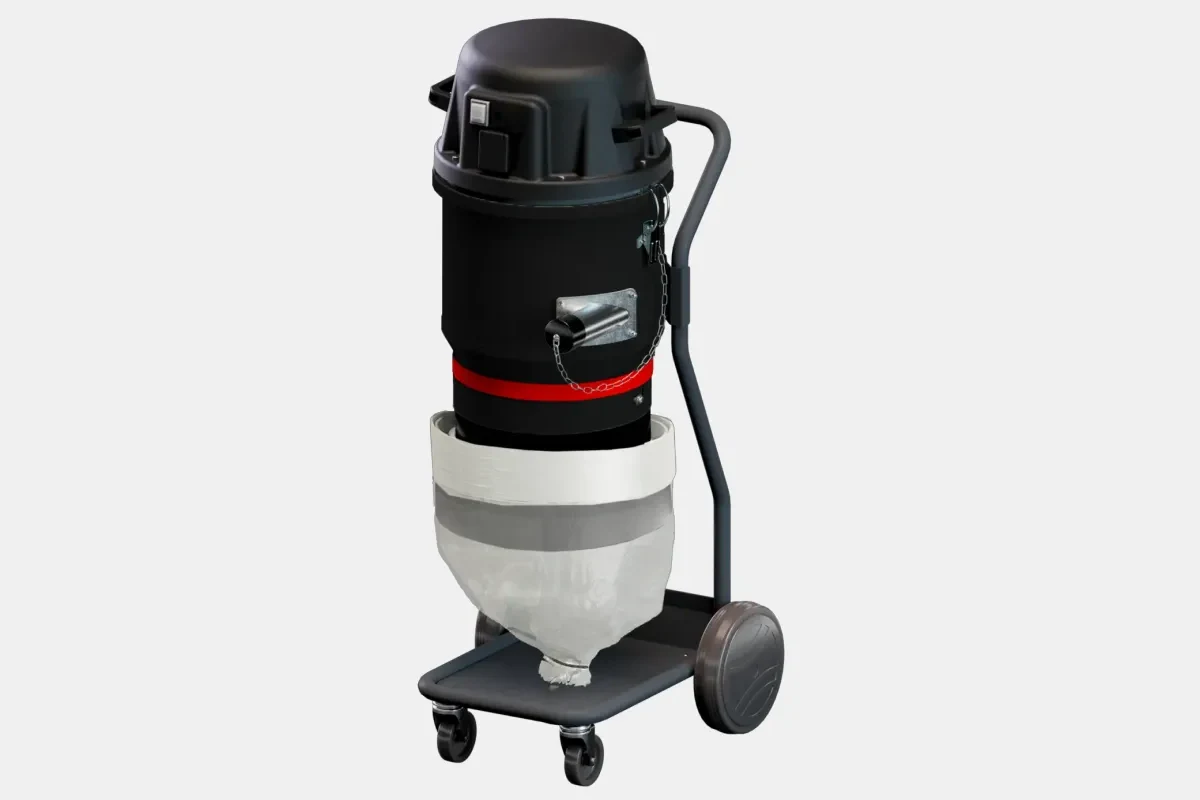
The IU33 Longopac vacuum meets all class H requirements and integrates the Longopac system as standard. For larger sites, the IU40, IU51 and IU81 offer higher airflow while remaining compliant, with HEPA H14 compatibility for the strictest requirements.
For more on jobsite dust extraction solutions, see our construction dust extraction page.
Mandatory PPE
Personal protective equipment for asbestos removal must meet specific standards.
Respiratory protection
- Licensed/high risk: powered air-purifying respirator (PAPR) or supplied-air respirator with assigned protection factor 80 or higher.
- Non-licensed/low risk: half-mask or full-face mask with P3 filters (assigned protection factor 30 to 40 depending on expected concentration).
P3 filters must be marked EN 143 (Europe) or NIOSH 100 (US) and replaced according to manufacturer guidance or as soon as the wearer detects breakthrough.
Coveralls
Single-use coverall type 5/6 category III, certified under EN ISO 13982-1. Integrated hood, adjustable cuffs and ankles. Light colour to spot contamination. One coverall per day minimum, or more if exiting the contained zone.
Gloves and footwear
- Single-use nitrile gloves, category III.
- Dedicated safety footwear, washable or disposable overshoes.
Decontamination unit
A three-chamber decontamination unit (dirty, shower, clean) is mandatory for licensed work and strongly recommended for non-licensed work. All wash water must be HEPA filtered before discharge.
Site procedures
Beyond equipment, compliance rests on strict procedures.
Plan of work
Mandatory document before any licensed intervention. It describes the asbestos materials, removal techniques, capture methods, number of operators, expected exposure durations and emergency measures. This plan is submitted to the regulator at least 14 days before work begins (UK HSE) or 30 days under the French Code du travail.
Containment
Work zones are contained with double-layer polyethylene sheeting and kept under negative pressure of at least 10 Pa relative to the outside. Extraction air is HEPA filtered before discharge.
Air monitoring
Air sampling is mandatory:
- before intervention (baseline),
- during intervention (control samples),
- at the end of work (clearance after visual inspection and air sample below 0.01 fibre/cm³).
Sept Tools compatible solutions
Sept Tools develops a specific range for asbestos jobsites. The brushless design reduces vibration and limits motor heat, two important factors in confined spaces where heat builds up quickly.
Recommended licensed-work setup
- IU33 Longopac, IU40, IU51 or IU81 depending on jobsite size.
- Brushless tools permanently connected to the vacuum (sealed connectors, synchronised airflow).
- Dust-retention discs and pads that capture up to 80 % of particles at the source before vacuum capture.
Recommended non-licensed-work setup
- Battery-powered class H vacuum for short interventions in occupied premises.
- Lightweight brushless tools with integrated dust capture (drills, portable grinders).
- Pre-marked sealed disposal bags.
Training and certification
No operator may work on asbestos without prior certified training. Training durations vary by jurisdiction but typically include:
- High-risk/licensed work: 5 days for operators, 10 days for site supervisors. Annual refresher.
- Low-risk/non-licensed work: 2 days for operators, 5 days for supervisors. Refresher every 3 years.
Sept Tools does not deliver training but its engineers support certified contractors in equipment selection and work plan design.
Conclusion
Asbestos removal is the most heavily regulated construction operation worldwide. Compliance rests on three inseparable pillars: an administrative framework (work plan, training), technical equipment (class H vacuums, PPE, containment) and operational discipline (procedures, monitoring, traceability). Sept Tools offers a range of class H vacuums and brushless tools designed to minimise physical strain in already constrained conditions.
To size your equipment for your business, contact our engineers or use the Sept Tools configurator.
Sept Tools Configurator
Find your ideal set in 2 minutes
Guided questionnaire: grinder, vacuum and anti-fatigue accessories matched to your jobsite.
What operators face on site
Fibres invisible to the naked eye
Asbestos fibres measure a few microns and are undetectable without a microscope; silent exposure can last hours.
Powered air-purifying respirator for high-risk work, TM3P mask with assigned protection factor 80 minimum.
IARC group 1 carcinogen
Asbestosis, pleural plaques, lung cancer, mesothelioma: 4 major diseases with latency of 10 to 40 years.
Class H vacuum with sealed Longopac bagging and certified type 5/6 category III coverall.
Source dust capture mandatory
Without extraction, fibres disperse within minutes throughout the containment and adjacent zone.
IU33 Longopac, IU40, IU51 or IU81 compliant with the strictest categories, permanent tool connection and synchronised airflow.
Administrative traceability
Plan of work, monitoring, training records: any gap exposes the company to criminal sanctions.
Sept Tools pre-validated procedures, engineering support for equipment selection backed by documentation.
Equipment featured in this article
IU33 Longopac
Class H13 compliant with strict regulations, continuous Longopac bagging
View product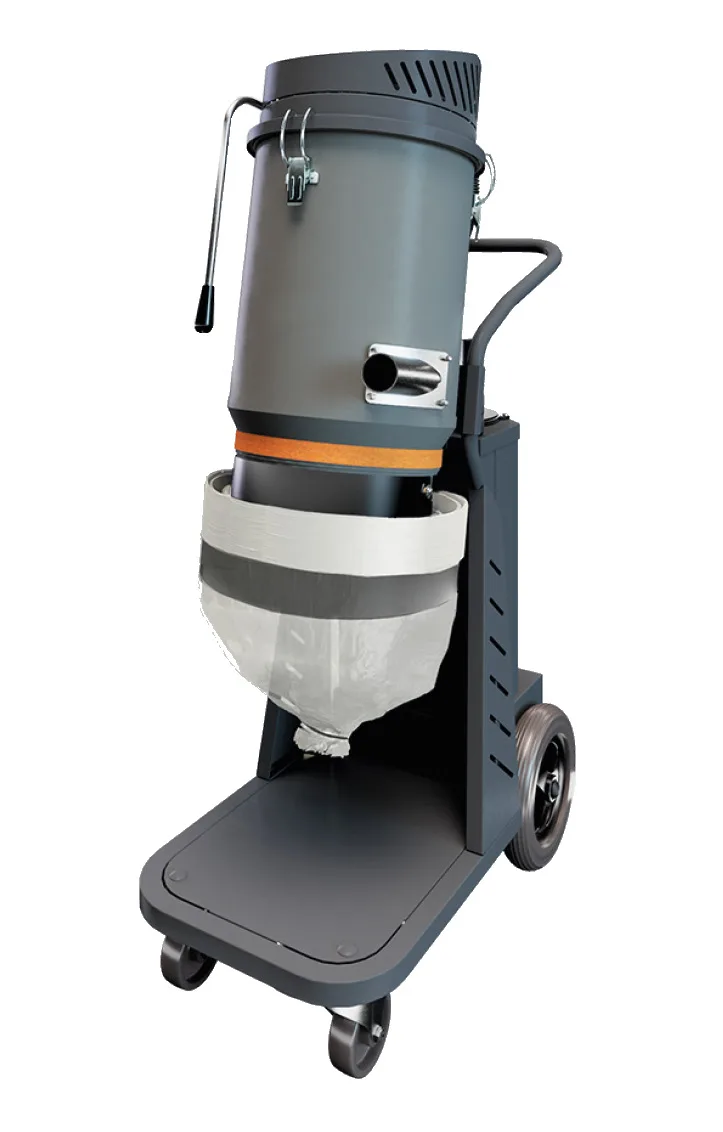
IU40
Class H vacuum with HEPA H14 compatibility, Longopac bagging for medium asbestos jobsites
View product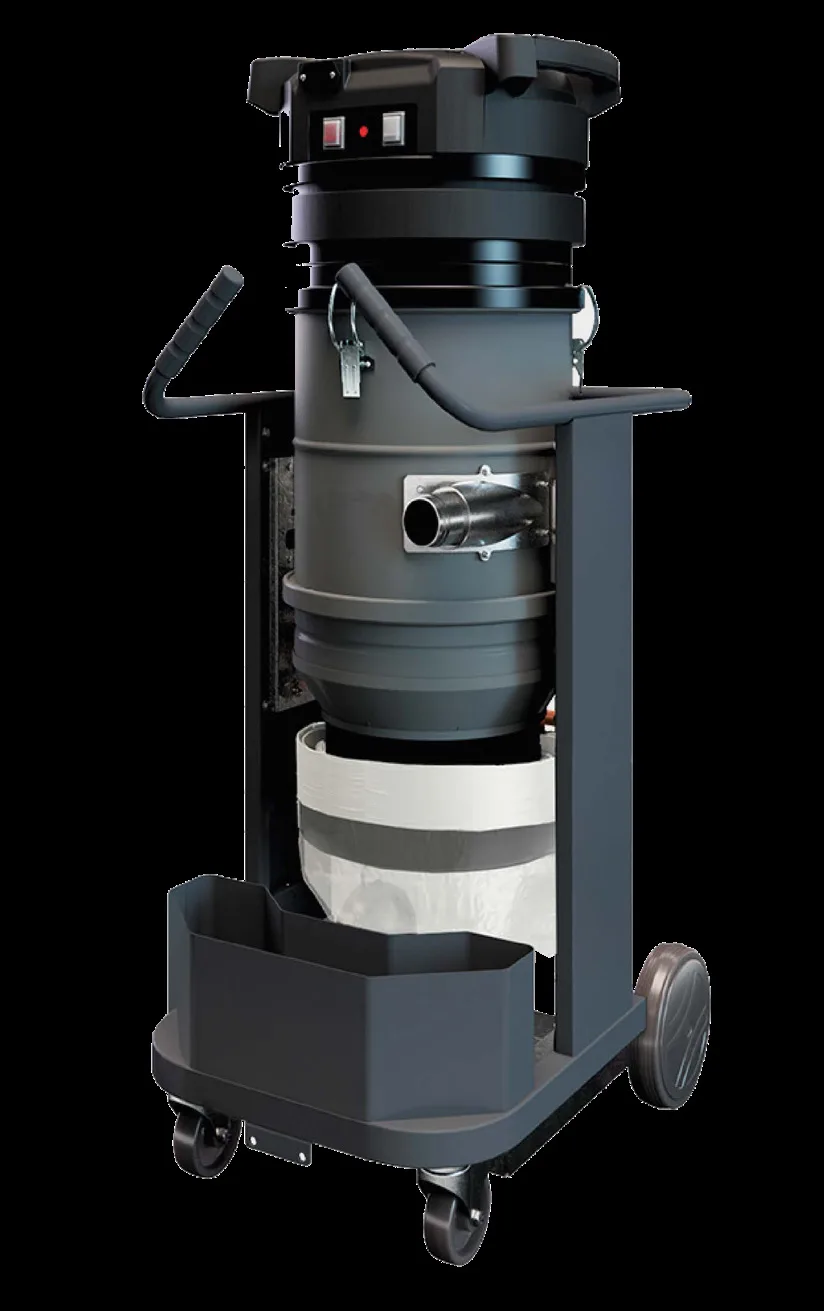
IU51
Class H vacuum with HEPA H14 compatibility, higher airflow for mid-size licensed asbestos work
View product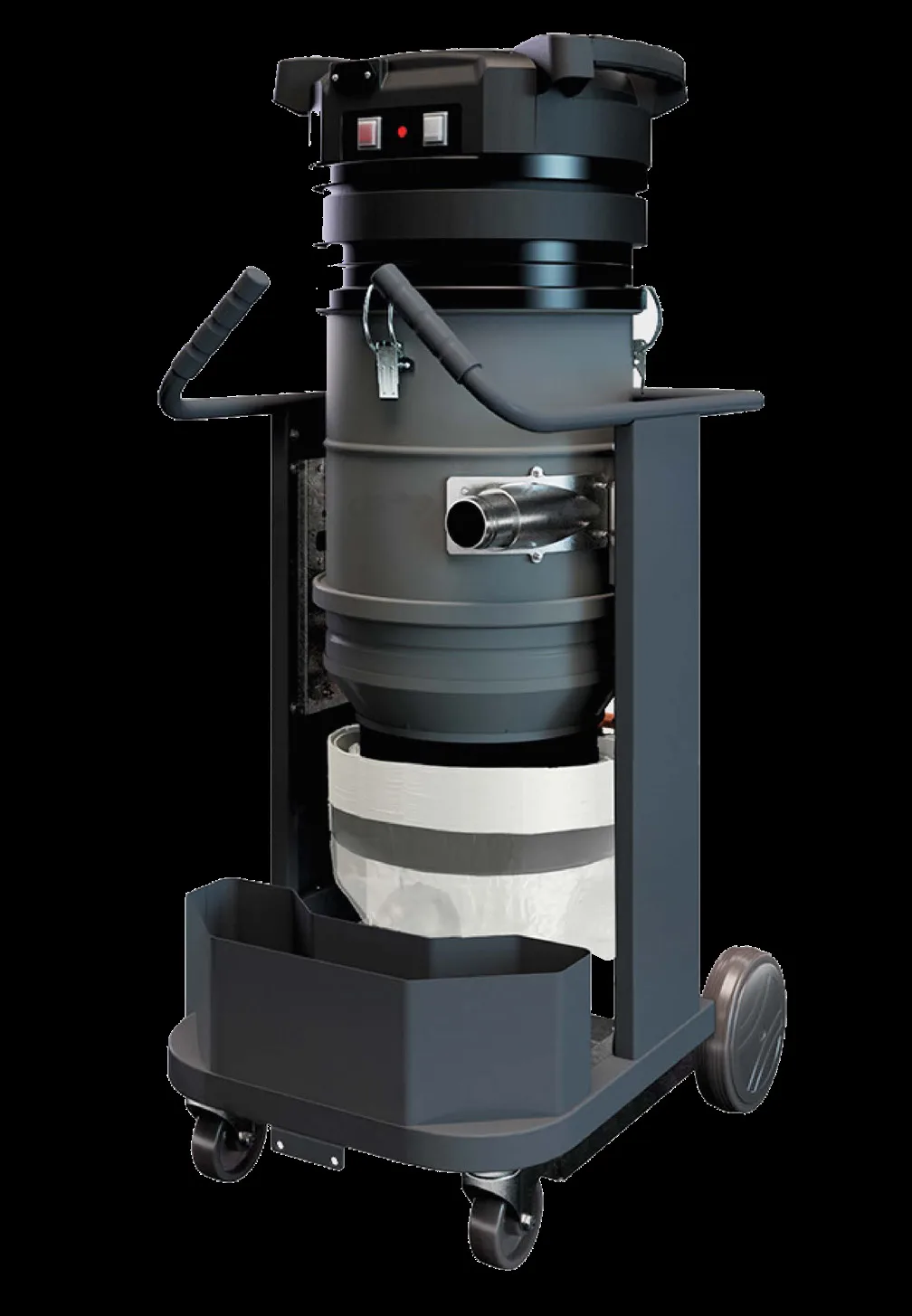
IU81
High-airflow class H vacuum with HEPA H14 compatibility, large licensed asbestos jobsites
View product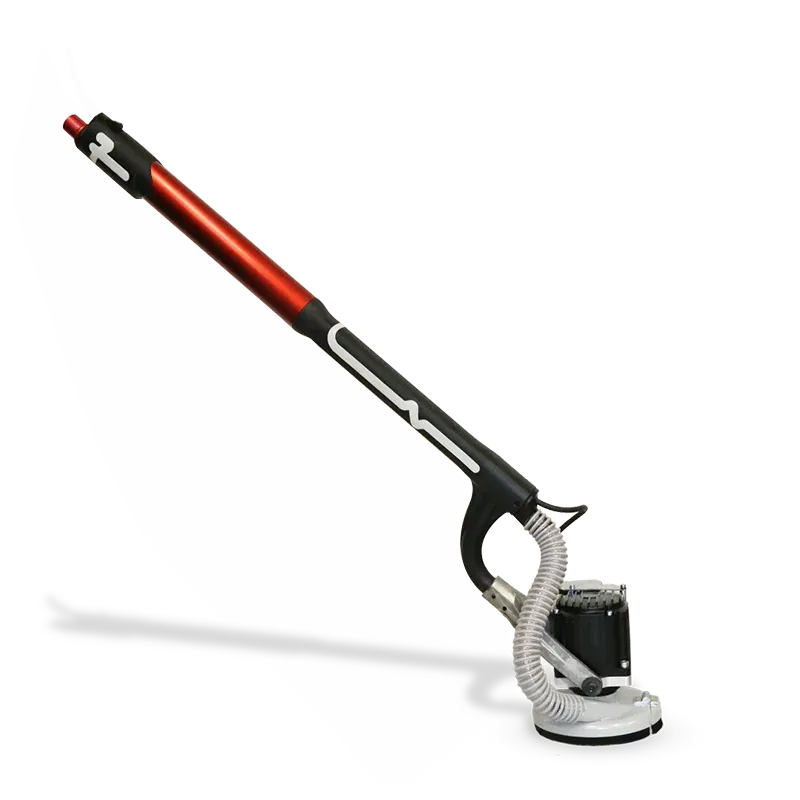
Fouine XB165
Brushless grinder connectable to a class H vacuum
View productFree guide: 5 mistakes that shorten the life of your grinder
12 pages of practical tips for your job sites.
Frequently asked questions
Is a class M vacuum enough for asbestos?
How long does a HEPA H13 filter last?
Is certification required to buy a class H vacuum?
What is the difference between P3 and P3 R?
Find your ideal set
Configure your machine + ergonomics + vacuum combination in a few clicks.