Crystalline silica regulations on construction sites: what you need to know
Updated obligations on crystalline silica in construction: OEL values, class H extraction, prevention measures and compliant Sept Tools solutions.
Crystalline silica is the leading cause of occupational disease on construction sites. Found in concrete, granite, sandstone and most mortars, it is released as respirable dust during grinding, chiselling and sawing.
Regulations have tightened considerably in recent years. This guide summarises current obligations and prevention solutions.
Crystalline silica: an invisible hazard
Crystalline silica dust (quartz) measures less than 5 micrometres. It penetrates deep into the lungs and causes silicosis over time: an irreversible pulmonary fibrosis. It is also classified as a Group 1A carcinogen by the IARC.
Concrete grinding operations release between 0.5 and 5 mg/m³ of respirable crystalline silica, 10 to 100 times the OEL.
The current regulatory framework
OEL: the exposure limit
The binding OEL for crystalline silica (quartz) is 0.05 mg/m³ over 8 hours. This value is consistent across the EU since Directive (EU) 2017/2398.
Employer obligations
- Risk assessment: identify exposed roles and measure dust levels
- Substitution: replace dust-generating processes where possible
- Collective protection: source extraction, ventilated enclosure, wet methods
- Individual protection: FFP3 masks as a complement (never a replacement)
- Medical surveillance: enhanced monitoring for all exposed workers
- Training: inform workers about risks and prevention measures
Source extraction: class H required
Source extraction is the most effective collective protection measure. Regulations require a class H vacuum (EN 60335-2-69), filtering 99.995% of particles above 0.3 micrometres.
A class M vacuum (99.9%) is not sufficient for crystalline silica.
Prevention solutions on site
1. Dry grinding with class H extraction
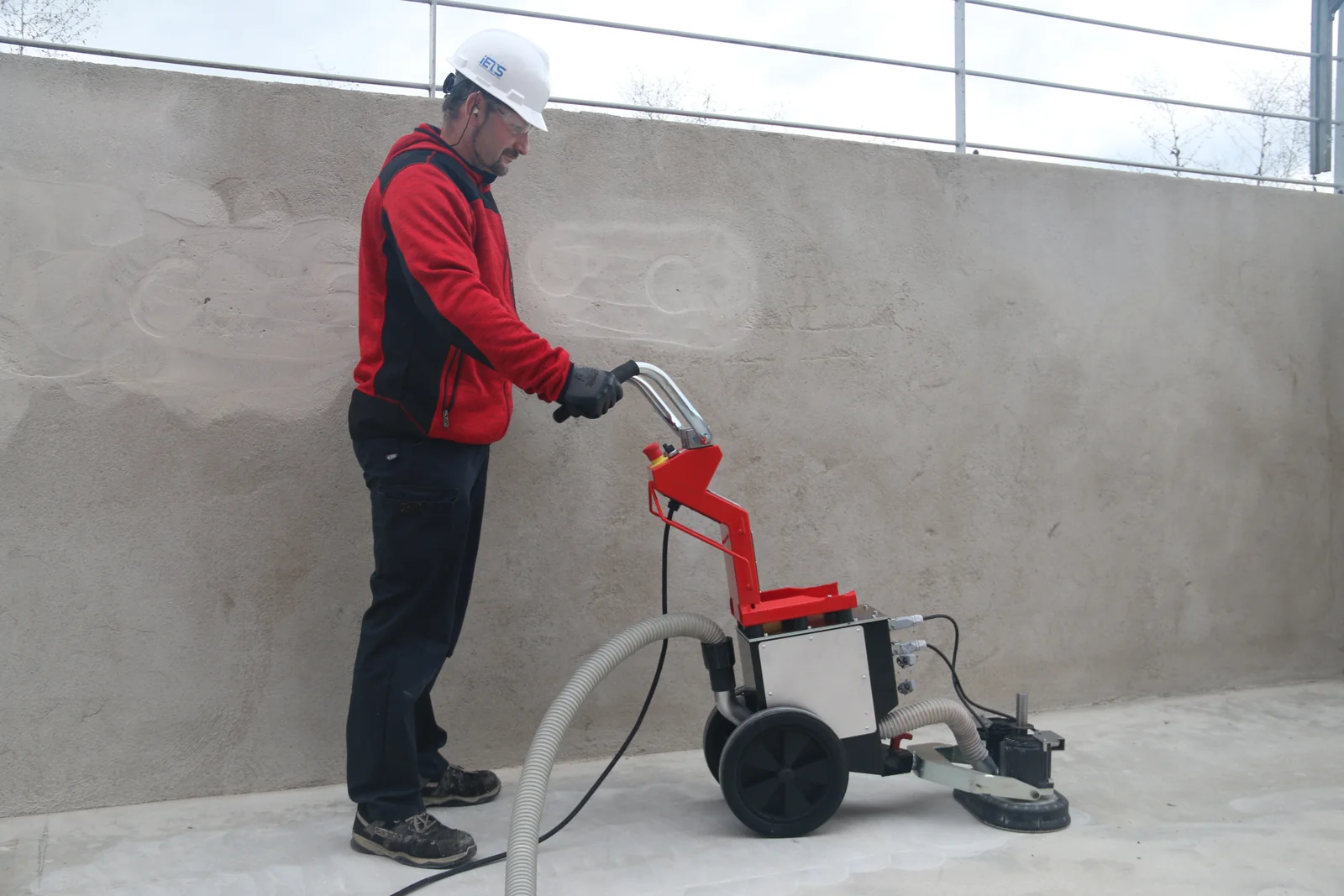
The most common and effective method. The grinder connects to a class H vacuum via a hose. Dust is captured at source before dispersing into the ambient air.
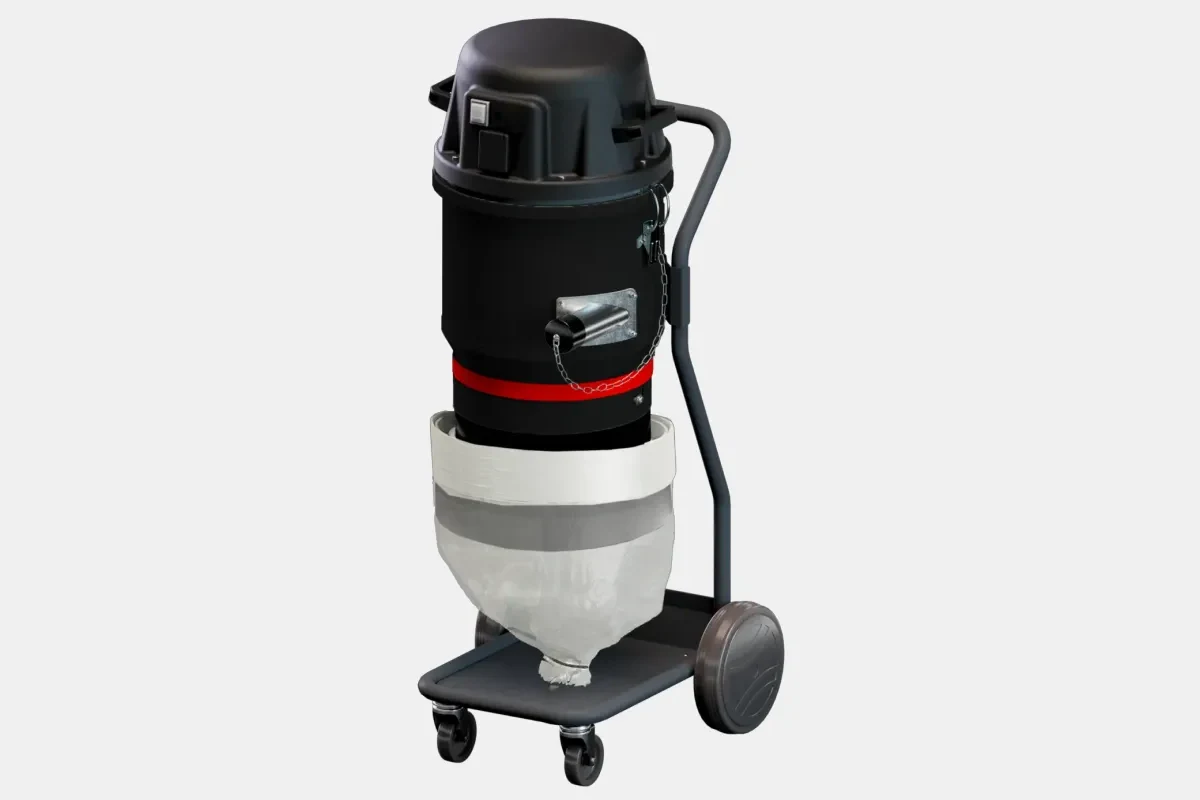
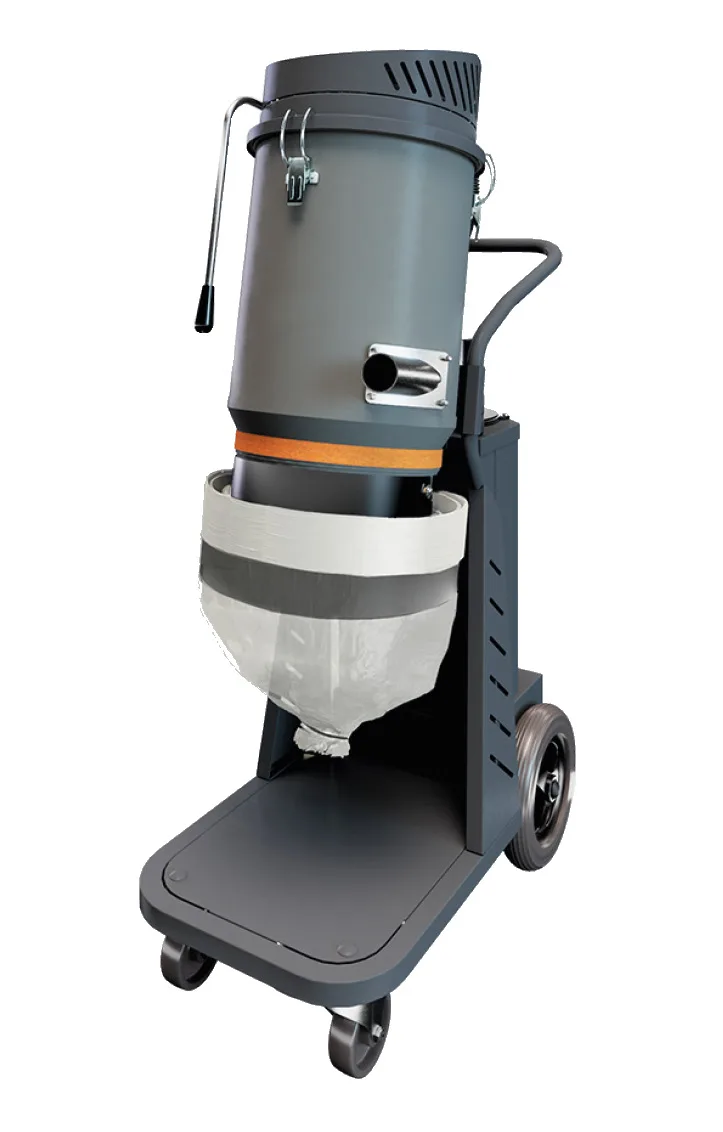
The Sept Tools IU33 Longopac is a class H vacuum with continuous Longopac bagging. The operator never touches the dust: tie the bag, cut it, unroll a new one. Zero contact, zero exposure.
2. Wet grinding
Water grinding pins dust to the ground as slurry. This method greatly reduces airborne dust but generates liquid waste to collect and treat. It is incompatible with some surfaces (plaster, coating, parquet).
3. Source capture (hood, extraction ring)
Some grinders integrate an extraction ring around the plate that channels dust-laden air towards the hose. Effectiveness depends on the seal between the ring and the surface.
Economic impact: the cost of non-compliance
Non-compliance exposes employers to:
- Site shutdown: immediate inspector decision
- Criminal penalties: fines of EUR 10,000 to 30,000 per exposed worker
- Premium increase: higher workers’ compensation rates
- Compensation claims: damages to workers diagnosed with silicosis
By contrast, a grinding system with class H extraction costs a few thousand euros, recoverable over 3 to 5 years.
The Sept Tools solution
Sept Tools offers an integrated system compliant with regulations:
- Brushless grinders: compatible with source extraction, 60 dB noise level
- IU33 Longopac: class H vacuum with continuous bagging, zero dust contact
- IU40: compact HEPA H14 compatible vacuum for mobile sites
Configure your system in a few clicks in our configurator. Select your application, surface, and the configurator suggests the complete set with the right extraction.
Request a quote for your extraction system.
Sept Tools Configurator
Find your ideal set in 2 minutes
Guided questionnaire: grinder, vacuum and anti-fatigue accessories matched to your jobsite.
Free guide: 5 mistakes that shorten the life of your grinder
12 pages of practical tips for your job sites.
Frequently asked questions
What is the OEL for crystalline silica?
Is class H extraction mandatory for concrete grinding?
What are the penalties for non-compliance?
Does wet grinding exempt from extraction?
How does Sept Tools help meet regulations?
Find your ideal set
Configure your machine + ergonomics + vacuum combination in a few clicks.