British hospital site: asbestos textured coating removal, 1,000 m² in 4 weeks
A public hospital site in northern England, patients present, a tight schedule. The Sept Tools captive grinding solution removed over 1,000 m² of asbestos-containing textured coating in 4 productive weeks, with air monitoring results validated by an independent UKAS-accredited laboratory.
Project steps
- 01 / 05
The context
A British public hospital with patients on site, over 1,000 m² of Artex textured asbestos coating to remove within 6 weeks. The gel method was assessed as too slow and too costly at this volume.
- 02 / 05
The chosen method
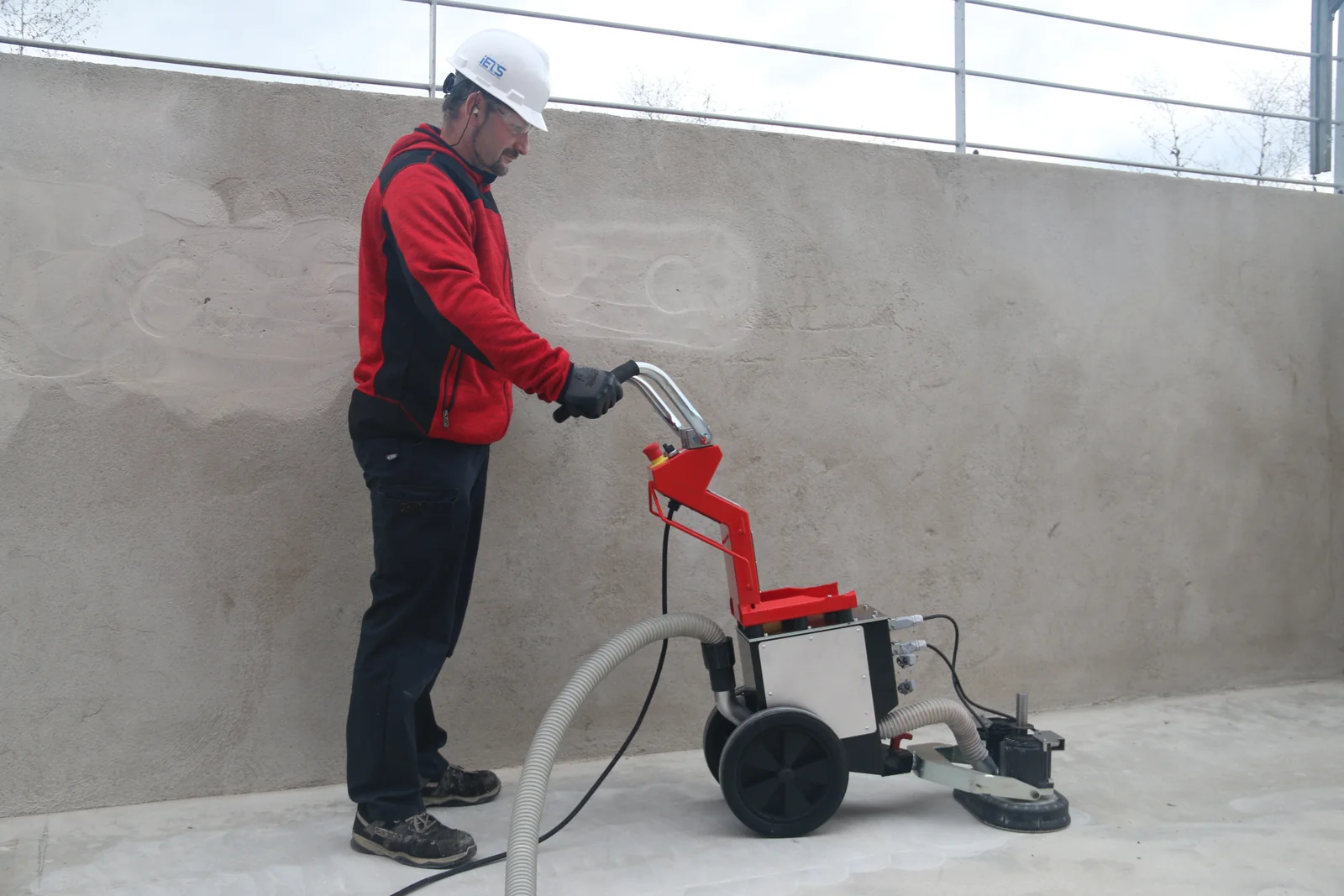
On-site demonstration by SMH Products Ltd. Sept Tools captive grinding system paired with a class H vacuum and HEPA H13 filter. Source extraction, fibres contained inside the vacuum, no dispersion into ambient air.
- 03 / 05
Deployment on site
1,600 W constant-torque brushless motor, 60 dB at the operator station (compatible with an occupied site), 0.35 m/s² hand-arm vibration, IP65 sealing. Throughput 3 to 4 times higher than the gel method.
- 04 / 05
Site figures
Over 1,000 m² treated, 4 productive weeks out of 6 planned, zero downtime due to equipment failure, zero exceedance of the UK regulatory asbestos threshold.
- 05 / 05
Independent validation
British UKAS-accredited laboratory 2544, HSG248 protocol. Personal exposure 0.02 f/ml, 5 times below the 0.1 f/ml regulatory limit. Near source below the laboratory's 0.010 f/ml limit of quantification.
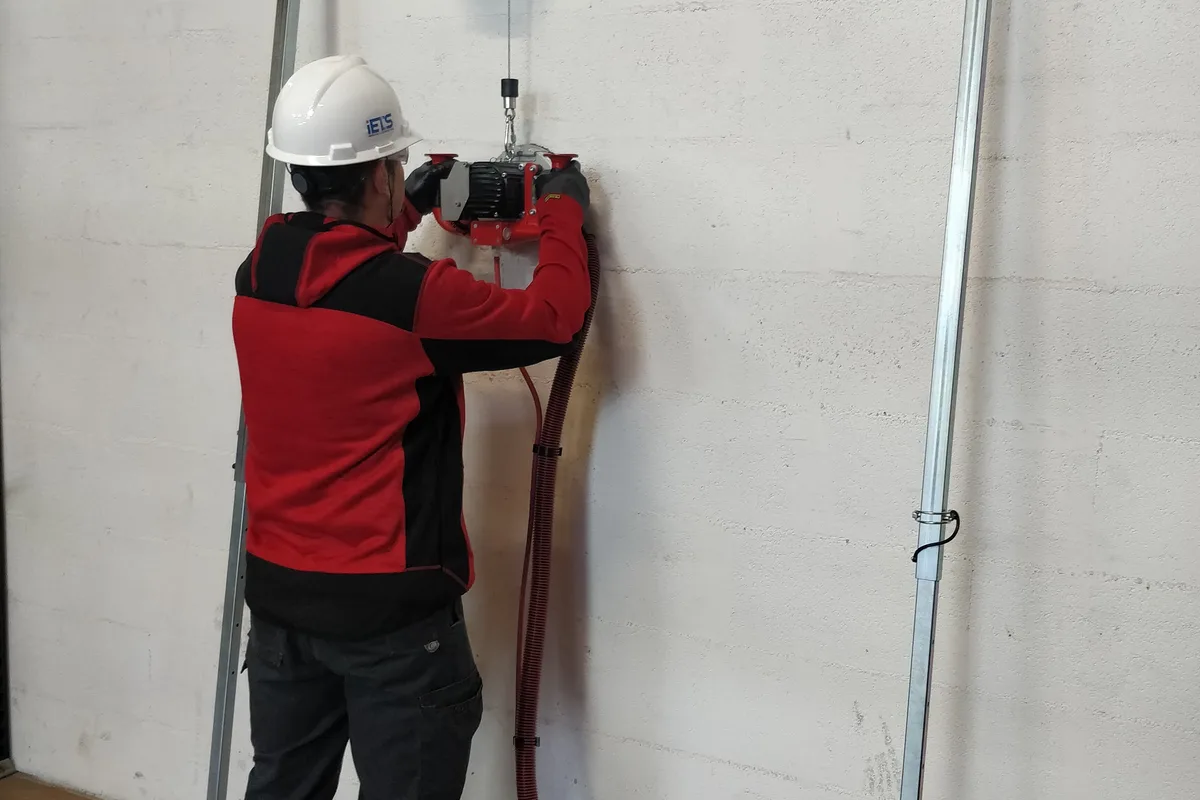
The context: a public hospital site in active use
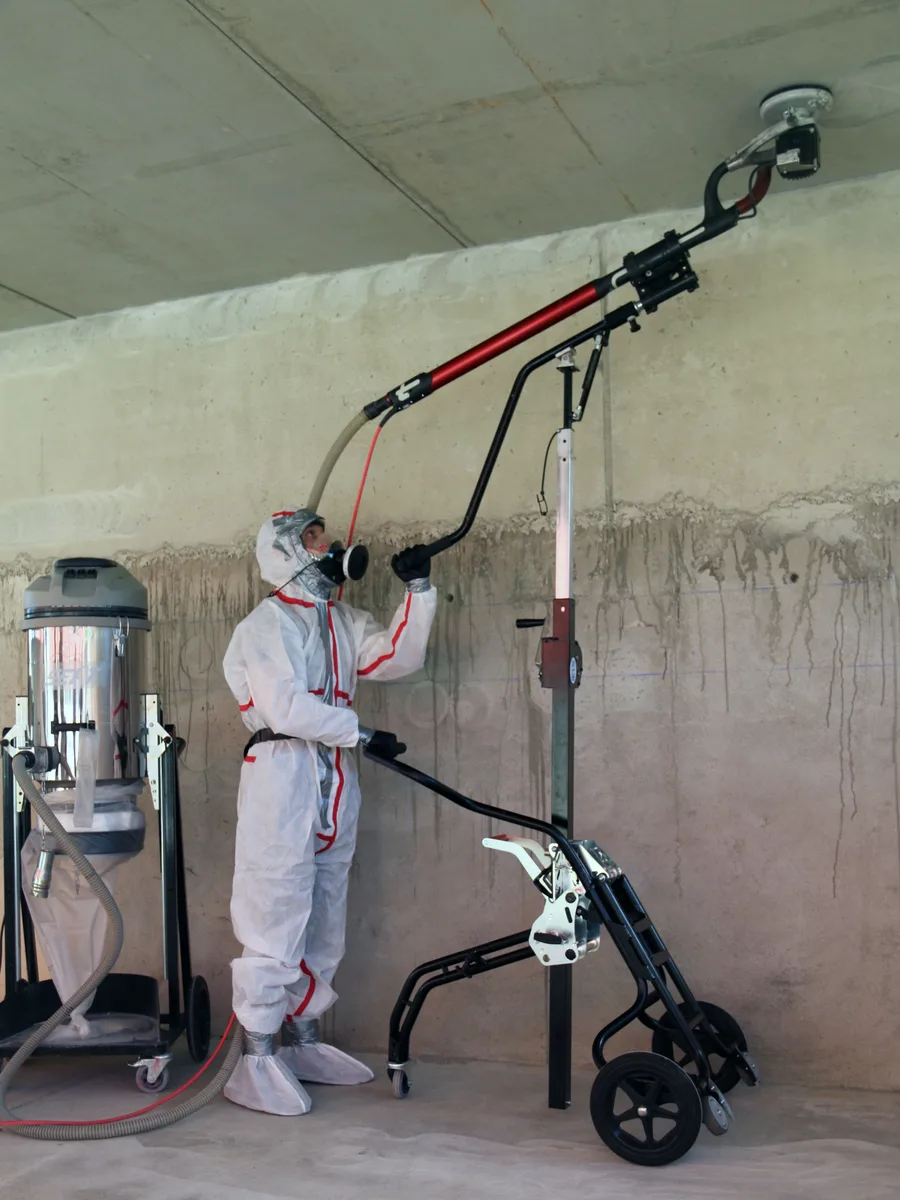
The project took place at a public hospital in northern England. The works involved accommodation wings where patients remained present throughout the operations. The overall project window was 6 weeks.
The core challenge: ceilings and walls covered with Artex-type textured coating containing asbestos, across a total surface area exceeding 1,000 m². The asbestos removal contractor had initially evaluated the gel method (applying a fixative gel followed by manual scraping), but the volume made this approach too slow and too costly. The number of passes required, gel consumption, and management of liquid waste classified as DHA significantly inflated the projected budget.
The contractor therefore sought a faster alternative compatible with the constraints of an occupied site: reduced noise levels, controlled fibre emissions, and sufficient work rate to meet the programme.
The chosen solution: Sept Tools grinding system with dedicated extraction
An on-site demonstration was arranged by SMH Products Ltd, the exclusive Sept Tools distributor in the United Kingdom. The objective was to validate under real conditions that the captive grinding system could handle the asbestos textured coating within the hospital site constraints.
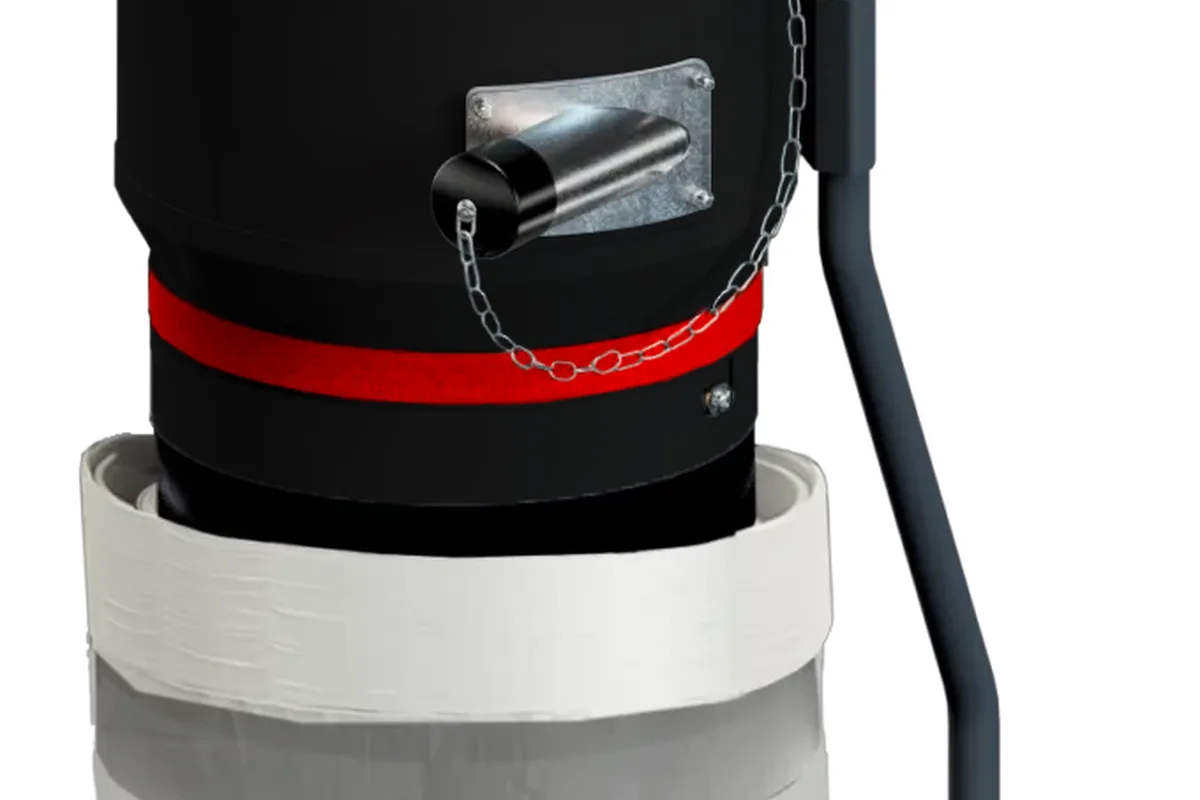
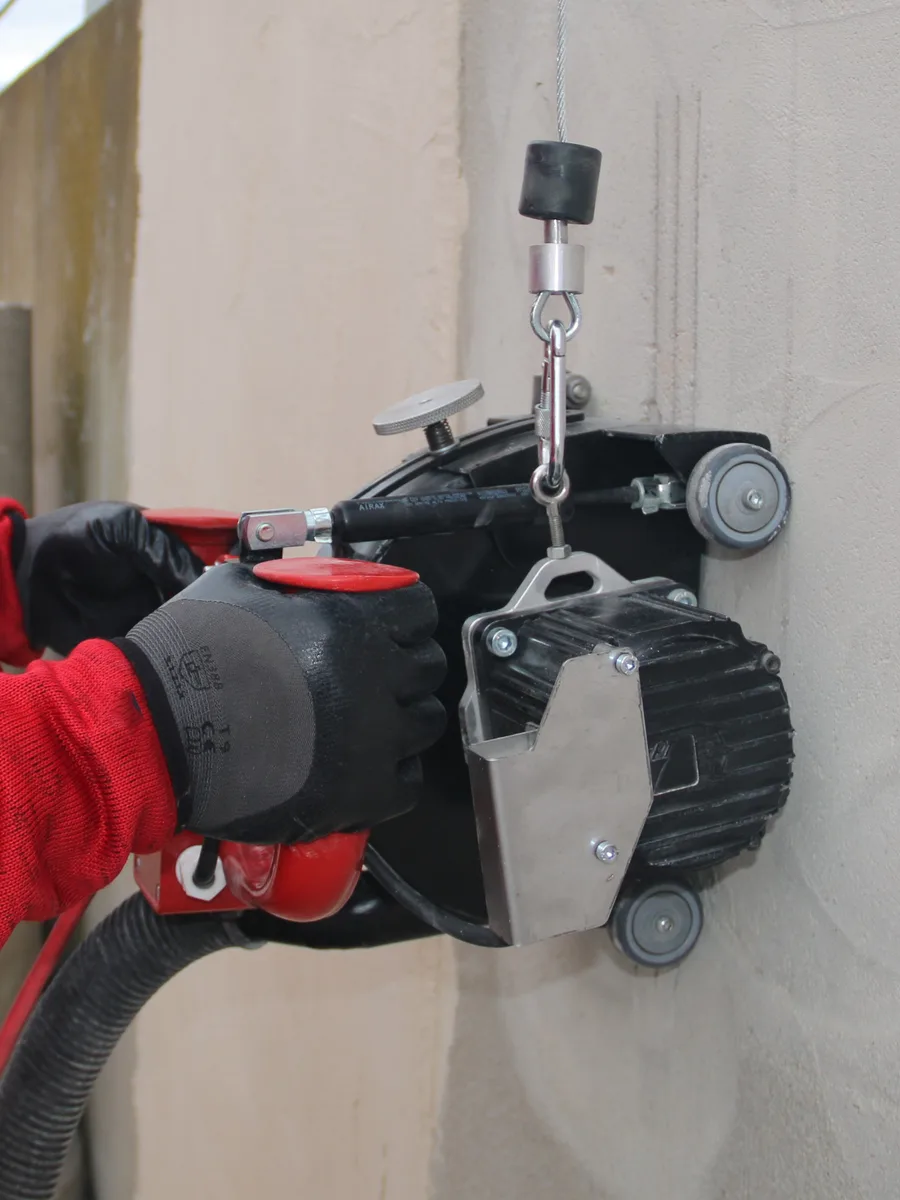
The equipment is built around a brushless motor delivering 1,600 W of constant torque, paired with a class H vacuum fitted with a HEPA H13 filter. The system operates on captive extraction: fibres are vacuumed directly at the point of contact between the diamond pad and the substrate, preventing dispersion into the ambient air.
Key technical specifications of the system: 60 dB at the operator position (suitable for an occupied site with patients), 0.35 m/s² hand-arm vibration (well below the 2.5 m/s² regulatory threshold), IP65 sealing, and a motor lifespan exceeding 13 times that of an equivalent brushed motor.
Operators noted the equipment's manoeuvrability, with smooth directional control and the ability to adjust pressure and working angle during operation. On a hospital site where precision and discretion are essential, these characteristics made the difference.
Site figures
The operations director's assessment
The operations director of the British demolition and asbestos removal contractor who led this project reported that the Sept Tools grinding solution produced a noticeably superior finish compared to their previous experience with the gel approach. He highlighted that the process was faster to carry out, that consumable usage was significantly reduced, and that overall cost-effectiveness was substantially better. According to him, the difference in finish quality was visible to the naked eye, and the team adopted the method without hesitation after the demonstration phase.
Feedback gathered in October 2025, on a British hospital site.
Independent validation by a UKAS-accredited laboratory
Airborne fibre concentration measurements were carried out by an independent British laboratory holding UKAS accreditation number 2544. The protocol followed was HSG248, the official Health and Safety Executive (HSE) method for asbestos air monitoring in the United Kingdom.
Three measurement points were deployed during the operations:
- Personal (on the operator): 0.02 f/ml. The UK regulatory threshold is 0.1 f/ml, placing this result 5 times below the permitted limit.
- Near source (beside the equipment): below 0.010 f/ml, under the laboratory's limit of quantification (LOQ). This is the strongest signal: fibre concentration next to the machine was too low to measure.
- Field blank (quality control witness): compliant. This sample ensures the results are not skewed by contamination of the measuring equipment.
Laboratory conclusion: air test results satisfactory. This verdict confirms that the Sept Tools captive grinding system, used under real conditions on a hospital site, maintains fibre concentrations well below regulatory thresholds.
Why captive grinding rather than the gel method
Traditional gel method
- Apply fixative gel before manual scraping
- Throughput 3 to 4 times lower than captive grinding
- Costly gel consumables (significant budget impact on 1,000+ m²)
- Liquid waste classified as DHA (specific handling and disposal)
- High hand-arm vibration from manual scraping tools
Sept Tools captive grinding
- Source-capture extraction, fibres confined in class H vacuum
- Dry confined waste, no DHA liquid management
- 0.35 m/s² vibration, well below the 2.5 m/s² threshold
- 3 to 4 times greater throughput
- No gel consumable, reduced operating cost
Distributed by our exclusive UK partner: SMH Products Ltd
SMH Products Ltd is the exclusive distributor of the Sept Tools range in the British market. SMH Products Ltd provides on-site technical demonstrations, operator training for the captive grinding system, and first-line after-sales support for UK clients.
It was SMH Products Ltd that arranged the initial demonstration on the hospital site, enabling the asbestos removal contractor to validate the method before committing to the full project.
Frequently asked questions about asbestos removal with captive grinding
What types of asbestos-containing coatings can be removed with Sept Tools captive grinding?
Textured coatings such as Artex, spray-applied renders, and asbestos-containing tile adhesives. The matched diamond pad attacks each substrate without dispersion, while the class H HEPA H13 extraction captures fibres directly at the point of contact.
Is the captive grinding method compliant with the Control of Asbestos Regulations 2012?
The method meets CAR 2012 requirements when carried out by a trained operator using the complete system (grinder + class H vacuum). HSG248 monitoring results from the hospital site confirm fibre concentrations below the 0.1 f/ml regulatory threshold.
What is the laboratory's limit of quantification and why does it matter?
The UKAS laboratory's LOQ (limit of quantification) is 0.010 f/ml. The near source result was below this value, meaning fibre concentration immediately beside the equipment was too low to measure. This is the best possible outcome under real-world conditions.
How does captive grinding compare to the gel method in terms of cost?
Captive grinding is faster (3 to 4 times greater throughput), eliminates the need for gel consumables, and produces dry confined waste rather than liquid waste classified as DHA. The operations director on the hospital site confirmed better overall cost-effectiveness.
Who distributes Sept Tools equipment in the United Kingdom?
SMH Products Ltd is the exclusive Sept Tools distributor for the British market. SMH provides on-site technical demonstrations, operator training, and first-line service support.
Planning an asbestos removal project?
Our team analyses your requirements and proposes the solution matched to your volume, substrate, and regulatory constraints.