How to choose a professional wall sander for construction
Complete buying guide for professional wall sanders: technical criteria, vibration levels, dust extraction, consumables and Sept Tools solutions compared.
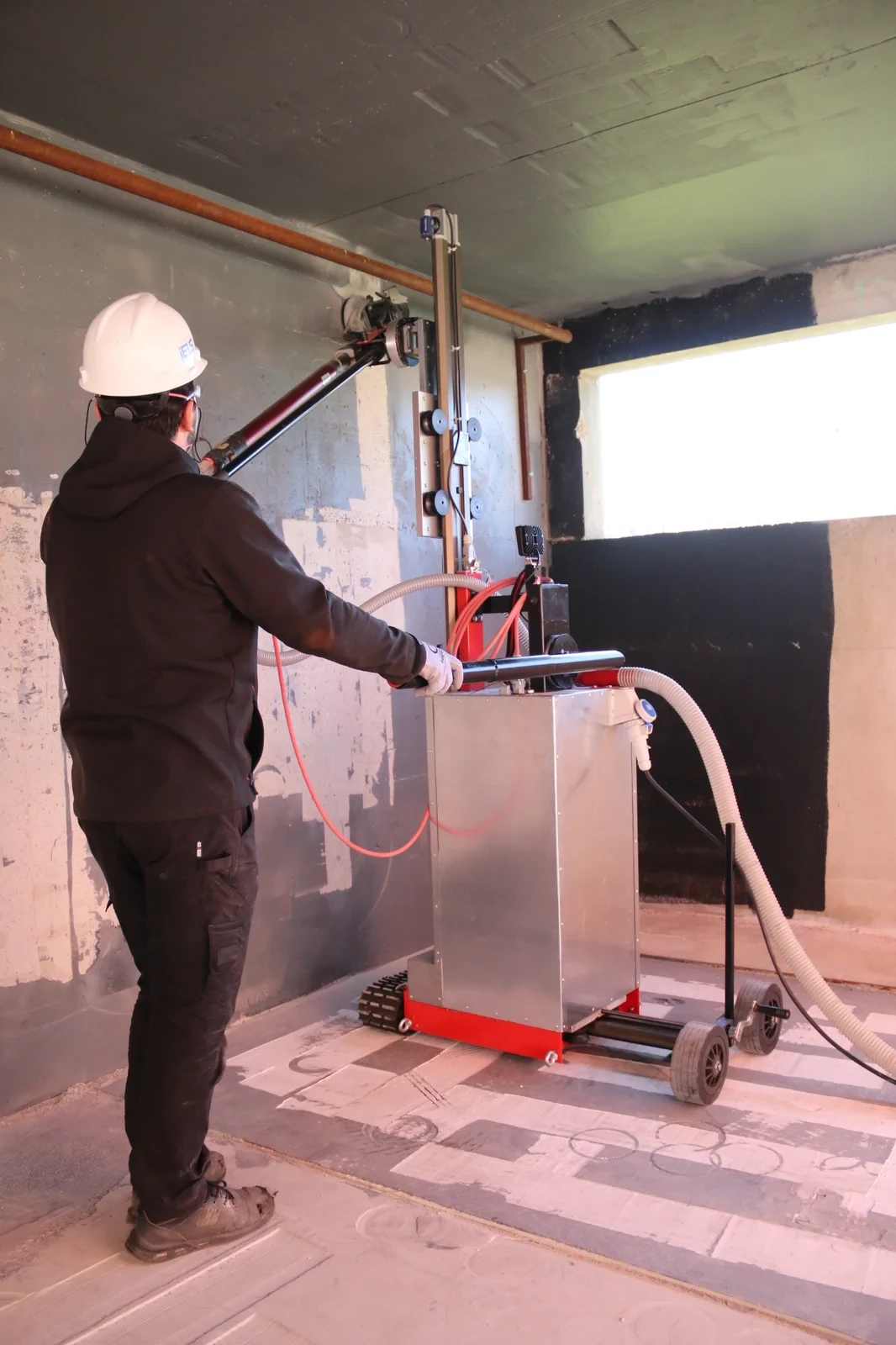
Wall sanding is one of the most common and demanding tasks in construction finishing. Plaster, concrete, coating, resin: each surface requires a different approach, and the choice of sander determines the finish quality, work speed and operator health.
This guide covers the essential criteria for choosing a professional wall sander suited to your job sites.
Technical criteria to evaluate
Power and motor type
Motor power determines the cutting capacity on hard surfaces. For construction, two technologies compete:
- Brushed motor: lower purchase price, but noisy (90+ dB), subject to brush wear and overheating. Typical lifespan: 300 to 500 hours.
- Brushless motor: quiet (60 dB at Sept Tools), zero motor maintenance, constant power output. Lifespan: 3,000 to 5,000 hours.
The price difference is recouped within the first quarter on a professional job site.
Vibrations and Directive 2002/44/EC
European Directive 2002/44/EC sets hand-arm vibration exposure limits:
- Action value: 2.5 m/s²
- Exposure limit value: 5 m/s²
Sept Tools sanders deliver just 0.35 m/s², 7 times below the action threshold. This is a decisive criterion for regulatory compliance and musculoskeletal disorder prevention.
Plate diameter and consumable compatibility
The standard diameter for wall sanders is 165 mm. This format offers the best balance between contact area, manoeuvrability and consumable availability.
Ensure your sander accepts a quick-change system (Velcro or clip) to swap grits in seconds on site.
Weight and ergonomics
An operator carries the sander 6 to 8 hours a day. Every kilogram matters. Sept Tools wall sanders weigh between 4 and 6 kg, but ergonomics goes beyond machine weight: anti-fatigue solutions (balancer, frame, exoskeleton) transfer tool weight to a mechanical support.
IP rating and site conditions
Sanding generates fine dust in quantity. An IP65 rating ensures the motor and electronics withstand dust and water splashes. Without this protection, real-world machine lifespan drops drastically.
Dust extraction: class H mandatory
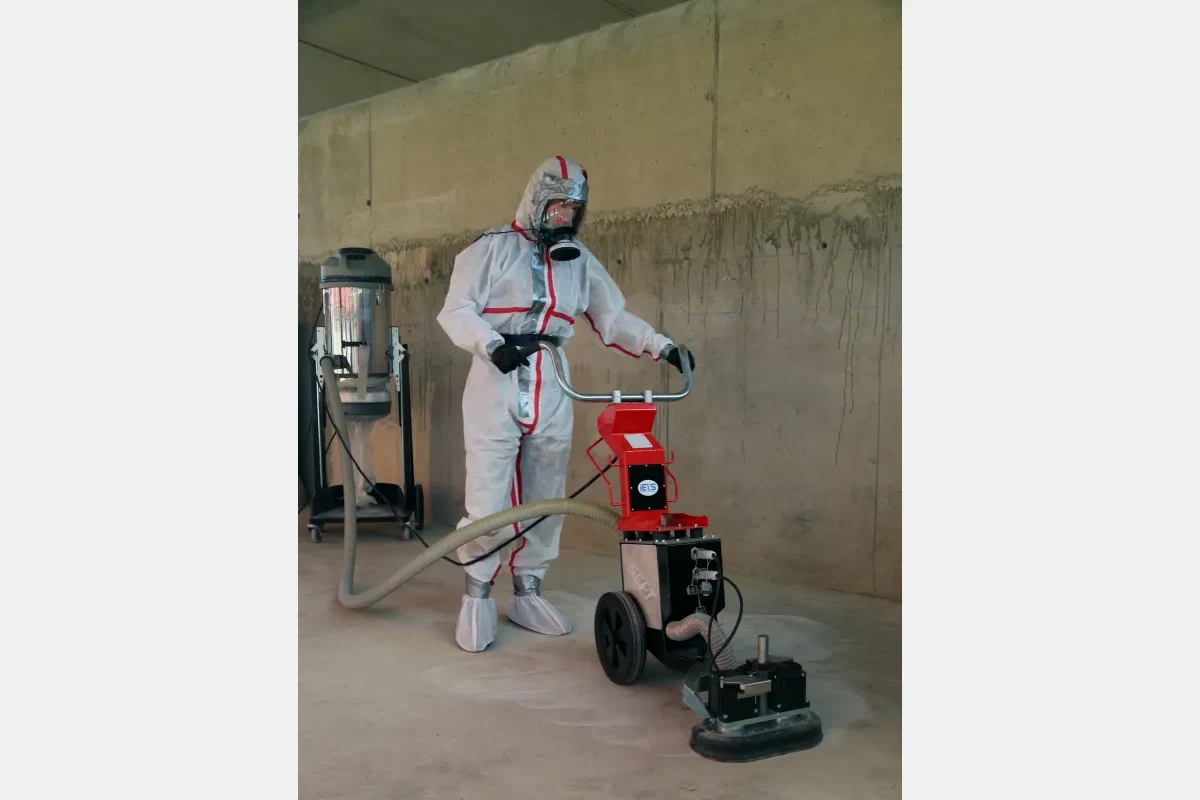
Under updated crystalline silica regulations, class H extraction is mandatory for concrete and plaster sanding. The extraction system must match the sander’s airflow.
The Sept Tools IU33 Longopac uses a continuous bagging system: dust drops into an endless plastic bag that the operator ties and cuts when full. Zero contact with silica dust.
Evaluating total cost of ownership
Purchase price represents only 15 to 20% of total cost of ownership. The real cost drivers are:
- Consumables (diamond plates, abrasives)
- Maintenance (brush replacement, repairs)
- Machine downtime
- Health costs (musculoskeletal disorders, occupational disease)
Investing in a low-vibration brushless sander reduces every one of these items.
Sept Tools wall sanding solutions
Sept Tools offers a complete system:
- Petit Potam XM165: brushless wall sander 165 mm, 0.35 m/s² vibration
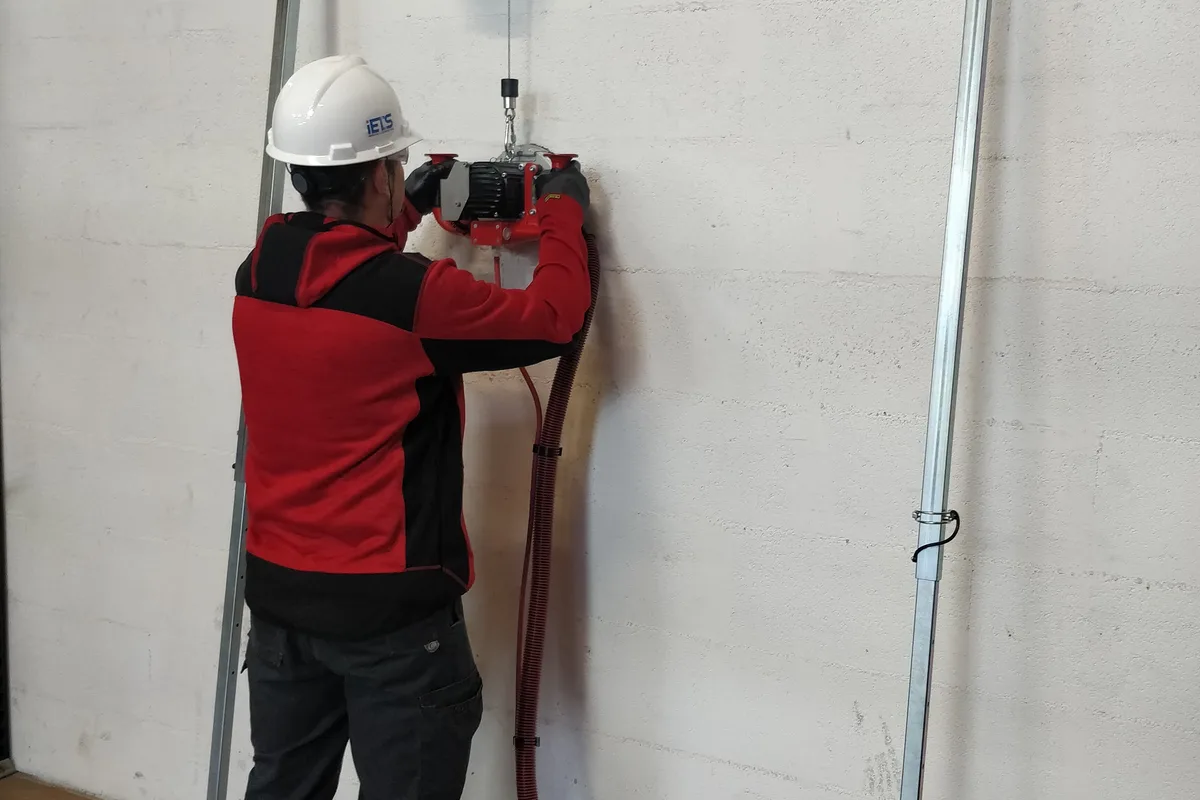
- Eland balancer: supports the machine weight, operator guides the movement
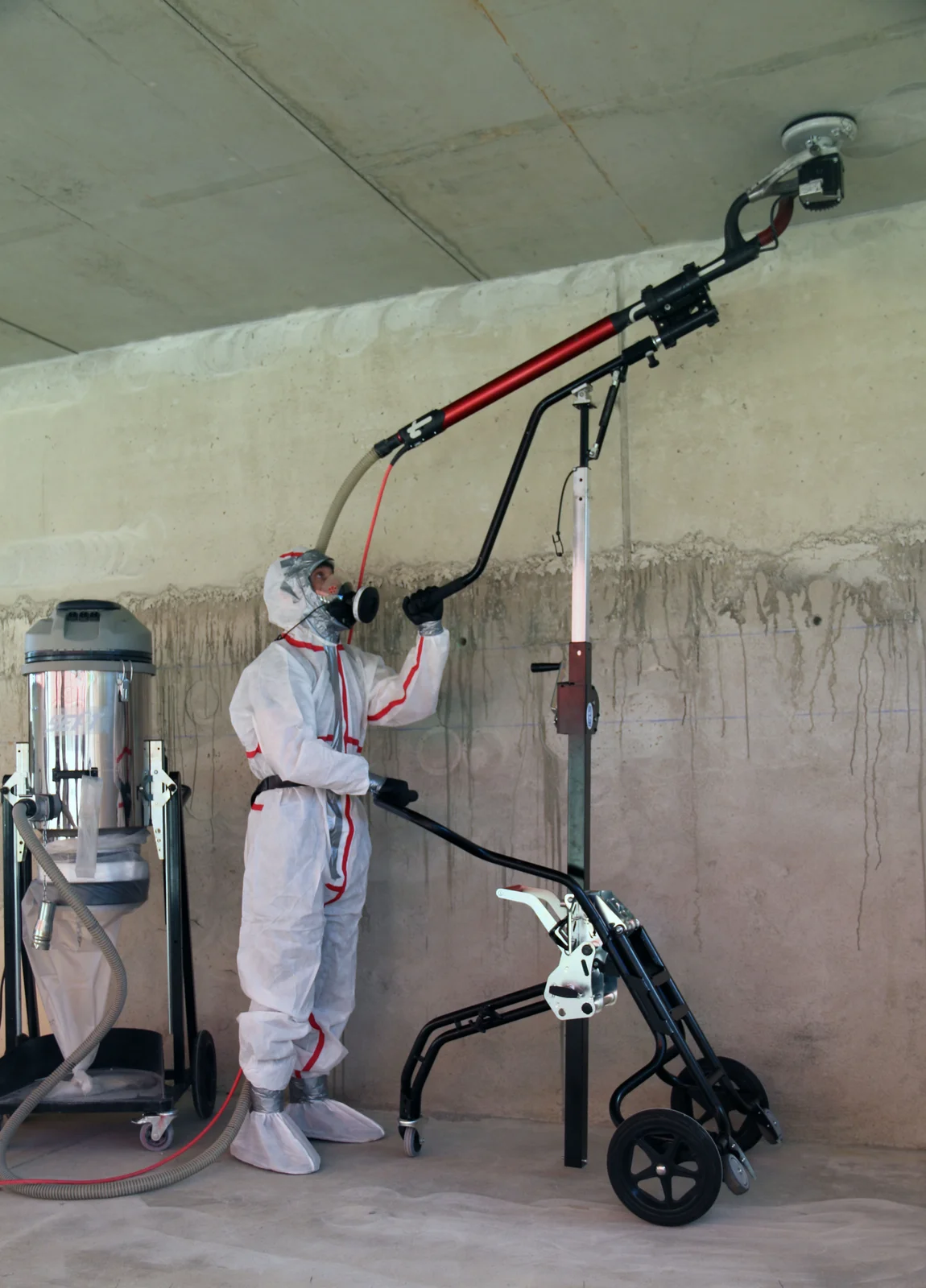
- Mygale frame: articulated arm fixed to the wall, completely frees the operator’s arms
- Scourpio exoskeleton: wearable solution for areas without anchor points
Each solution is configurable in our online configurator based on your application, surface and site constraints.
Calculate the real 5-year cost of your fleet
Purchase price says nothing about the real cost of a construction tool. Enter your fleet size, your usage hours and your team hourly cost : the calculator returns the cumulative 5-year gap in seconds.
Conclusion
Choosing a professional wall sander comes down to five criteria: brushless power, vibrations below the 2002/44/EC threshold, 165 mm plate, IP65 protection and class H extraction. Evaluate total cost of ownership, not just the purchase price.
Configure your wall sanding system in 2 minutes or request a custom quote.
Sept Tools Configurator
Find your ideal set in 2 minutes
Guided questionnaire: grinder, vacuum and anti-fatigue accessories matched to your jobsite.
Free guide: 5 mistakes that shorten the life of your sander
12 pages of practical tips for your job sites.
Frequently asked questions
What minimum power for a professional wall sander?
Do I need an anti-fatigue system for wall sanding?
What diamond plate for sanding a concrete wall?
What dust extraction should I use with a wall sander?
Find your ideal set
Configure your machine + ergonomics + vacuum combination in a few clicks.