How to choose a ceiling grinder
Complete guide to choosing the right ceiling grinder for your jobsite: technical criteria, ergonomics, dust extraction, motor technology (brushed vs brushless) and anti-fatigue solutions.
vs 88 to 92 dB on a brushed machine
Far below the 2.5 m/s² action threshold
Sealed against dust and water spray
vs an equivalent brushed motor
Ceiling grinding remains the most physically demanding operation in interior finishing. Arms extended overhead, weight loaded onto the shoulders, vibration transmitted directly to the trunk, exposure to crystalline silica: every musculoskeletal risk factor is present. Choosing the right ceiling grinder can divide physical fatigue by five and extend the service life of the machine. The criteria below cover the technical, ergonomic and economic dimensions worth examining before purchase.
Why ceiling grinding is a specific challenge
A floor grinder works under downward pressure: the weight of the machine provides the contact force. On a ceiling, the operator pushes the machine upward continuously, sometimes for several hours in a row. Every kilogram of the machine is multiplied by working time and height.
Three biomechanical constraints add up:
- static effort in the shoulders and neck,
- hand-arm vibration transmitted through the handles,
- exposure to dust from concrete, plaster or paint that falls directly on the operator’s face.
The result: a skilled operator reaches their physiological limit in less than 90 minutes on a typical plastering jobsite, compared to 6 or 7 hours on a floor.
Technical selection criteria
Useful power and constant torque
The wattage shown on the data plate is not enough. A brushless grinder maintains its nominal torque across the full speed range, while a brushed motor loses up to 30 % of torque under load. For ceiling grinding, target a useful power of at least 750 W with constant torque between 1,500 and 6,500 rpm.
Weight and balance
Gross weight matters less than the centre of gravity. A well-balanced 4.2 kg grinder is easier to handle than a 3.8 kg machine with an offset motor. Sept Tools designs its brushless grinders with an axial motor block that aligns the centre of gravity with the disc axis, eliminating parasitic wrist torque.
Hand-arm vibration
Standard EN ISO 5349 sets the daily exposure value at 2.5 m/s² (action) and 5 m/s² (limit). A brushed grinder regularly exceeds 7 m/s² at the handle. A well-designed brushless grinder stays under 0.4 m/s². At that level, cumulative exposure is no longer a risk factor. This is the most decisive gap between the two technologies.
Disc diameter
The 165 mm size is now the professional standard for ceiling grinding. It offers the best compromise between feed rate and manoeuvrability in corners. The 125 mm is reserved for finishing and touch-ups; the 250 mm for large flat floor areas.
Motor technology: brushed or brushless?
This is where the largest gap exists between a standard ceiling grinder and a next-generation one. Brushed ceiling grinders are still the market norm; brushless ceiling grinders remain rare, with Sept Tools being one of the very few manufacturers offering a fully brushless ceiling grinder. Here is what that choice actually changes on a jobsite.
| Criterion | Brushed motor | Brushless motor |
|---|---|---|
| Useful service life | 800 to 1,400 hours | 20,000 hours |
| Typical noise level | 88 to 92 dB(A) | 60 dB(A) |
| Vibration at handle | 5 to 9 m/s² | 0.2 to 0.4 m/s² |
| Motor maintenance | Brush change every 80 h | None |
| Energy efficiency | 65 to 75 % | 92 to 96 % |
| Torque under load | 25 to 30 % drop | Constant |
Over a full 5-year usage cycle, a brushless machine has a lower total cost of ownership despite a higher purchase price. The difference comes from avoided maintenance, jobsite availability and reduced lost time from MSDs.
The grinding cart: transferring the load
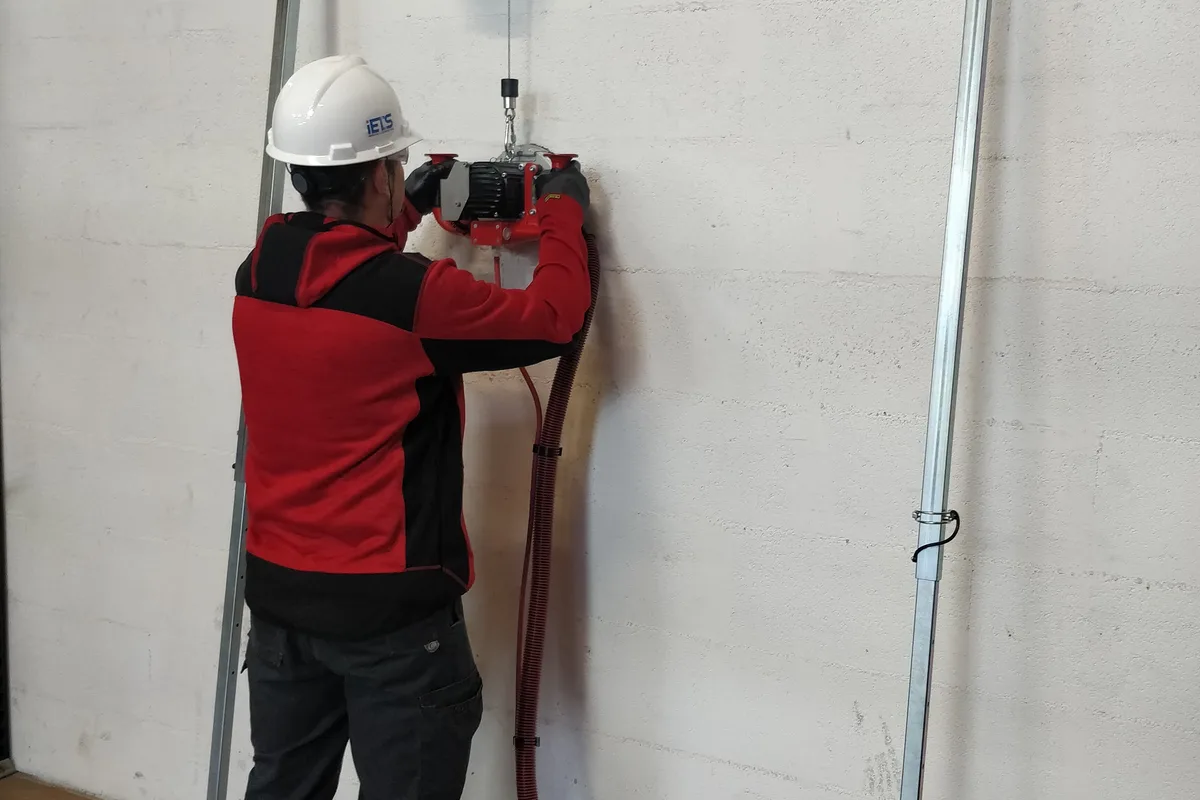
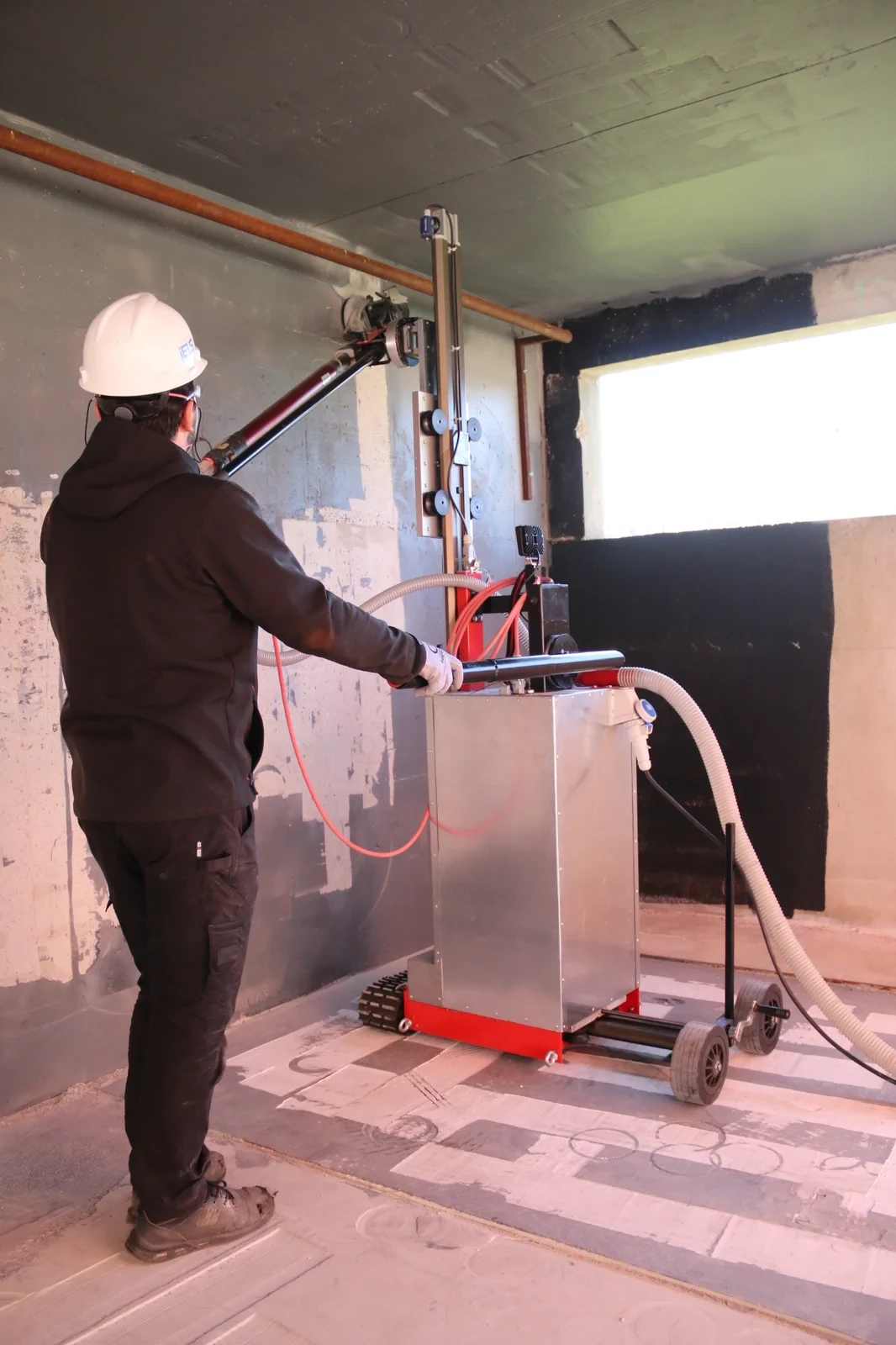
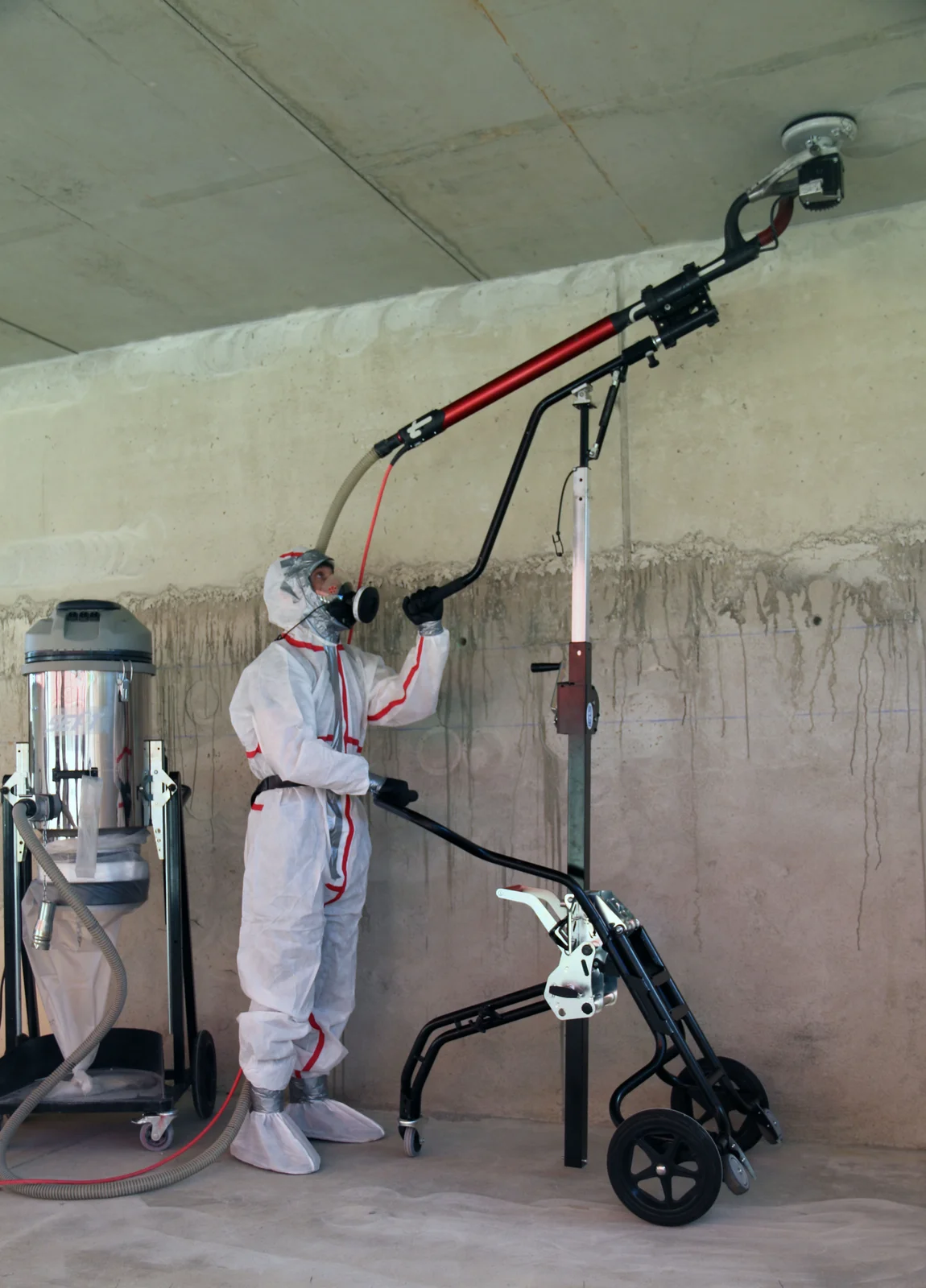
A high-performance ceiling grinder is not enough if the operator still has to carry it overhead. The cart holds the machine and brings it against the ceiling, the operator only has to guide it. Sept Tools offers two configurations designed for ceiling grinding:
Gazelle Premium: integrated vacuum
The Gazelle Premium is a ceiling grinding cart with an integrated support that holds the vacuum directly on the cart. The combination forms a compact, self-contained workstation, ideal when working space is restricted and you want to avoid running a hose along the floor.
Eland Grinding Arm: vacuum on the side
The Eland Grinding Arm is a cart equipped with a grinding arm module for the Fouine or Fouinette grinder. The vacuum stays on the floor next to it, connected by hose. Ideal configuration for large surfaces and jobsites where the workstation is moved frequently without having to recable everything.
For more information, see our anti-fatigue construction equipment page.
Vacuum compatibility: the forgotten criterion
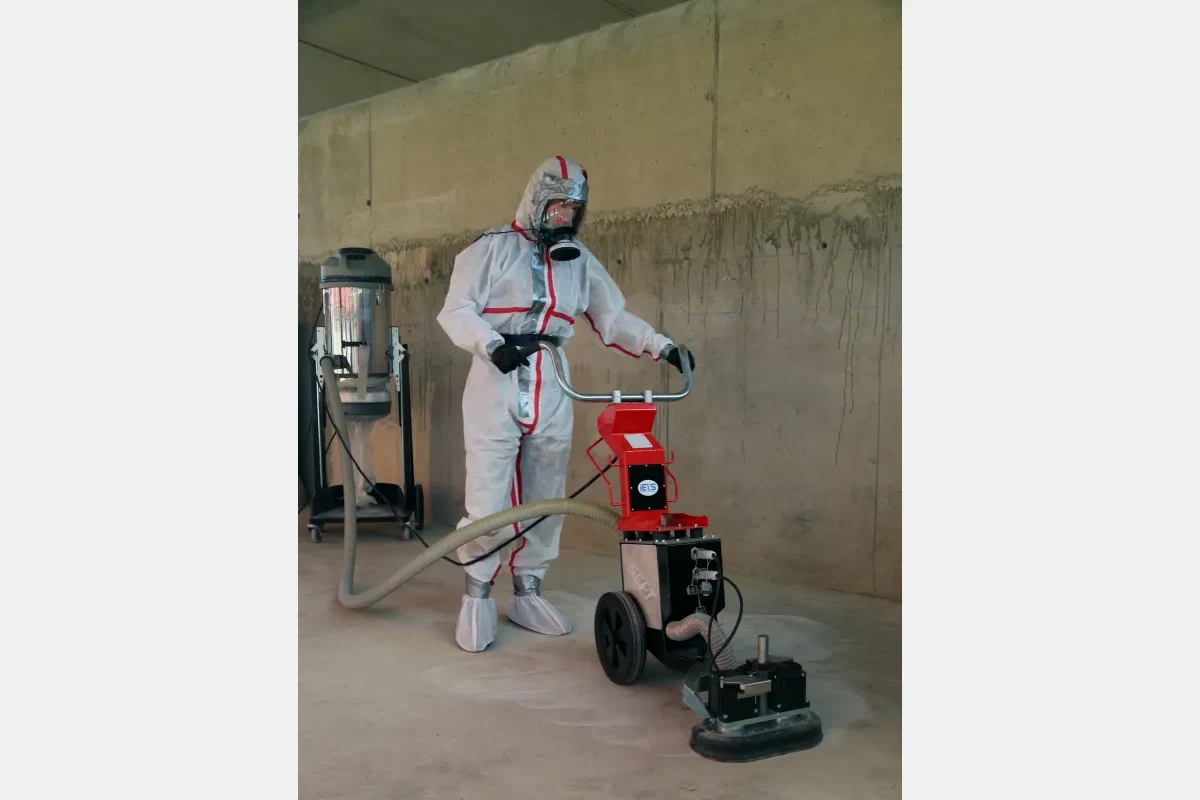
A ceiling grinder must always be connected to a class M or class H vacuum, depending on the dust type. Without extraction, two problems appear:
- dust falls continuously on the operator (crystalline silica, plaster, paint fibres),
- the disc clogs within minutes and loses 40 % of its cutting efficiency.
Which vacuum for which material?
- Plaster, coating, standard paint: class M vacuum, minimum 65 l/s.
- Concrete, mortar, crystalline silica: class H vacuum with automatic filter cleaning, minimum 70 l/s. The IU33 Longopac meets these requirements with a continuous bagging system that prevents any contact with dust during disposal.
- Asbestos removal, lead: certified class H vacuum with HEPA H14 compatibility and sealed bagging. The IU40, IU51 and IU81 comply with the strictest requirements depending on workload (compact, intermediate, large jobsite).
Sept Tools solutions for ceiling grinding
For a typical plastering jobsite, the winning combination is:
- Fouine XB165 ceiling grinder: 1600 W brushless motor, 165 mm disc, 3.9 kg, 0.35 m/s² vibration.
- Gazelle Premium cart (integrated vacuum) or Eland Grinding Arm cart (vacuum on the side) for load transfer.
- IU33 Longopac vacuum for class M/H extraction.
- Suitable diamond discs: PCD for stripping (paint, adhesives, resins, epoxy), segmented diamond discs grit 16 to 40 for grinding concrete and coatings.
This setup allows an operator to work a full day without exceeding any exposure threshold. It can be sized to your jobsite via our online configurator.
Calculate the real 5-year cost of your fleet
Purchase price says nothing about the real cost of a construction tool. Enter your fleet size, your usage hours and your team hourly cost : the calculator returns the cumulative 5-year gap in seconds.
Conclusion
Choosing a ceiling grinder is not a question of purchase price but of ecosystem. The three variables that really matter are transmitted vibration (under 0.5 m/s²), vacuum compatibility (class M minimum, H for silica) and the available anti-fatigue accessories. Brushless technology delivers a major step change in service life, noise and vibration, but remains rare on the ceiling grinder market. A machine alone does not solve the problem; an integrated system does.
Sept Tools is the only French manufacturer designing the entire chain (grinder, cart, vacuum and discs) around brushless technology. For precise sizing, contact our engineers or use the Sept Tools configurator.
Sept Tools Configurator
Find your ideal set in 2 minutes
Guided questionnaire: grinder, vacuum and anti-fatigue accessories matched to your jobsite.
What operators face on site
Sustained static effort
Arms extended overhead, weight loaded onto shoulders for hours, fatigue of the rotator cuff.
Gazelle or Eland cart: the machine no longer hangs in the operator's arms, the cart carries it and brings it to the ceiling.
Hand-arm vibration
A brushed grinder regularly exceeds 7 m/s² at the handle, above the 5 m/s² limit value.
Suspended brushless motor, manufacturer measurement under 0.4 m/s², cumulative exposure no longer significant.
Silica dust exposure
Concrete and plaster dust falls continuously on the operator's face.
Class H source capture with automatic filter cleaning and Longopac continuous bagging.
90 min physiological limit
A skilled operator saturates after 90 minutes on a typical plastering jobsite in manual mode.
Integrated grinder + cart + vacuum system: full day of work without exceeding any threshold.
Before / After Sept Tools
Traditional brushed grinder
- 88 to 92 dB(A) under prolonged use
- 5 to 9 m/s² hand-arm vibration
- Brush maintenance every 80 hours
- 25 to 30 % torque drop under load
- 800 to 1,400 hours useful service life
- 65 to 75 % energy efficiency
Sept Tools brushless
- 60 dB(A) constant, EN ISO compliant
- 0.2 to 0.4 m/s² measured at the handle
- Zero motor maintenance over 5 years
- Constant torque across the full speed range
- 20,000 hours of useful service life
- 92 to 96 % efficiency, jobsite energy savings
Equipment featured in this article
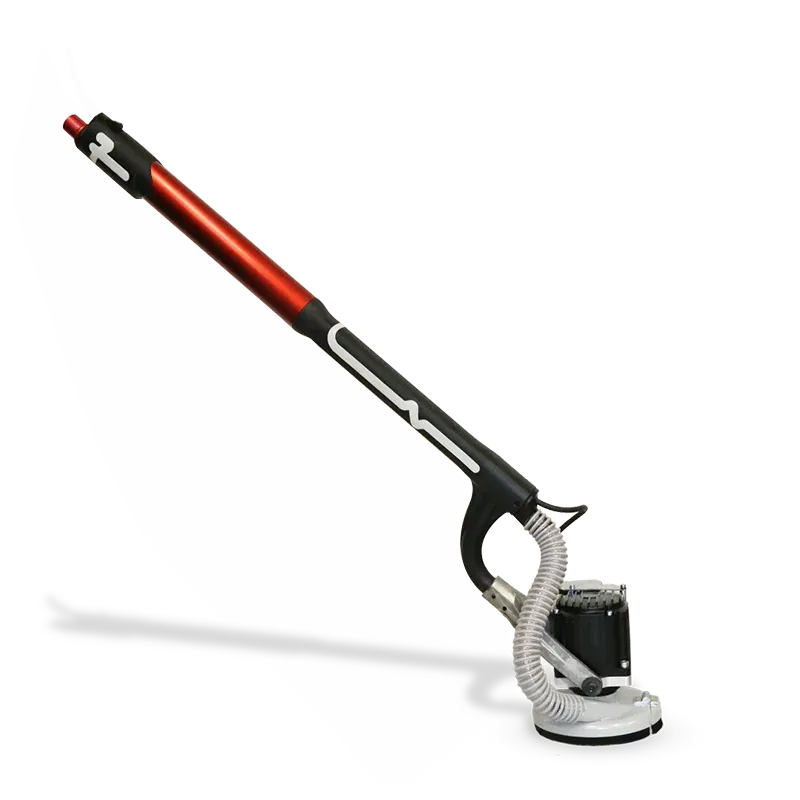
Fouine XB165
Brushless ceiling grinder 1600 W, 165 mm disc, 0.35 m/s² vibration
View product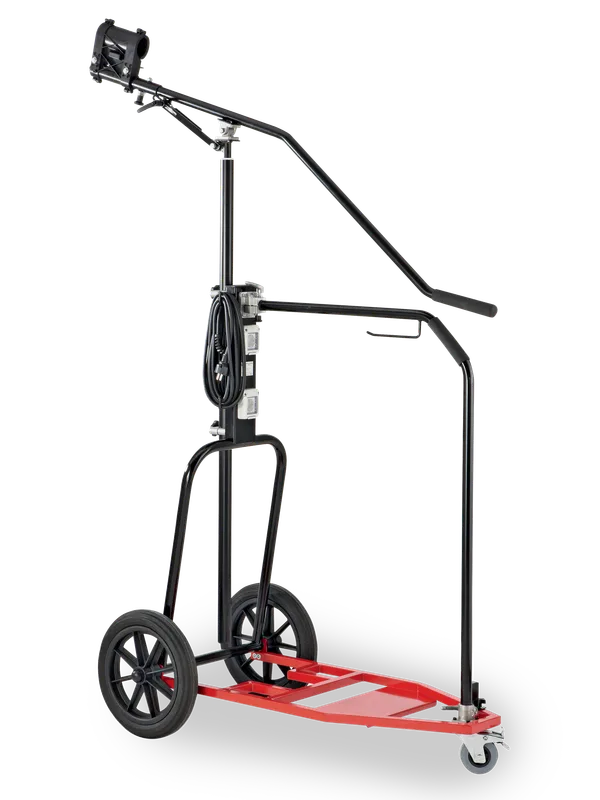
Gazelle Premium
Ceiling grinding cart with integrated vacuum support, compact and self-contained workstation
View product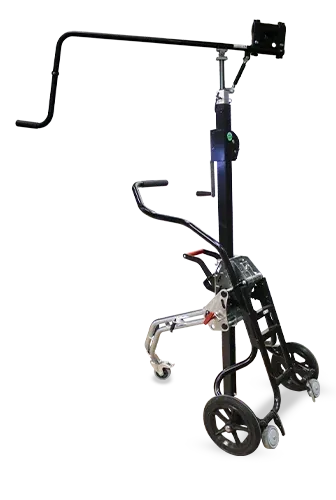
Eland Grinding Arm
Ceiling grinding cart for Fouine or Fouinette, vacuum kept on the side
View product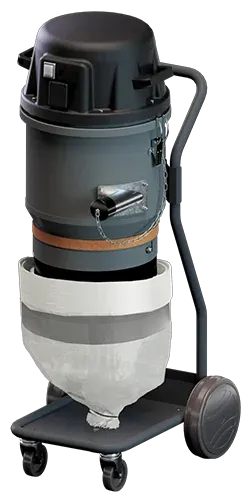
IU33 Longopac
Class M/H vacuum, continuous bagging, 70 l/s airflow
View productFree guide: 5 mistakes that shorten the life of your grinder
12 pages of practical tips for your job sites.
Frequently asked questions
What power is needed for a ceiling grinder?
Brushless or corded for ceiling work?
What is the difference between class L, M and H vacuums?
Can a ceiling be ground without a vacuum?
Which diamond disc should I choose for ceiling grinding?
Find your ideal set
Configure your machine + ergonomics + vacuum combination in a few clicks.