Total cost of ownership (TCO) for construction tools: why the purchase price is only 20%
TCO calculation for construction tools: depreciation, maintenance, site downtime costs. Why the purchase price accounts for only 20% of the real cost.
EUR 10,000 purchase plus EUR 400/year maintenance
Median 6-year saving vs brushed mid-range (EUR 850 unit)
1 Sept Tools equals 2.5 mid-range brushed grinders
With regular maintenance, 2-year minimum warranty
For a construction procurement manager, comparing two tools by catalogue price is like comparing two vehicles by purchase price alone, ignoring fuel consumption, servicing and resale value. The purchase price of a tool represents only 15 to 20% of what it actually costs over 5 years. The rest is maintenance, consumables, site downtime and early replacement.
What is tool TCO?
TCO (Total Cost of Ownership) is the sum of all costs associated with a tool, from purchase to disposal. In construction, this calculation includes five main cost categories.
1. Purchase price
This is the only figure most buyers compare. On an entry-level brushed motor tool, it is 30 to 50% lower than a brushless equivalent. This difference is real, but it represents only one-fifth of the total cost.
2. Motor maintenance
A brushed motor requires brush replacement every 80 to 150 hours of actual use. The unit cost is low (EUR 10 to 20 per pair) but the frequency is high: with 6 hours of daily use, brushes need changing every 3 to 5 weeks. Add periodic commutator resurfacing (every 3 to 4 sets of brushes) and the risk of brush short-circuit failure.
A brushless motor has no internal wear parts. The only components to monitor are the bearings, whose lifespan is measured in thousands of hours. The motor maintenance budget drops from EUR 300 to 600 per year to under EUR 50.
3. Motor-related consumables
This category does not cover abrasives (identical regardless of motor type) but motor-specific parts. Brushes, commutator springs, brush holders: these items simply do not exist on a brushless motor.
4. Site downtime costs
This is the most underestimated and often the heaviest cost category. When a tool breaks down on site, the consequences far exceed the repair cost.
Direct costs: idle labour (1 to 3 operators for 2 to 4 hours), emergency tool rental, workshop or supplier travel.
Indirect costs: delay to the overall schedule, potential contractual penalties, crew disruption, half-day productivity loss.
An unplanned stoppage costs an average of EUR 180 to 350 per hour depending on site size. A brushed motor generates 2 to 4 unplanned stoppages per quarter. A brushless motor generates 0 to 1 per year.
5. Early replacement
An intensively used brushed tool (more than 4 hours per day) reaches end of life in 18 to 24 months. The brushless equivalent lasts 5 to 8 years. The fleet renewal cost, annualised, is divided by 3 to 4.
6-year TCO simulation: brushless ceiling grinder vs brushed fleet
The model applies Pierre’s 2026 reference : 1 Sept Tools grinder vs an equivalent brushed fleet over 6 years. A brushed cycle lasts 3 months of effective jobsite work spread over roughly 4.5 calendar months, i.e. 16 cycles per brushed machine over the period. Productivity ratios are calibrated on 2023 to 2025 sites.
1 Sept Tools over 6 years
| Category | Cost |
|---|---|
| Purchase (excl. consumables) | EUR 10,000 |
| Maintenance EUR 400/year x 6 years | EUR 2,400 |
| Total 6 years | EUR 12,400 |
Manufacturer warranty 2 years minimum, technical lifespan 6 years with regular maintenance.
Equivalent brushed fleet by range
| Range | Median unit price | Productivity ratio | Machines renewed over 6 years | Brushed fleet cost 6 years | Sept Tools savings |
|---|---|---|---|---|---|
| Entry level | EUR 400 | 1:3 | 48 | EUR 19,200 | EUR 6,800 (35 %) |
| Mid range | EUR 850 | 1:2.5 | 40 | EUR 34,000 | EUR 21,600 (64 %) |
| High-end pro Hilti-class | EUR 2,300 | 1:1.4 | 22 | EUR 51,600 | EUR 39,120 (76 %) |
Median mid-range saving : EUR 21,600 over 6 years. Edge case : at EUR 200 (bottom of entry range), Sept Tools costs EUR 2,800 more over 6 years. The calculator displays this case without hiding it, but the defensible median remains EUR 400 on entry level.
Why construction buyers still think in purchase price
Three reasons explain the persistence of this bias.
Line-item budgets. Tools are purchased from an equipment budget, maintenance is charged to a workshop budget, site downtime is absorbed into overheads. Nobody consolidates the three lines.
No analytical tracking. Tool failures are rarely tracked with precision. The true cost of stoppages remains invisible in dashboards.
Distorted comparisons. Catalogues display purchase prices, not TCOs. The buyer compares what appears comparable, but is not in reality.
Brushless vs petrol engine comparison
For some site tools (cut-off saws, compactors), the alternative is not the brushed motor but the petrol engine. The petrol TCO is even less favourable.
Fuel: a petrol engine consumes 1.5 to 3 litres per hour. At EUR 2 per litre, that is EUR 3,300 to 6,600 per year for 5 hours of daily use.
Engine maintenance: filters, spark plugs, oil changes, carburettor. Average budget of EUR 600 to 1,200 per year.
Regulatory constraints: a petrol engine in a confined space requires mechanical ventilation whose cost adds to the TCO. In urban areas, noise and exhaust emission restrictions are tightening every year.
Brushless eliminates all three cost categories simultaneously.
How to calculate your own TCO
Sept Tools provides a configurator that lets you size your requirements and estimate TCO over 3, 5 or 7 years based on your usage volume. The calculation uses real lifespan data from our machines and maintenance costs observed across our professional clients.
For a personalised calculation tailored to your existing fleet, contact our sales team. We carry out free TCO audits for fleets of more than 5 machines.
Calculate the real 5-year cost of your fleet
Purchase price says nothing about the real cost of a construction tool. Enter your fleet size, your usage hours and your team hourly cost : the calculator returns the cumulative 5-year gap in seconds.
Conclusion
The purchase price is a misleading indicator for professional construction tools. The true cost of a tool is measured over its full lifespan, incorporating renewal, maintenance and longevity. Over 6 years of site work, 1 Sept Tools grinder at EUR 12,400 replaces between 22 and 48 brushed grinders depending on the range compared, with a median cumulative saving of EUR 21,600 vs mid range.
TCO is not a theoretical concept: it is the difference between a tool budget that is suffered and one that is controlled.
Sept Tools Configurator
Find your ideal set in 2 minutes
Guided questionnaire: grinder, vacuum and anti-fatigue accessories matched to your jobsite.
What operators face on site
Misleading purchase price
The buyer compares catalogue prices without factoring in lifecycle costs. The cheapest tool at purchase becomes the most expensive over 3 years.
Sept Tools provides a TCO simulator that integrates maintenance, consumables, downtime and lifespan. The real cost is visible before ordering.
Unbudgeted site downtime
Tool failures are not tracked. The real cost of stoppages is invisible in cost accounting.
Brushless reliability (20,000 hours without motor intervention) divides unplanned stoppages by 14 to 25.
Reactive, not preventive maintenance
Brushes wear out without warning. The tool stops mid-site, and the workshop may not have the right part in stock.
Zero motor wear parts on a brushless. Maintenance is limited to bearings every 20,000 hours, fully plannable.
Before / After Sept Tools
Buying on catalogue price
- Decision based on the lowest purchase price
- Maintenance not budgeted, absorbed during the project
- Unplanned stoppages: 2 to 4 per quarter
- Fleet renewal every 18 to 24 months
- True cost hidden, discovered at year-end
Sept Tools TCO approach
- Decision based on total cost of ownership
- Predictable and near-zero maintenance
- Unplanned stoppages: 0 to 1 per year
- Fleet renewal every 5 to 8 years
- Tool budget controlled and predictable
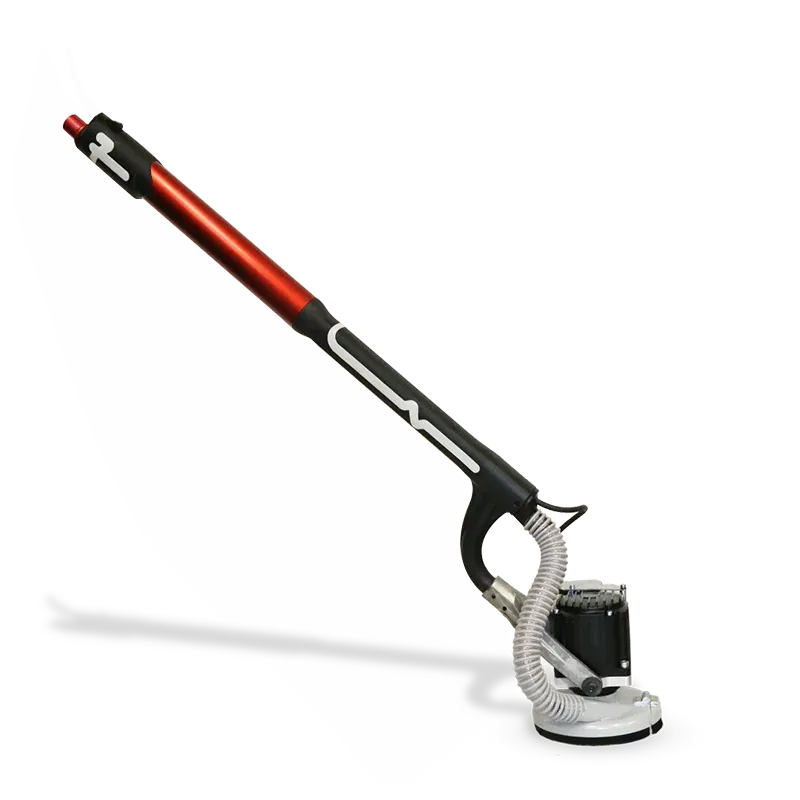
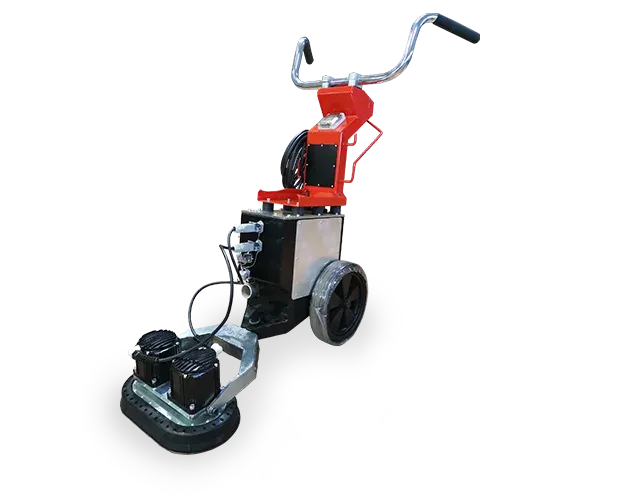
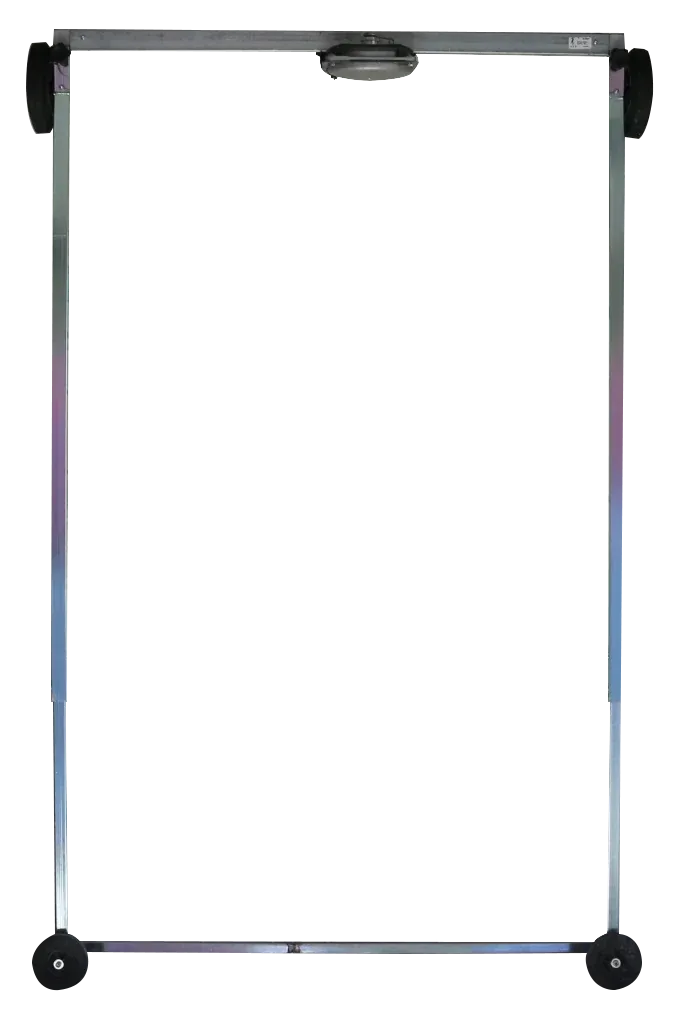
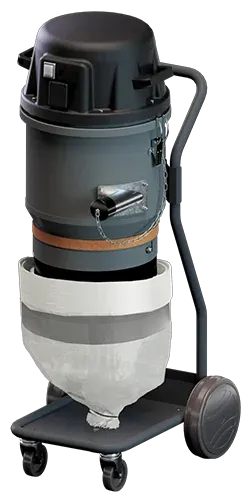
Equipment featured in this article
Free guide: 5 mistakes that shorten the life of your grinder
12 pages of practical tips for your job sites.
Frequently asked questions
How do you calculate the TCO of a construction tool?
What is the average ROI of a brushless tool compared to a brushed one?
Are site downtime costs really significant?
How does brushless reduce maintenance costs?
Find your ideal set
Configure your machine + ergonomics + vacuum combination in a few clicks.