Giraffe sander, pole sander, ceiling grinder: whatever the site name. The Sept Tools ceiling sander is brushless, whisper-quiet at 60 dB, manufactured in Roanne, and designed for the professional who buys their equipment rather than renting it job after job.
Free quote, no obligation, reply within one working day. Equipment guaranteed 24 months.
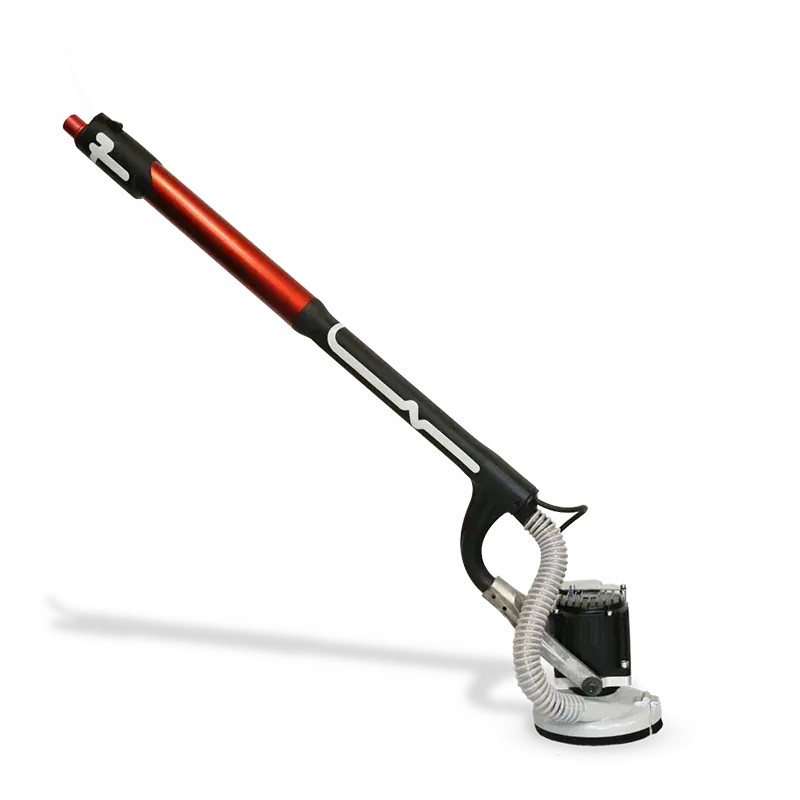
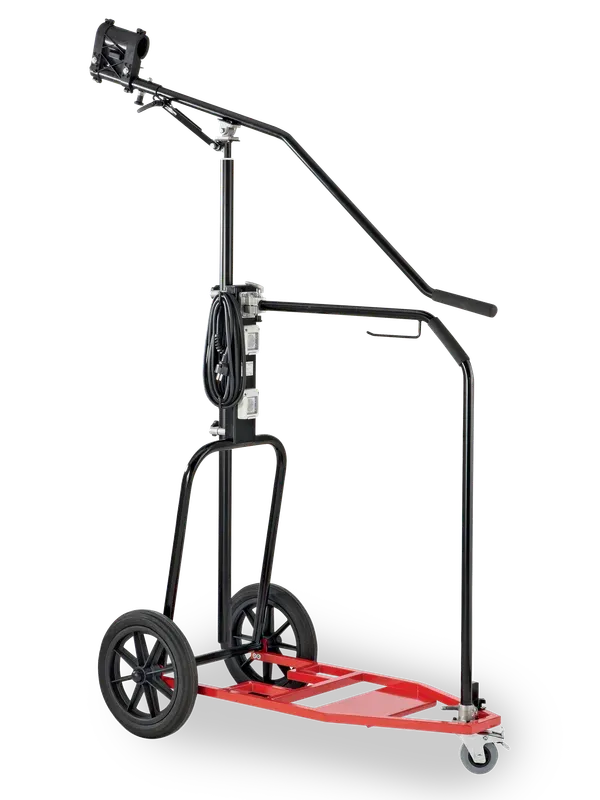
A ceiling sander for professional use is the brushless Fouine XB165, mounted on the Gazelle trolley or the Eland trolley rather than held overhead.This ceiling grinder cart setup keeps torque constant on raw concrete, seals to IP65 against falling dust, and stays quiet enough for occupied sites, with Class H extraction capturing silica dust at the source.
Our solutions
Which machine for your job site?
The machines below are selected for this application: brushless motors, dust captured at the source (class H extraction) and anti-MSD design. Quote within one working day.
Operational car park, occupied building: zero acoustic nuisance at ceiling level.
0.35m/s2
Hand-arm vibrations
Regulatory ELV 5 m/s2. Sept Tools: 14 times below the legal threshold.
x13
Motor lifespan
Brushless 20,000 h without brushes versus 1,500 h for a carbon-brush motor.
12-16sq m/h
Concrete ceiling sanded
Fouine giraffe sander on trolley. Manual method on pole: 2 to 3 sq m/h.
Traditional method vs Sept Tools
×
Rented or entry-level ceiling sander
Rental at around EUR 50 per day, machine not always available
Carbon-brush motor 600 h, speed dropping under load
90 dB machine prohibited on occupied sites
Vibrations above 5 m/s2
Dust falling back onto the operator
✓
Sept Tools brushless ceiling sander
Purchase amortised, machine always available
Brushless 20,000 h, constant torque
60 dB: cohabitation in car parks, offices, hospitals
Vibrations 0.35 m/s2 (14 times below the threshold)
HEPA H13 extraction at source
Why Sept Tools
Why choose French brushless tools?
Constant-torque brushless
Constant torque on raw concrete at ceiling level, x13 lifespan, IP65 sealing. Not an entry-level carbon-brush ceiling sander.
HEPA extraction at source
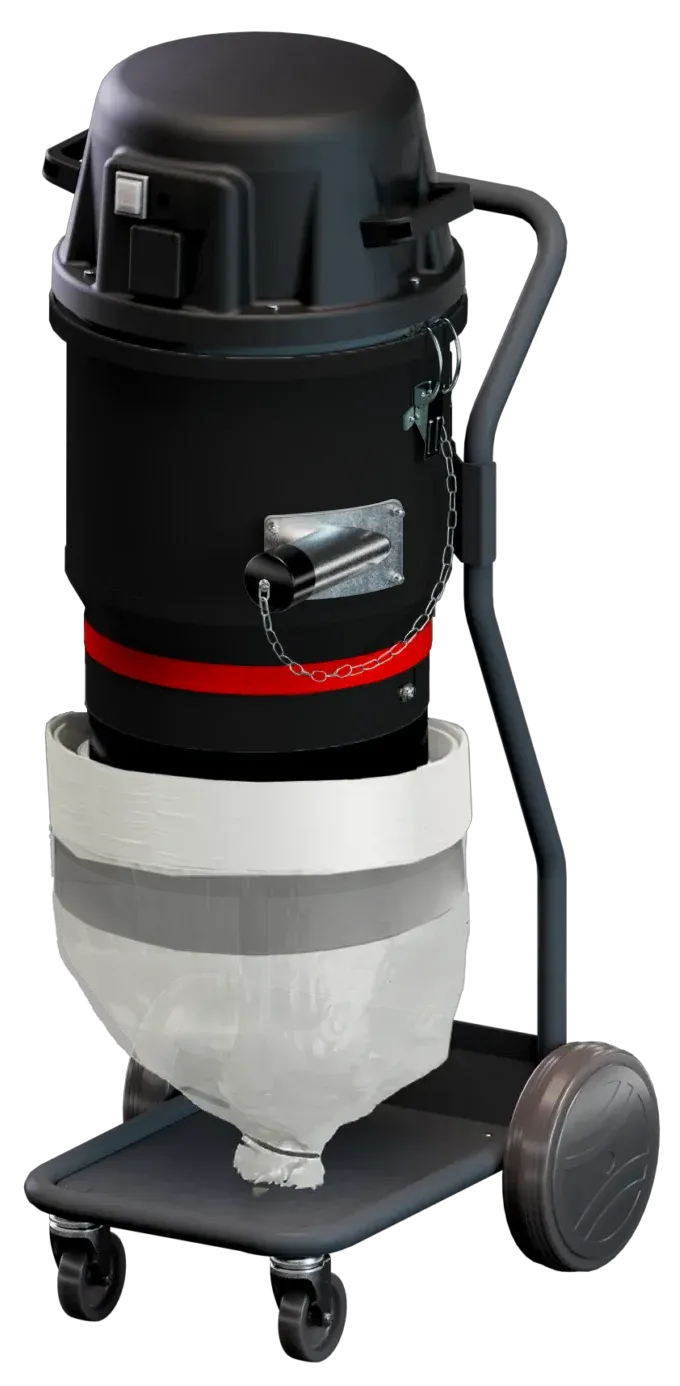
IU33 Longopac Class H captured at the pad, HEPA H13. Plaster and concrete dust no longer falls back onto the operator.
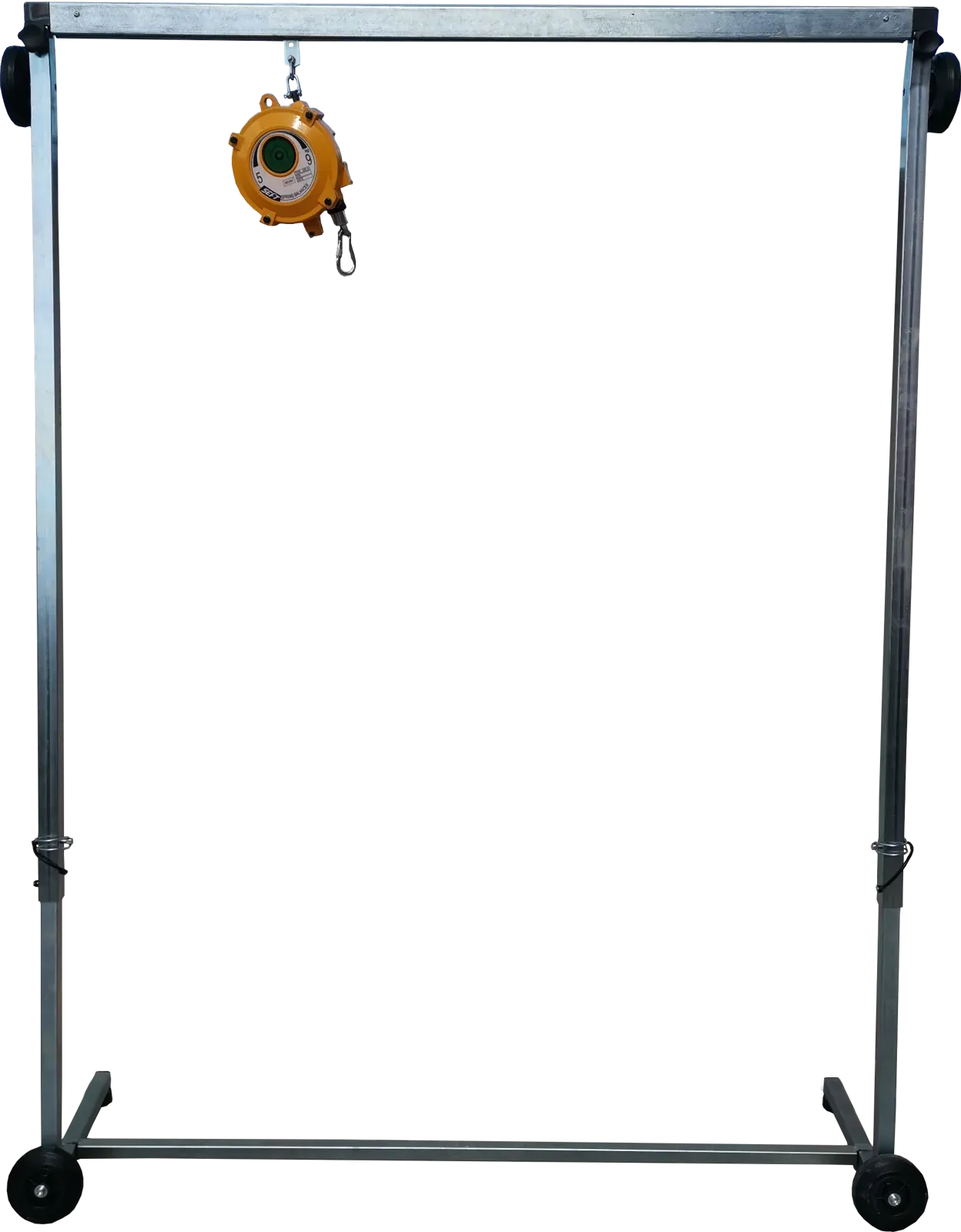
Anti-strain: Mygale, Eland, Gazelle
Trolley and gantry that carry the giraffe sander overhead. The operator guides rather than reaching up. No more holding the machine at arm's length.
Made in Roanne, repairable
Engineering and assembly in France, parts in stock, after-sales quote within 1 to 2 working days. The machine is repaired, not thrown away.
Choosing and deploying your ceiling sander
1
Site assessment
Surface area, ceiling height, substrate, occupied-site constraints or asbestos PPE requirements.
2
Giraffe sander configuration
Fouine XB165 on Gazelle trolley or Eland trolley, Mygale gantry according to the zone.
3
Sanding at 7-12 sq m/h
Single operator, machine carried by the trolley, HEPA extraction at source.
4
IU33 Longopac H13
Continuous hermetic bagging, zero dust fallback, silica compliance.
5
Amortisation and after-sales service
Parts in stock in Roanne, after-sales quote within 1 to 2 working days: the machine is repaired and amortised.
1
Site assessment
Surface area, ceiling height, substrate, occupied-site constraints or asbestos PPE requirements.
2
Giraffe sander configuration
Fouine XB165 on Gazelle trolley or Eland trolley, Mygale gantry according to the zone.
3
Sanding at 7-12 sq m/h
Single operator, machine carried by the trolley, HEPA extraction at source.
4
IU33 Longopac H13
Continuous hermetic bagging, zero dust fallback, silica compliance.
5
Amortisation and after-sales service
Parts in stock in Roanne, after-sales quote within 1 to 2 working days: the machine is repaired and amortised.
Challenges and solutions
Which challenges, and how to solve them?
Rental ceiling sander unavailable or worn
The problem
Day rental: machine not always available, variable condition, costs that accumulate job after job.
Sept Tools
Purchase of a durable brushless giraffe sander: always available, set up, amortised over 20,000 h of motor lifespan.
Entry-level sander struggling on concrete
The problem
750 to 1050 W carbon-brush ceiling sander: speed drop on raw concrete, burnt-out motor, machine discarded.
Sept Tools
Constant-torque brushless: does not struggle on laitance or reinforced concrete, x13 lifespan.
Musculoskeletal strain from overhead work
The problem
Giraffe sander held overhead with arms raised: rotator cuff musculoskeletal disorder in under 2 h.
Sept Tools
Gazelle trolley, Eland trolley, Mygale gantry: the operator guides, no more holding at arm's length, 0.35 m/s2 vibrations.
Noise nuisance on occupied sites
The problem
Machine at 90 dB prohibited in operational car parks, offices, hospitals: loss of contracts in occupied tertiary buildings.
Sept Tools
Brushless ceiling sander at 60 dB: permanent cohabitation, no time restrictions.
Dust falling back onto the operator
The problem
Ceiling sanding without capture: silica fines fall back onto the face and airways.
Sept Tools
HEPA H13 source extraction via IU33 Longopac Class H: exposure reduced, helps meet the silica OEL.
Low output on a pole
The problem
Manual method: 2 to 3 sq m/h, useful working time exhausted in 90 minutes.
Sept Tools
Fouine on trolley: 7-12 sq m/h, productive output sustained throughout the full working day.
Use cases
For which job sites?
Professional investing in their own equipment
Painting, plastering, and renovation contractors: beyond a few rental days per year, buying a brushless ceiling sander pays off. The machine is always available, set up, clean, and free from the uncertainty of a rental fleet. The Fouine giraffe sander on the trolley covers 7-12 sq m/h on raw concrete.
Occupied site sensitive to noise
Operational car park, hotel, hospital, active office: an angle grinder at 90 dB is prohibited, but a ceiling sander at 60 dB coexists with occupants and faces no time restrictions. A decisive advantage that no entry-level machine can offer.
Surface preparation before painting, render, or carbon reinforcement
Stripping and opening the ceiling substrate to guarantee coating adhesion. Variable speed from 500 to 4,800 rpm, diamond pad matched to grain. Consistent surface profile for bonding carbon fibre plates (structural reinforcement).
Asbestos removal and overhead stripping in confined areas
Captive ceiling sanding in a confined zone with IU33 Longopac Class H extraction, HEPA H13. The Fouine IP65 withstands extended sessions in full PPE and high-pressure wash-downs between operations.
Frequently asked questions
Your questions, answered
Which ceiling sander should I choose for intensive professional use?
For intensive use, a brushless ceiling sander is the only durable choice: brushless motor, 20,000 hours of lifespan (13 times longer than a carbon-brush motor), constant torque on raw concrete, IP65 sealing. The Fouine XB165 giraffe sander on the Gazelle trolley or the Eland trolley covers the large majority of ceiling sanding sites. Made in Roanne, parts in stock, after-sales at the factory.
Which is the quietest ceiling sander for working on occupied sites?
The Sept Tools ceiling sander operates at 60 dB, equivalent to a normal conversation, compared with 90 dB for an angle grinder. This makes it possible to sand ceilings in operational car parks, offices, hotels, or occupied hospitals without time restrictions or complaints from neighbouring occupants. The brushless motor is the key to this level of quiet.
Does a ceiling sander vibrate too much for prolonged use?
A poorly designed ceiling sander exceeds the 5 m/s2 hand-arm vibration limit in under two hours. The Sept Tools ceiling sander measures 0.35 m/s2 at the handle, 14 times below the regulatory threshold, allowing a full day of sanding without risk of musculoskeletal disorders. Within the Gazelle ceiling set, the muscular load is reduced by a factor of 5 (RULA measurement).
Is it better to rent or buy a ceiling sander as a professional?
Renting a ceiling sander costs around EUR 50 per day. Beyond roughly fifteen days of use per year, buying a durable brushless ceiling sander becomes more economical, with the machine always available and in good condition. The motor lifespan 13 times longer and the reduction in musculoskeletal absenteeism accelerate the return on investment. Sept Tools pricing is established on a project-by-project quote basis, with no public list price, as the configuration depends on the surface area and ergonomic requirements.
What does a brushless motor bring to a ceiling sander?
The brushless motor on a ceiling sander delivers a lifespan 13 times longer (20,000 hours versus 1,500), zero motor maintenance, constant torque under load that does not falter on raw concrete, lower heat generation, and IP65 sealing. That is what separates a professional machine from an entry-level carbon-brush ceiling sander.
Does a ceiling sander withstand plaster and concrete dust?
The Sept Tools giraffe sander is rated IP65: fully sealed against the plaster and concrete dust that falls directly onto the machine at ceiling level, and resistant to water jets and wash-downs. Paired with the IU33 Longopac Class H vacuum with HEPA H13 filtration, it captures fine particles at source rather than sending them back onto the operator.
What is the difference between a rotary and an eccentric ceiling giraffe sander?
A rotary giraffe sander spins the pad for high material removal, ideal for rapid stripping and preparation. An eccentric giraffe combines rotation and oscillation for a finer finish with fewer marks. The Sept Tools Fouine operates with a diamond pad at variable speed from 500 to 4,800 rpm, allowing the aggressiveness to be matched to the substrate and the desired finish.
What pad diameter is best for sanding a ceiling efficiently?
The standard diameter for a ceiling giraffe sander is Ø225 mm for output on large surfaces, with smaller pads (Ø165 mm) for edges, corners, and hard-to-reach areas. The Fouine XB165 uses interchangeable diamond pads in various grits depending on the material, from aggressive stripping to fine finishing.
How do I remove 3-4 mm of render from a large concrete ceiling?
For removing 3-4 mm of applied render from a large concrete ceiling, the right approach is the Fouine XB165 in planing mode with an aggressive diamond segment pad (coarse grit). Soft spray render: medium grit is sufficient. Hard cement or lime mortar: use the most aggressive segments at reduced speed to avoid clogging the pad. Mounting the Fouine on the Gazelle trolley or the Eland trolley keeps the pace steady over a full shift without operator strain. The Gazellomur is a dedicated wall machine and is not used for ceiling planing. You are always free to request a quote tailored to your site.
How much does a professional ceiling sander set cost?
A complete professional ceiling sanding set (Gazelle trolley, Fouine XB165 giraffe sander, IU33 Longopac vacuum) is offered on a B2B quote-only basis (no online sales). The exact price depends on your surface area, ceiling height, and chosen anti-strain level (Eland trolley). A detailed quote is provided within 24 hours on request.
Is it better to buy or rent a professional ceiling sander?
Renting a ceiling sander costs around EUR 50 per day. For occasional one-off jobs (under 5 days), rental remains sensible. For regular use, buying a Sept Tools machine (20,000-hour motor, 24-month warranty) becomes more economical from around 15 days per year, with the machine always available in known condition rather than dependent on the rental fleet's state. A TCO calculator on the site lets you compare acquisition versus rental on your actual annual volume.
Ceiling sander: Gazelle cart or Eland cart, which should I choose?
Both are carrier trolleys with a telescopic rack mast that take the same sanding arm and the same Fouine XB165 sanding head. The Gazelle (32 kg, 122 kg maximum load) works up to 3.80 m. The Eland (36 kg, 135 kg maximum load for the complete assembly) works up to 3.30 m on ceilings and 3.80 m on walls, depending on the arm fitted.
What ceiling height can this ceiling sander reach?
Mounted on the Gazelle trolley, the Fouine XB165 works up to 3.80 m under ceiling. Mounted on the Eland trolley, it works up to 3.30 m on ceilings, with a maximum load of 135 kg for the complete assembly. Both cover the ceiling heights found in car parks, offices, and industrial halls.
Is Class H silica dust extraction included with the ceiling sander?
Yes. The Fouine XB165 is designed to run with Class H dust extraction connected at the sanding head, capturing crystalline silica dust before it falls back on the operator. This is the standard configuration on every ceiling sanding job, whatever the substrate: raw concrete, render, or old coatings.
Is it better to rent or buy a ceiling sander?
Occasional jobs are usually covered by rental. Contractors who sand ceilings on a recurring basis get more value from buying, since a brushless motor is built to be amortised over years rather than a handful of rental days, and the machine is always available and in known condition. We size the right choice against your annual usage in the quote.
How does this ceiling sander compare with a classic rigid-arm giraffe sander?
A classic rigid-arm giraffe sander is carried and pushed by the operator throughout the session, so arm fatigue sets the real working pace. The Fouine XB165 on the Gazelle trolley or the Eland trolley shifts that weight onto the carrier, letting the operator guide rather than support the head, which keeps the pace consistent across a full shift.
What determines how long a ceiling sanding job will take?
The main factors are the substrate hardness (raw concrete, render, old paint), the diamond pad grit selected, ceiling height and obstacles that affect trolley or arm movement, whether the site is occupied and imposes noise or PPE constraints, and the finish required before the next trade. These are assessed on-site to build an accurate quote and schedule.