





Why do generalist manufacturers neglect ceiling drilling?
Generalist tool manufacturers designed the standard hammer drill for wall work at chest height, not for overhead use, leaving a trade where many drillings are done with arms raised above the head without a dedicated solution. On a modern office floor, the electrical network runs at the ceiling: cable trays, suspensions, multiple fixings, technical penetrations for server rooms and patch panels. That represents hundreds of drillings per floor, sometimes more than a thousand per jobsite.
Generalist tool manufacturers long ignored this trade. The standard hammer drill weighs 4 to 6 kg, it is designed to be held at chest height on a wall. Holding it overhead for eight hours is a medium-term sentence: tendinitis, rotator cuff syndrome, low back pain. Construction electricians have long lived with it, for lack of better.
Sept Tools developed a range specifically dedicated to this trade.
Eland Ceiling Drill: the dedicated solution
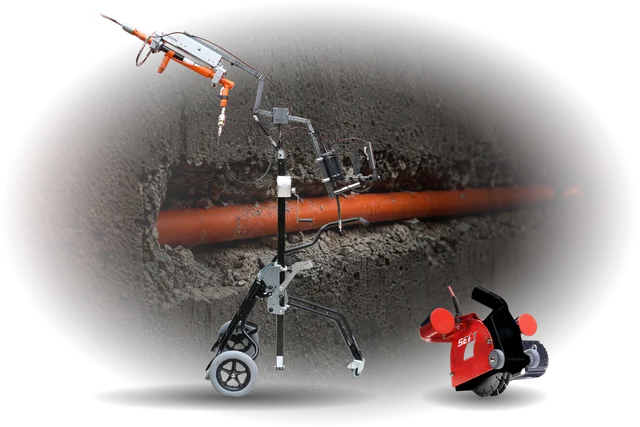
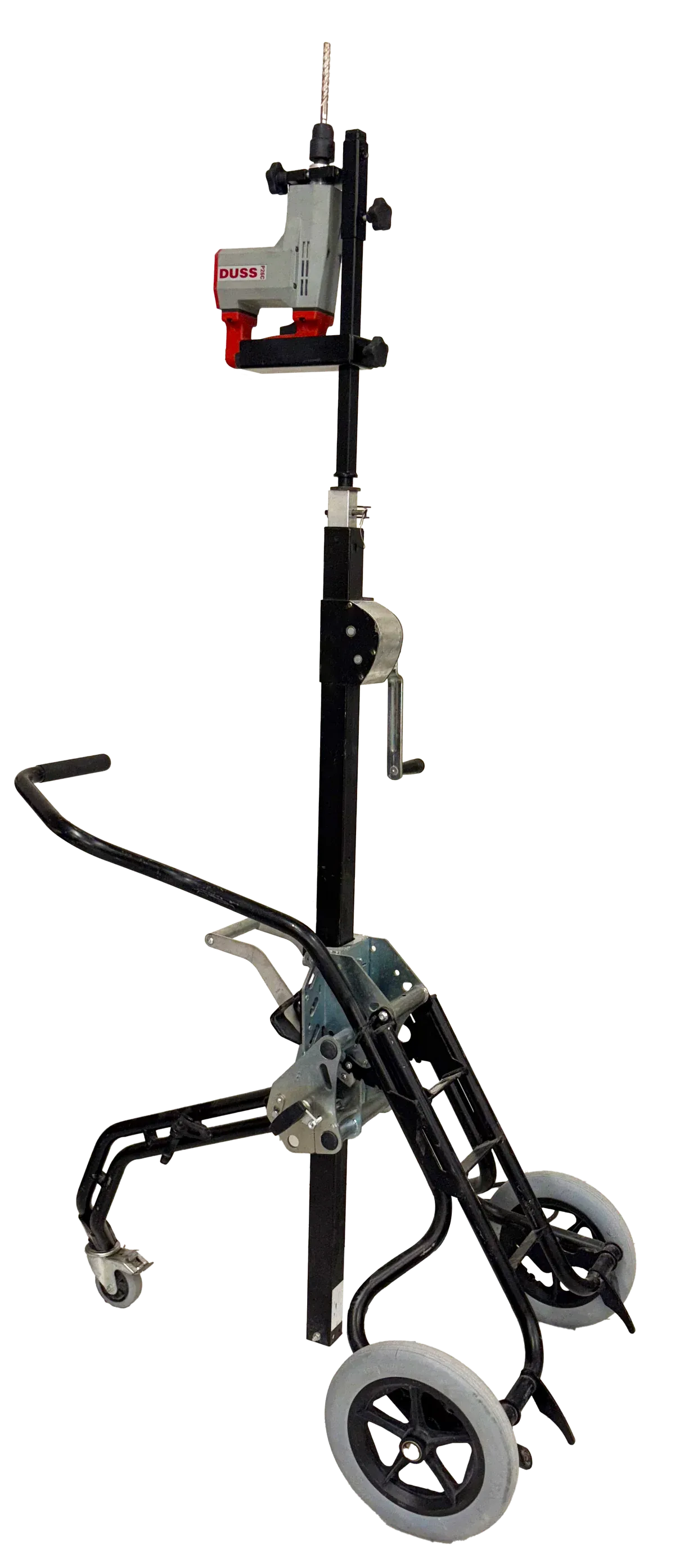
The Eland Ceiling Drill is a Sept Tools innovation. It is a carrier trolley with a rack-and-pinion telescopic mast, fitted with a ceiling drilling module (Pic Epeiche diamond drill on base or hammer support). The mast carries the machine and its upward thrust. The operator only guides it and triggers the drilling. Shoulders and neck no longer carry the machine: no more holding at arm’s length.
The system covers heights up to 3.30 metres on ceilings. Beyond that, notably for higher technical premises (data centres, industrial workshops), you go back to classic scaffolding with a Pic Epeiche drill in hand.
Pic Epeiche: the versatile companion
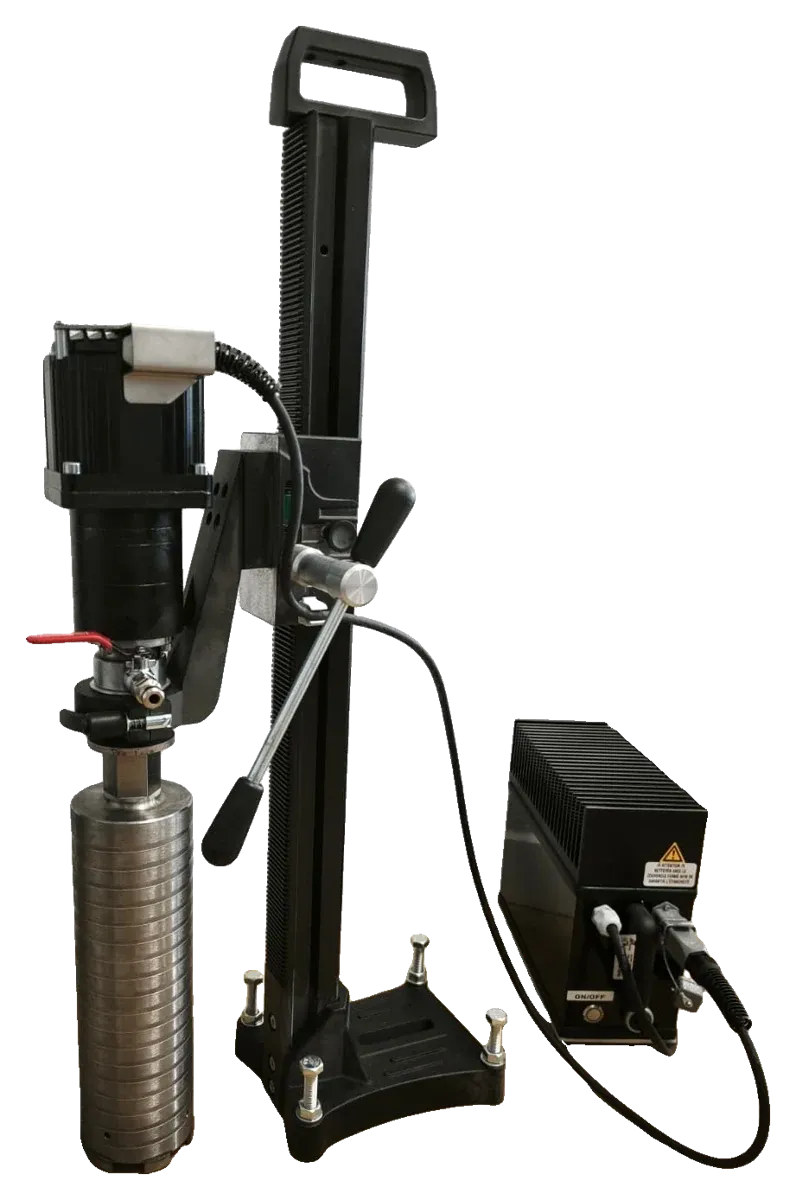
The Pic Epeiche is a diamond water drill (1600 W motor, IP65), handheld or base-mounted, for one-off drillings and restricted-access zones (technical risers, cupboards, dismounted false ceilings).
For stabilised drillings (calibrated holes for precision fixings), the Pic Epeiche Base version offers extra stability. This version suits server rooms and zones where drilling alignment is critical.
How does the 6-head multiple drill multiply your site productivity?
The 6-head multiple drill drills six holes in a single pass: six diamond heads driven by six brushless motors controlled from the control case, installed on a mast trolley or on a platform, for careful alignment and clean drilling.
The perimeter drill completes this logic for drilling at different angles, for example in a tunnel, with dust capture.
How to make clean wall chases for electrical conduit routing?
The Desman Groove Cutter makes clean rectangular wall chases for embedded conduit routing using 1 to 3 Ø 230 mm diamond discs in one pass (4 discs in two passes), with depth and width adjustable up to 50 mm and a vacuum outlet. The Desman Groove Cutter is designed for this use: diamond discs to make a clean rectangular channel, depth and width adjustable up to 50 mm, vacuum outlet for silica capture. With it, an electrician grooves cleanly, with the silica captured at source.
Extraction: an increasingly watched criterion
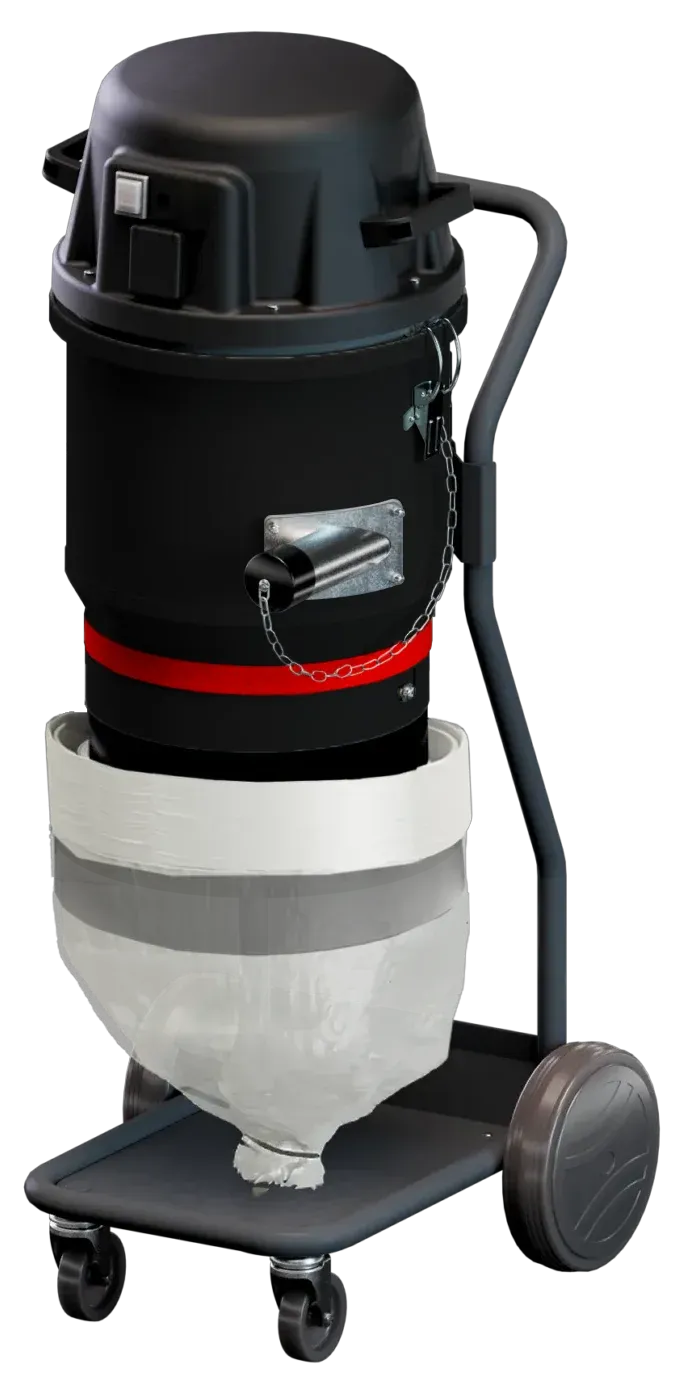
Drilling and grooving concrete release crystalline silica, classified as a carcinogen by the IARC since 1997. The OSHA permissible exposure limit is 0.05 mg/m³. The IU33 Longopac class H, connected to Sept Tools drills, captures dust at the source. Electricians can work in occupied or finishing premises with less disturbance to other teams; exposure remains to be assessed by the employer.