Configure your set
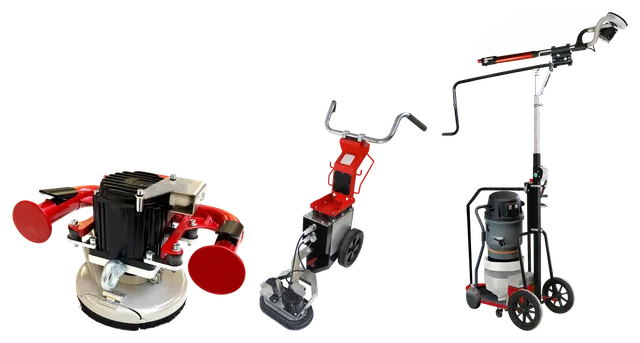
Build your machine + ergonomics + vacuum + consumable combination tailored to your job site.
You are configuring for:
What is your application?
Select the type of work you are doing.
All Sept Tools solutions by application and surface
Our brushless range covers 6 construction applications (grinding, drilling, chasing, bush hammering, planing, chiseling) on walls, floors and ceilings. Made in France (Roanne) since 2018.
Chasing
Bush hammering
Planing
Ergonomics & extraction
Configure your surface preparation assembly
The Sept Tools configurator guides you through the selection of a complete, validated surface preparation assembly: machine, ergonomic trolley or gantry, extractor, and diamond consumable. The result is a personalised quotation or demonstration request addressed to the Sept Tools technical team, not an instant price. All sales are B2B, handled on request, with no public pricing and no commitment at the configuration stage.
How the configurator works
Select your application
Choose from six surface preparation operations: grinding, drilling, grooving, planing, bush hammering, or chiselling. This first choice filters every subsequent option so only compatible equipment is presented.
Define your surface and material
Specify whether you are working on a wall, floor, or ceiling, and identify the substrate: concrete, screed, stone, or render. Material hardness directly determines the diamond consumable bond and grit selection.
Choose your machine and ergonomic module
The configurator proposes the machine matched to your application and surface, with a trolley (Eland or Gazelle) for overhead work or the Mygale gantry for wall work at height: you work without scaffolding and with less strain on the shoulders.
Complete the assembly with extraction and consumables
Select the Class H extractor sized to your machine's dust output and the diamond consumable validated for your substrate. Every element in the assembly is cross-matched for airflow, load, and surface compatibility.
Submit your quotation or demonstration request
The completed configuration is sent to the Sept Tools technical team, who respond with a site-specific proposal. No price is generated automatically: all sales are handled on a B2B basis with a personalised quotation.
How to choose the right configuration
Surface preparation equipment selection depends on four independent variables: the operation type, the surface orientation, the substrate hardness, and the site constraints around noise, dust, and ergonomics. The criteria below summarise the decision logic that the configurator applies automatically.
Operation type determines the machine family
The right operation avoids forcing the wrong tool: grinding to prepare for coatings, planing to remove thicker build-ups, bush hammering to create a key for renders and overlays. Grooving and chiselling cover joint cutting and concrete breaking.
Surface orientation determines the ergonomic module
On walls and ceilings the machine no longer rests on your arms and shoulders: the Eland or Gazelle trolley carries it for ceilings, the Mygale gantry for walls, usually without scaffolding.
Substrate hardness determines the consumable bond
The configurator proposes the diamond consumable that suits your substrate, so it cuts well and lasts.
Dust class is non-negotiable for silica-bearing materials
Concrete, screed, stone and brick dust contains crystalline silica: we recommend Class H extraction at source to protect your team, and it also keeps the consumable cutting. Class L and M extractors filter less finely.
Noise and vibration constraints govern site authorisation
Quieter, lower-vibration machines are easier to authorise on sensitive sites. Each manual declares its own figures (for example the Petit Potam: 59 dB(A) and 0.35 m/s²), to check against your site rules and your vibration risk assessment (Directive 2002/44/EC).
Productivity requirements determine the number of units
Knowing the productivity per application lets a works manager calculate the number of machines and shifts required for a given programme before committing to a quotation request. The output calculator gives reference ranges per application.
Open the output calculatorFrequently Asked Questions
How do I choose the right surface preparation machine for concrete, screed, stone, or render?
The choice depends on two factors: the type of surface and the finish required. For concrete slabs and screeds, grinding removes laitance and levels high spots; heavy-duty planing tackles coatings and thick build-ups; bush hammering opens the surface texture for bonding. For walls in brick, stone, or render, orbital sanding removes paint layers and flattens irregularities without aggressive material removal. For soft renders or lime-based coatings, lower-aggression grinding or sanding with a fine diamond consumable is preferred. The Sept Tools configurator maps your application (grinding, drilling, grooving, planing, bush hammering, or chiselling) against your surface type (wall, floor, or ceiling) to propose a complete assembly matched to the job.
Is it possible to sand or plane a ceiling or work overhead without scaffolding or a lifting platform?
Yes. Sept Tools designs ergonomic trolley systems: the Eland and Gazelle trolleys for overhead and ceiling work, and the Mygale gantry for at-height wall work. These systems support the machine mechanically so the operator guides the tool rather than bearing its weight, which can avoid scaffolding or a mobile elevated work platform in many interior applications, within the maximum height of each trolley (see the product page). This approach helps reduce musculoskeletal disorder (MSD) risk by relieving prolonged static load from the shoulders, arms, and neck.
Which dust-extractor class is required for concrete dust and crystalline silica on a construction site?
Class H extraction is recommended when working with materials that generate hazardous dust, including concrete, screed, stone, and any substrate containing crystalline silica. Class H filters capture these fine particles at source, and actual exposure is measured on site. Sept Tools assemblies integrate a vacuum matched to the airflow and chip load of each machine; in the Sept Tools range, the IU33 Longopac and the IU51 are declared class H. Class L and M extractors filter less finely, so they suit work involving silica less well; check your site obligations.
What is the difference between grinding, planing, and bush hammering, and when should each be used?
Grinding uses rotating diamond segments to remove thin layers of surface material, laitance, coatings, or adhesive residue, and to level minor height differences. It is the standard preparation method before laying floor coverings, applying resin systems, or repainting walls. Planing removes thicker material more aggressively, such as epoxy coatings, thick adhesive beds, or surface irregularities exceeding a few millimetres; it leaves a more pronounced profile suited to mechanical keying. Bush hammering impacts the surface with carbide tips to create a heavily textured, open profile: it is used primarily on concrete or stone to maximise adhesion for renders, overlays, or thermal insulation systems, and to expose aggregate for an architectural finish.
Why specify a complete assembly (machine, extraction, consumable) rather than buying a machine alone?
Surface preparation performance depends on three interdependent elements working together. The machine provides drive power and motion; the diamond consumable determines the cut rate, finish profile, and material compatibility; the Class H extractor removes dust at source, which protects operator health and is a condition for the consumable to work at rated efficiency (clogged segments lose cut rate rapidly). Specifying these three elements separately without matching them risks mismatched airflow, consumable overloading, or inadequate dust capture. Sept Tools assemblies are validated as a system: the extractor is sized to the machine's dust output, and the consumable grade is matched to the surface hardness and the required finish. The configurator builds this matched assembly in a single step.
Which diamond consumable or grit size should I use for each type of work?
Diamond consumables are selected by bond hardness, segment geometry, and grit size according to two variables: substrate hardness and the depth of material removal required. Hard bonds suit soft abrasive materials (soft concrete, screed); soft bonds suit hard dense materials (hard concrete, natural stone, granite), as the bond must wear at a rate that continuously exposes fresh diamond. Coarse grits (lower mesh numbers) are used for heavy stock removal, coating stripping, and levelling; medium grits for general preparation and surface opening; fine grits for finishing and smoothing before coating application. The Sept Tools configurator selects the appropriate consumable family based on the application and surface material you declare, so no grit-size expertise is required from the operator.
How does Sept Tools reduce vibration and musculoskeletal disorder risk on site?
Hand-arm vibration is the value declared in each machine's manual: 0.27 m/s² for the Tapir, 0.35 m/s² for the Petit Potam, the Fouine XB165 and the Gazellomur, 0.38 m/s² for the Desman. The daily exposure is calculated with the value of the machine in use and the real duration of use, which is the basis of the employer's vibration risk assessment. The ergonomic gantry systems complement this by removing the static load of the machine from the operator's body during wall and ceiling work, addressing postural MSD risk independently of vibration. Together, the declared vibration and the mechanical support cover both vibration and posture on repetitive surface preparation tasks.
What is the noise level of Sept Tools machines, and is the equipment suitable for sensitive environments?
The sound level is the one declared in each machine's manual: 59 dB(A) for the Petit Potam, 60 dB(A) for the Fouine XB165, 64 dB(A) for the Tapir. Whether a machine suits an occupied environment, a renovation site in a residential building, or a healthcare or educational facility depends on that level and on local site rules, to be checked before specifying equipment.
How long does the configurator take to complete, and what does the output provide?
The configurator follows 8 steps: application, surface, material, machine, ergonomic module, extractor, consumable and a final summary. Each step presents only the options compatible with your previous choices, so the choices stay consistent. The output is a personalised quotation request or demonstration request sent directly to the Sept Tools technical team. It is not an instant price: Sept Tools sells exclusively on a B2B basis with no public pricing. The request includes the full assembly specification, which allows the technical team to respond with a detailed, site-specific proposal.
Is the configurator free to use, and is there any commitment involved?
The configurator is entirely free and carries no commitment. Completing it generates a quotation or demonstration request only; no order is placed, no contract is formed, and no payment information is requested at any stage. The Sept Tools sales team reviews each request and responds with a tailored technical proposal. There is no obligation to proceed beyond the initial contact. The tool is designed for procurement managers, works managers, and rental fleet operators who need to compare configurations before engaging with a supplier.