
Rotator cuff RSI ceiling
The problem
Manual ceiling grooving: shoulders wrecked in 1 h, 60-day average absence.
Sept Tools
The arm and the trolley carry the machine, the operator guides the chase.
RAI102834 Ceiling Groover: the Desman head on an articulated arm, with an Eland or Gazelle trolley to absorb the weight. Ceiling grooving with reduced strain, for suspended electrical and HVAC networks.
Free quote, no obligation, reply within one working day. Equipment guaranteed 24 months.
Ceiling grooving is the critical step of routing networks inside suspended ceilings and soffits. Tertiary electrical cables, suspended HVAC lines, fibre optics, home automation: every recessed metre goes through a ceiling chase. Done manually with an angle grinder or chisel, the operation is punishing, loud and exposes the operator to silica dust. Sept Tools offers a dedicated machine: the RAI102834 Ceiling Groover, a Desman head on an articulated arm, paired with an Eland or Gazelle trolley to absorb the weight. The operator guides the machine without carrying it, a gas strut pushes the arm to keep the head pressed against the ceiling, and source extraction limits exposure to silica dust; a P2 mask remains mandatory and exposure is assessed on site.
The machines below are selected for this application: brushless motors, dust captured at the source (class H extraction) and anti-MSD design. Quote within one working day.
View all our products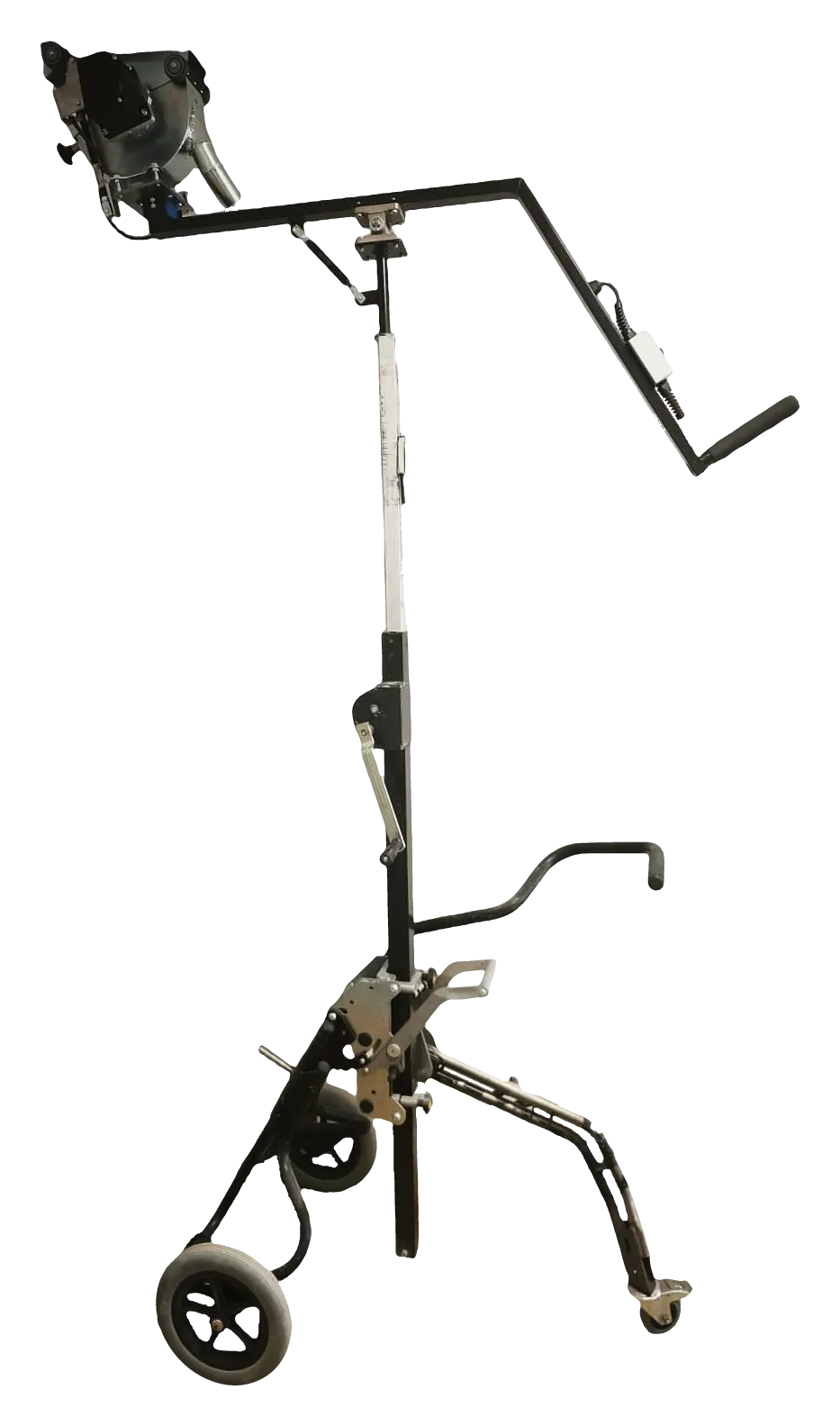
The Sept Tools Ceiling Groover takes the head of the Desman groover and mounts it on an arm designed for ceilings. It pairs with an Eland or a Gazelle trolley: the operator guides the groove instead of holding the machine overhead. Same grooving capacity as the Desman, up to 50 mm wide and 50 mm deep, brushless motor with no carbon brushes. The guard connects to a class H vacuum; overhead, a P2 mask remains mandatory. Maximum grooving height: 3 m.
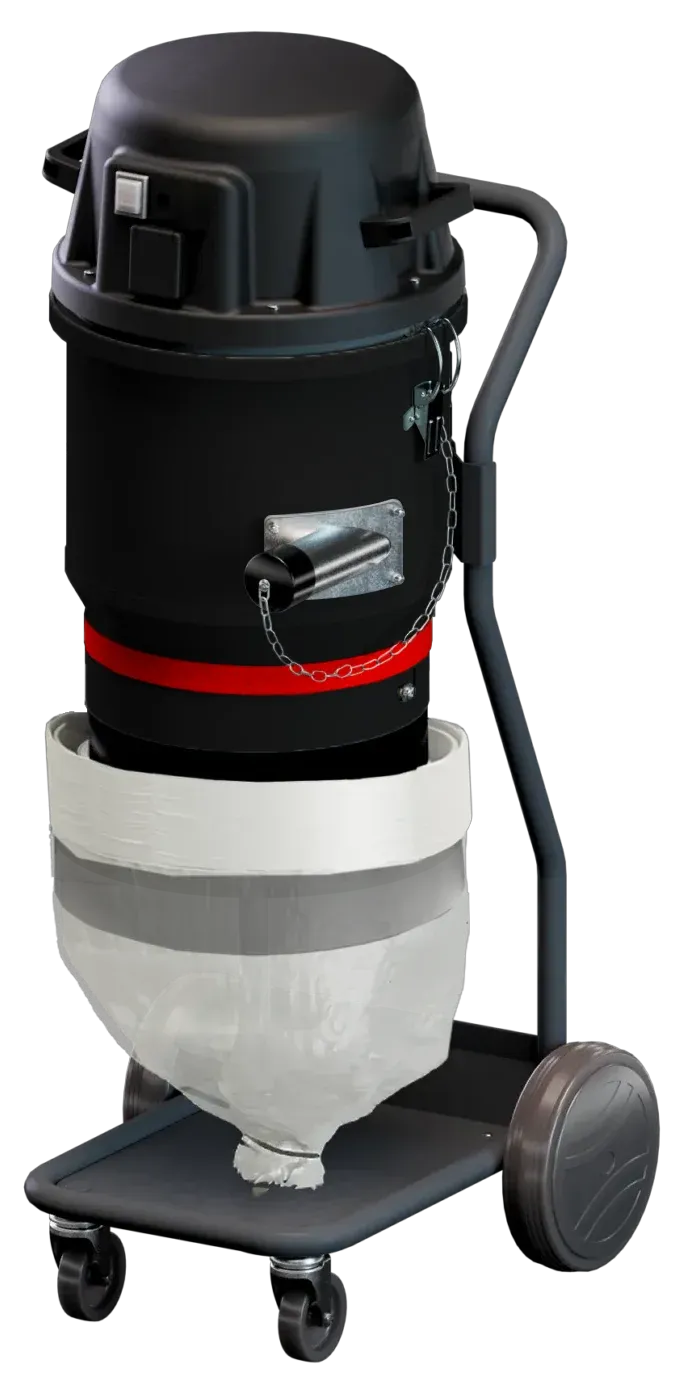
The IU33 Longopac is our class H construction vacuum for HEPA H13 source capture. 1100 W, 25 kg, 65 l/s flow. Longopac bagging system: continuous sealed bag, emptying without reopening, eliminating dust release on disposal. Compatible with all our grinders, planers, wall chasers and core drills. Source capture that helps keep exposure below the 0.1 mg/m³ crystalline-silica OEL (EU Directive 2017/2398). EN 60335-2-69 annex AA. Roanne, after-sales diagnosis within 48 working hours.
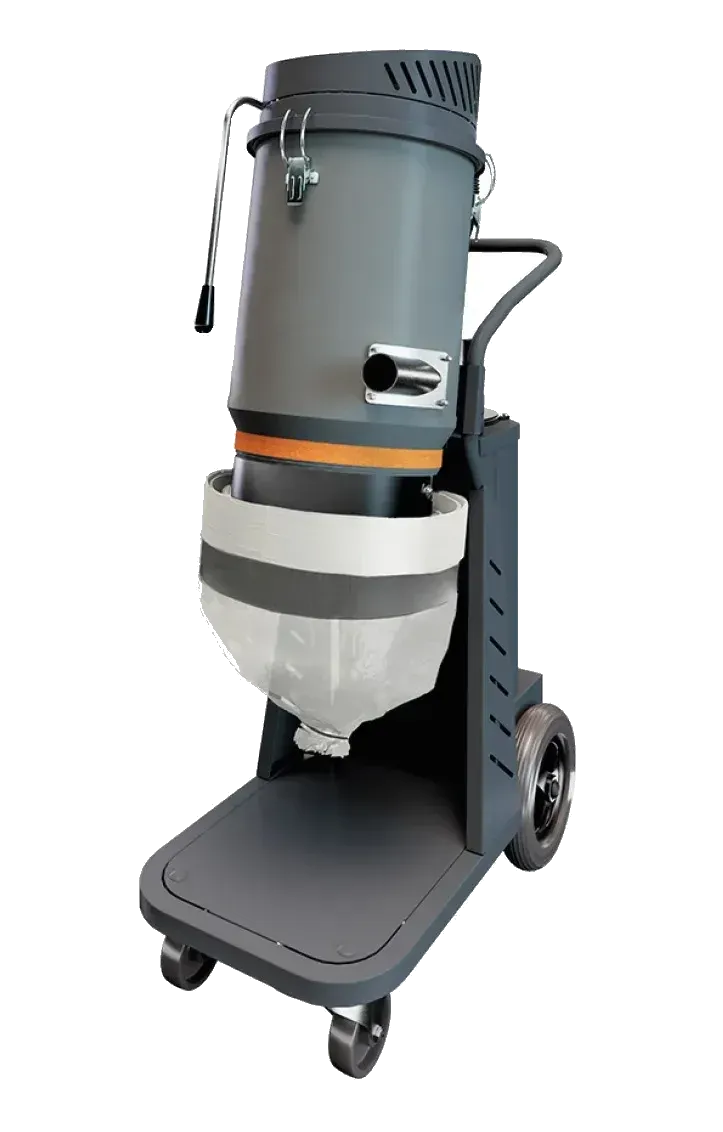
The IU40 is a universal bypass motor cyclonic dust extractor designed for fine dust extraction on site. Its compact design facilitates transport and provides stable manoeuvrability. Equipped with a 22 m Longopac system, a ULPA+PTFE cartridge filter (18,500 cm2 filtration area) and an airflow of 340 m3/h, it is the ideal extraction solution for the Petit Potam and Fouine grinders.
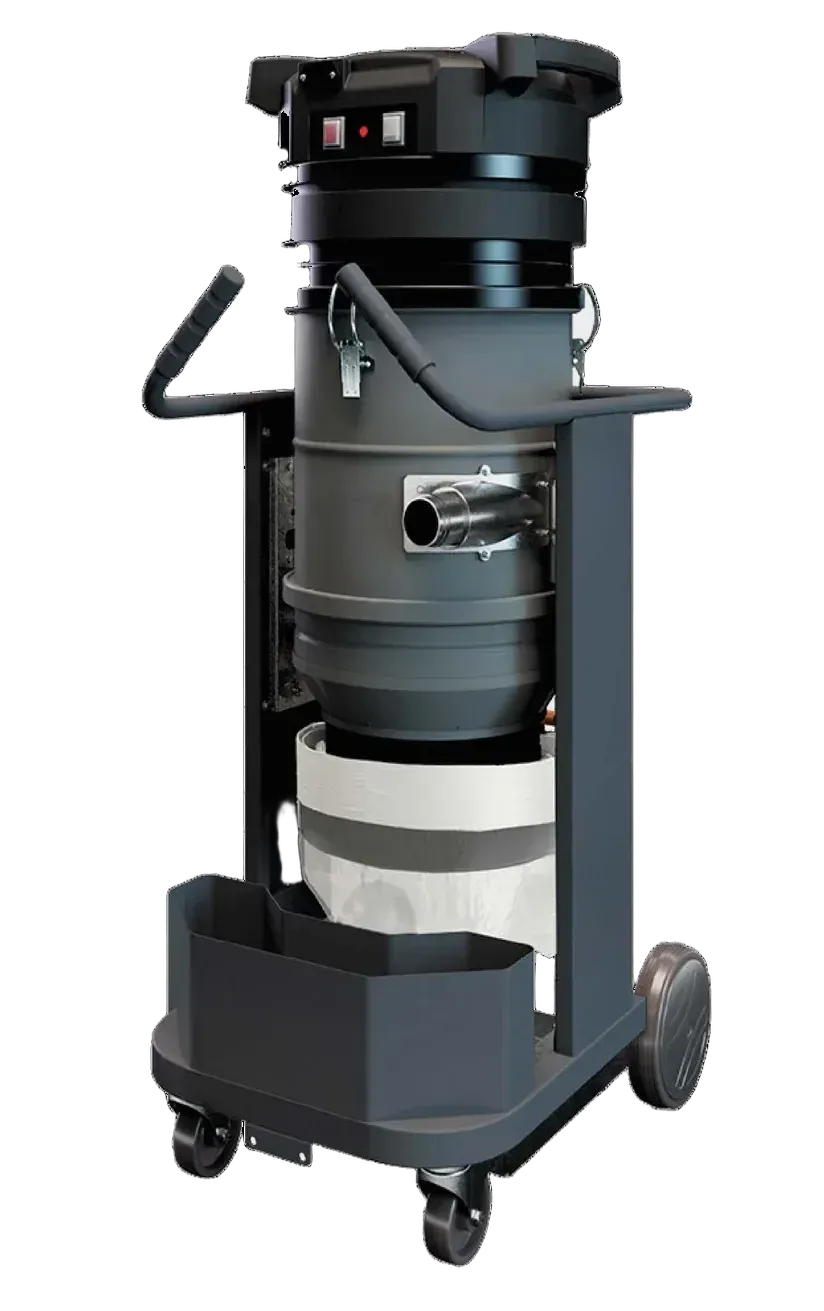
The IU51 is a dual universal bypass motor cyclonic dust extractor. Extremely compact for easy transport and excellent handling, it is ideal for confined spaces. Its automatic filter cleaning system guarantees continuous maximum efficiency. Equipped with 2 ULPA+PTFE cartridges (22,000 cm2), an airflow of 340 m3/h and the 22 m Longopac system. Compatible with the Petit Potam, Fouine and Castor.

The IU81 is a triple-motor cyclonic dust extractor, the market reference in terms of durability. Its enhanced filter protection against abrasive materials and improved cyclonic effect make it the high-performance solution for demanding sites. Automatic filter cleaning (also available in manual mode). Equipped with 3 ULPA+PTFE cartridges (36,000 cm2), an airflow of 510 m3/h and the 22 m Longopac system. Compatible with the Petit Potam, Fouine and Castor.

The IU200 is an industrial dust extractor with automatic filter cleaning and a multi-filter system. Designed for continuous 24/7 operation with no maintenance, it offers exceptional durability. Industrial extraction of fine dust for a clean and safe working environment. Equipped with 5 ULPA+PTFE cartridges (100,000 cm2), a turbine delivering 1,100 m3/h and a large-capacity drum. Compatible with the Petit Potam, Fouine and Castor.
Grooves up to 50 mm wide.
Up to 4 diamond discs on the shaft.
ICTA, multilayer, standard tubes.
Desman head on the ceiling arm, with an Eland or Gazelle trolley.
Constant torque on dense reinforced concrete ceilings: throughput preserved.
Head pressed against the ceiling, guided by the handle.
Chase-to-chase positioning effortless, full set on the move.
Class H source capture, which limits dust exposure.
Mark network paths: straight trace, laser references.
RAI102834 Ceiling Groover on Eland or Gazelle trolley, zone positioning.
Arm precision guiding, steady feed, constant torque.
IU33 Longopac: source capture, sealed bagging.
Immediate conduit or pipe recessing, plaster patching.
Ceiling chalk-line marking
Mark network paths: straight trace, laser references.
Set assembly
RAI102834 Ceiling Groover on Eland or Gazelle trolley, zone positioning.
Brushless chasing
Arm precision guiding, steady feed, constant torque.
Source extraction
IU33 Longopac: source capture, sealed bagging.
Network installation
Immediate conduit or pipe recessing, plaster patching.
Manual ceiling grooving: shoulders wrecked in 1 h, 60-day average absence.
The arm and the trolley carry the machine, the operator guides the chase.
Chaser held overhead, above the head.
The arm and the trolley carry the weight: the operator no longer holds the machine.
Ceiling fines falling on the operator's face.
IU33 Longopac HEPA H13 source capture 65 l/s, P2 mask mandatory.
Ceiling chase manual: trace deviates after 30 min, double patching cost.
Articulated arm guiding plus constant torque: clean trace in series.
Fixed compensator: small working area, frequent repositioning.
Articulated arm on an Eland or Gazelle trolley: the trolley moves fully equipped, without dismantling, from one area to the next.
Non-dedicated setup: 60-day MSD absence per year, throughput degraded 40 %.
Sept Tools dedicated architecture: payback 6 to 10 months, sustained throughput.
Ceiling chases for ICTA conduits and tertiary cables recessed in solid slab. Contemporary architectural finish without trunking: 20 to 40 linear metres per shift with articulated arm.
Multilayer and PEX pipe routing in concrete slab before acoustic ceiling. Hotels and care homes sector: 15 to 30 linear metres per shift.
Fine chases for fibre optic in office buildings and data centres. Clean trace for invisible patching, 30 to 50 linear metres per shift.
Home automation, alarm and access control cabling in premium office renovation. Fast solution versus through-slab drilling, 25 to 45 linear metres per shift.
See the real differences: motor, drive, rpm, weight, dust capture, side by side on manufacturer data.
Our sales team will help you choose your professional tools.
Free quote, no obligation. Equipment guaranteed 24 months.