Skip to content
Sept Tools

IU33 Longopac class H construction vacuum for silica and asbestos

Source capture, HEPA H14 filtration, sealed Longopac bagging. The IU33 Longopac, declared class H to EN 60335-2-69 annex AA. It is designed and made in Roanne.

Free quote, no obligation, reply within one working day. Equipment guaranteed 24 months.

On a concrete grinding, renovation or asbestos removal jobsite, the class H construction vacuum is not an accessory: it is the component that decides whether dust is captured before it reaches the operator. A class M vacuum is no longer enough once crystalline silica or asbestos is involved. At Sept Tools, the IU33 Longopac and the IU51 are declared class H to EN 60335-2-69 annex AA; the IU33 Longopac, the one we recommend for asbestos, adds HEPA H14 filtration (99.995% at 0.12 µm, MPPS): capture at the source at the grinder plate, continuous Longopac bagging with no operator contact, designed for the real jobsite, not for the sales sheet. Sept Tools-branded machines designed and assembled in Roanne, after-sales in Roanne.

Our solutions

Which machine for your job site?

The machines below are selected for this application: dust captured at the source and anti-MSD design. Quote within one working day.

View all our products
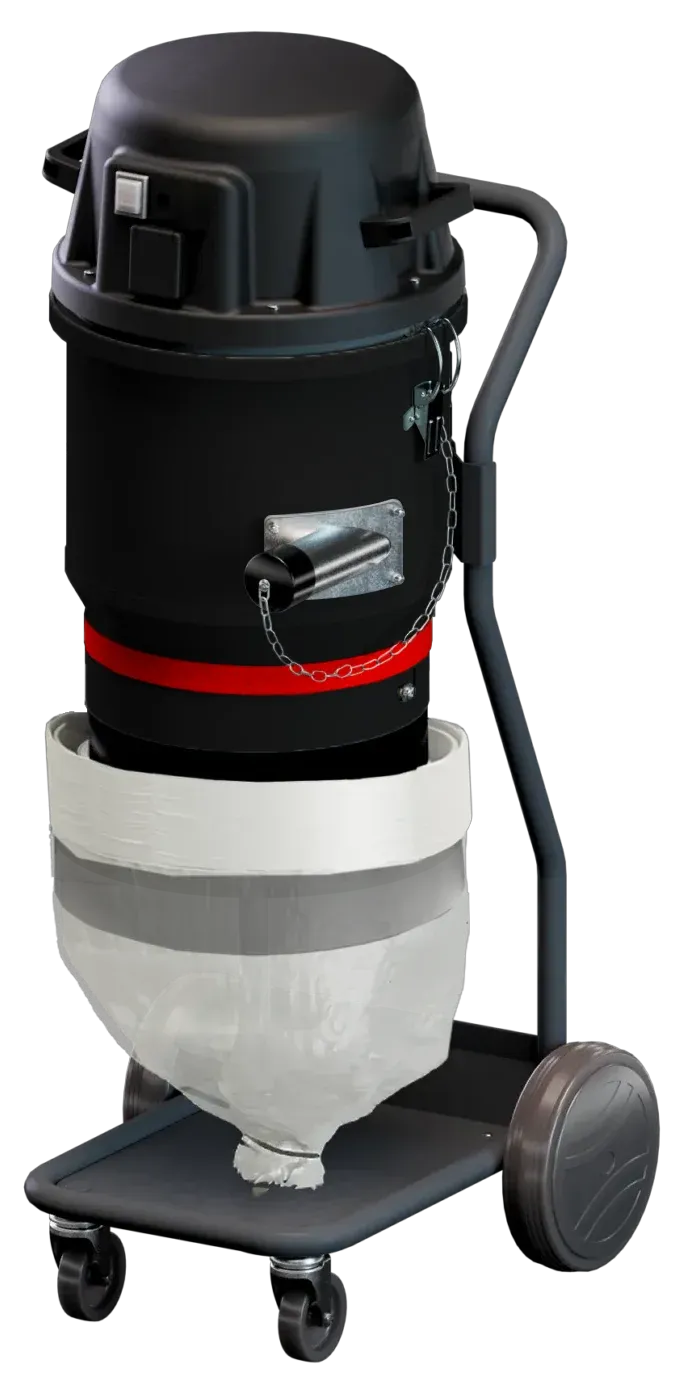
IU33 Longopac

IU33 Longopac

The IU33 Longopac is our class H construction vacuum for HEPA H14 source capture. 1100 W, 25 kg, 200 m³/h flow. Longopac continuous bagging system: the full bag is sealed and separated without exposing the operator to the collected dust. Compatible with all our machines except the Castor and Ceiling Planer planers. Source capture of crystalline silica. EN 60335-2-69 annex AA. Roanne, after-sales diagnosis within 48 working hours.

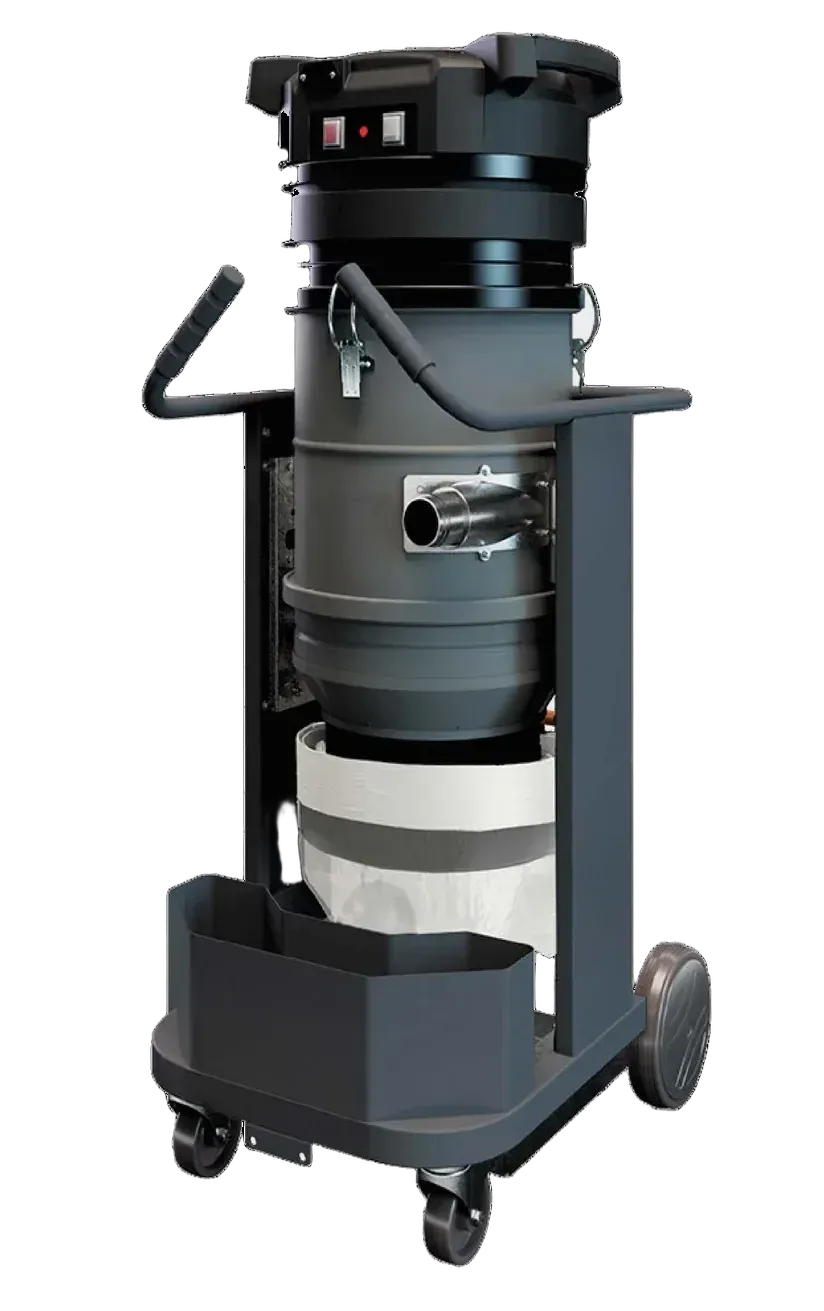
IU51

IU51

The IU51 is a dual universal bypass motor cyclonic dust extractor. Compact, easy to transport and to handle, it suits confined spaces. Its automatic filter cleaning system works during operation, without operator action, and keeps the airflow constant. Equipped with 2 ULPA+PTFE cartridges (22,000 cm²), an airflow of 340 m³/h and the 22 m Longopac system. Compatible with the Petit Potam, Fouine and Castor.

Key figures
99.995%
HEPA H14 retention

Filtration efficiency at 0.12 µm (MPPS) of the HEPA H14 filter of the IU33 Longopac.

0 contact
Longopac emptying

Continuous sealed bagging: the operator never touches the captured dust when changing the sleeve.

2 models
Class H declared

The IU33 Longopac and the IU51, declared class H to EN 60335-2-69 annex AA.

Traditional method vs Sept Tools

×

Without suitable class H extraction

  • Undersized vacuum: partial capture
  • Tank to empty by hand, operator exposed to fibres
  • Flow that drops as soon as the filter clogs
  • No usable certificate during an OEL audit
  • Asbestos dust re-suspended at emptying
✓

With the IU33 Longopac class H

  • Class H HEPA H14, source capture at the plate
  • Sealed Longopac bagging
  • Automatic cleaning, stable flow over the whole shift
  • Manual, technical data sheet and EC declaration supplied
Why Sept Tools

Why choose French brushless tools?

Class H HEPA filtration

HEPA H14 at 99.995% (0.12 µm, MPPS), IU33 Longopac classified H to EN 60335-2-69 annex AA; manual, technical data sheet and the manufacturer's EC declaration of conformity supplied.

Built-in source capture

Direct connection to the plate of Sept Tools grinders, planers and drills. Dust is captured before it falls on the operator, not sucked from the ambient air afterwards.

Sealed Longopac bagging

On the IU33 Longopac, continuously sealed plastic sleeve for contact-free emptying with no re-suspension.

Automatic cleaning and stable flow

Automatic filter cleaning maintains the negative pressure and the air flow throughout the session, with no manual stop.

From your jobsite to the right class H vacuum

  1. 1

    Jobsite qualification

    You describe the context: crystalline silica, asbestos sub-section 3 or 4, lead, surfaces, tools to connect. We identify the filtration level and flow required.

  2. 2

    Choice of model

    IU33 Longopac, declared class H, for silica and asbestos. IU51, also declared class H, for a higher flow. IU40, IU81 and IU200 for compact mobile or high flow: their manuals do not declare class H.

  3. 3

    Configuration and accessories

    Connection to grinders, planers and drills, choice of filters (HEPA + PTFE, H14), Longopac consumables, adapters. Everything is sized for source capture.

  4. 4

    Quote and ROI study

    We draw up a priced quote that builds in the return on investment: reduction in jobsite stoppages and, depending on profile, prevention equipment fundable under conditions, subject to prior approval by your insurance fund before purchase.

  5. 5

    Delivery, documentation and after-sales

    Delivery with manual, technical data sheet and the manufacturer's EC declaration of conformity.

Challenges and solutions

Which challenges, and how to solve them?

Silica not captured in concrete grinding

The problem

Grinding a concrete slab without suitable extraction pushes crystalline silica above the 0.1 mg/m³ OEL: carcinogenic exposure and risk of a labour inspectorate citation.

Sept Tools

The IU33 Longopac class H, connected at the source at the plate, captures the fines before they fall. Exposure is verified by measurement on the jobsite.

Asbestos fibres in a confined zone

The problem

Without source capture, asbestos fibres disperse in the confined zone, despite the 10 Pa negative pressure.

Sept Tools

The IU33 Longopac class H captures at the source and discharges into a sealed sleeve. Operator exposure at emptying is reduced; it is verified by measurement on the jobsite.

Exposure when emptying the tank

The problem

Manual emptying of a tank-type vacuum directly exposes the operator to the accumulated fibres and dust, wiping out the benefit of upstream filtration.

Sept Tools

The Longopac system seals the dust in a continuous plastic sleeve.

Flow collapsing during a session

The problem

On a class M vacuum or an undersized unit, filter clogging makes the negative pressure drop, and source capture loses its efficiency before the end of the shift.

Sept Tools

The automatic cleaning of the IU33 Longopac, IU51, IU81 and IU200 maintains the flow. The IU81 and IU200 provide the power reserve for long sessions.

Jobsite audit impossible to document

The problem

Without equipment documentation, justifying the class H of a vacuum during an inspection or an OEL measurement becomes an administrative headache.

Sept Tools

The IU33 Longopac, the Sept Tools class H vacuum, is supplied with its manual, its technical data sheet and the manufacturer's EC declaration of conformity.

Use cases

For which job sites?

Asbestos removal, sub-sections 3 and 4

In a confined zone at 10 Pa negative pressure, the IU33 Longopac provides source capture and sealed bagging. HEPA filtration, contact-free emptying: the operator in full PPE does not handle the captured dust.

Concrete grinding and surface preparation

Coupled to a floor, wall or ceiling grinder, the class H vacuum captures crystalline silica directly at the plate. On raw concrete, source extraction is part of the user's protection; exposure is verified by measurement on the jobsite.

Drilling and chemical anchoring

Connected to the drill, the class H vacuum extracts dust at the source, for a clean hole ready to receive the resin. The cleanliness of the drilling determines the pull-out resistance of the chemical anchor and the validity of the ETA technical assessment.

High-flow jobsites

The IU81 and IU200 cover large-scale jobsites, where a high air flow has to be supplied. The range scales up in power without changing the capture logic. Their manuals do not declare class H: for silica and asbestos, the IU33 Longopac remains the reference.

Frequently asked questions

Your questions, answered

What is the difference between a class H vacuum and a class M vacuum?

The class defines the filtration efficiency and the dust threshold tolerated at discharge. The class M vacuum suits wood dust and some mineral dusts with a limit value greater than or equal to 0.1 mg/m³. The class H vacuum is required for carcinogenic, mutagenic or toxic dusts: crystalline silica under source capture, asbestos, lead. For these jobsites, class H with HEPA filtration is the required class. At Sept Tools, the IU33 Longopac and the IU51 are declared class H to EN 60335-2-69 annex AA.

Is a class H construction vacuum mandatory for asbestos?

Yes. For work falling under sub-sections 3 and 4 of the French Labour Code, extraction of asbestos dust requires a class H vacuum with absolute HEPA filtration and source capture. The IU33 Longopac adds continuous sealed bagging, which removes all operator contact when emptying: a point regularly checked during jobsite audits. On an NHS hospital site, a UKAS-accredited laboratory measured 0.02 f/ml, five times below the UK control limit of 0.1 f/ml.

Which class H construction vacuum to choose for concrete grinding and silica?

For concrete grinding, the key factor is source capture at the grinder plate, coupled with HEPA H14 filtration. The IU33 Longopac, declared class H, covers most surface preparation jobsites with its continuous bagging; the IU51, also declared class H, provides a higher flow (IU51 340 m³/h against IU33 200 m³/h, according to the manuals). On large surfaces, the IU81 and IU200 provide the flow, but their manuals do not declare class H; the IU81 manual asks for after-sales advice before use on silica.

What is the price of the IU33 Longopac class H vacuum?

The IU33 Longopac, our class H vacuum, is offered by quote, based on your jobsite configuration (model, Longopac accessories, filters, tool connection, fleet volume). This approach makes it possible to build in the real return on investment: a class H vacuum suited to the jobsite limits stoppages and the hidden costs of undersized equipment. Depending on your profile, the equipment may be fundable under conditions, subject to prior approval by your insurance fund before purchase. Request a quote for a priced study suited to your business.

What filtration and efficiency does your class H vacuum offer?

The IU33 Longopac integrates HEPA H14 filtration, i.e. 99.995% retention at 0.12 µm (MPPS) to EN 1822, and Longopac bagging ensures sealed discharge. It is classified H to standard EN 60335-2-69 annex AA.
Go further

Related solutions and techniques

Need a quote or a demo?

Our sales team will help you choose your professional tools.

Contact us

Free quote, no obligation. Equipment guaranteed 24 months.

04 77 60 60 74 Request a quote