Skip to content
Sept Tools

Brushless electric concrete planer: precision stripping and surfacing

A concrete planer designed for the real jobsite: 20,000 h brushless motor, IP65, 59 dB(A) and declared vibration of 0.42 to 2.2 m/s². The Sept Tools concrete planer replaces the petrol planer for stripping and surfacing, with no exhaust gas and no excessive noise. French manufacturing, Roanne.

Free quote, no obligation, reply within one working day. Equipment guaranteed 24 months.

The concrete planer is the reference tool for stripping and surfacing hard substrates: removal of renders, resins, bituminous coverings or levelling a slab before laying. Sept Tools builds in Roanne a range of brushless electric planers that is a credible alternative to the petrol planer: no exhaust indoors, 59 dB(A) instead of the din of a petrol engine, and a motor with no carbon brushes rated for 20,000 hours. Three machines cover concrete planing depending on the surface and the orientation: the Gazellomur Rabot for long vertical runs, the Écureuil with its two interchangeable drums for targeted stripping, and the Ceiling Planer for work under the slab. Each concrete planer is positioned for force, not speed, to attack thick substrates without prematurely wearing the drum.

Our solutions

Which machine for your job site?

The machines below are selected for this application: dust captured at the source and anti-MSD design. Quote within one working day.

View all our products
Gazellomur Rabot

Gazellomur Rabot

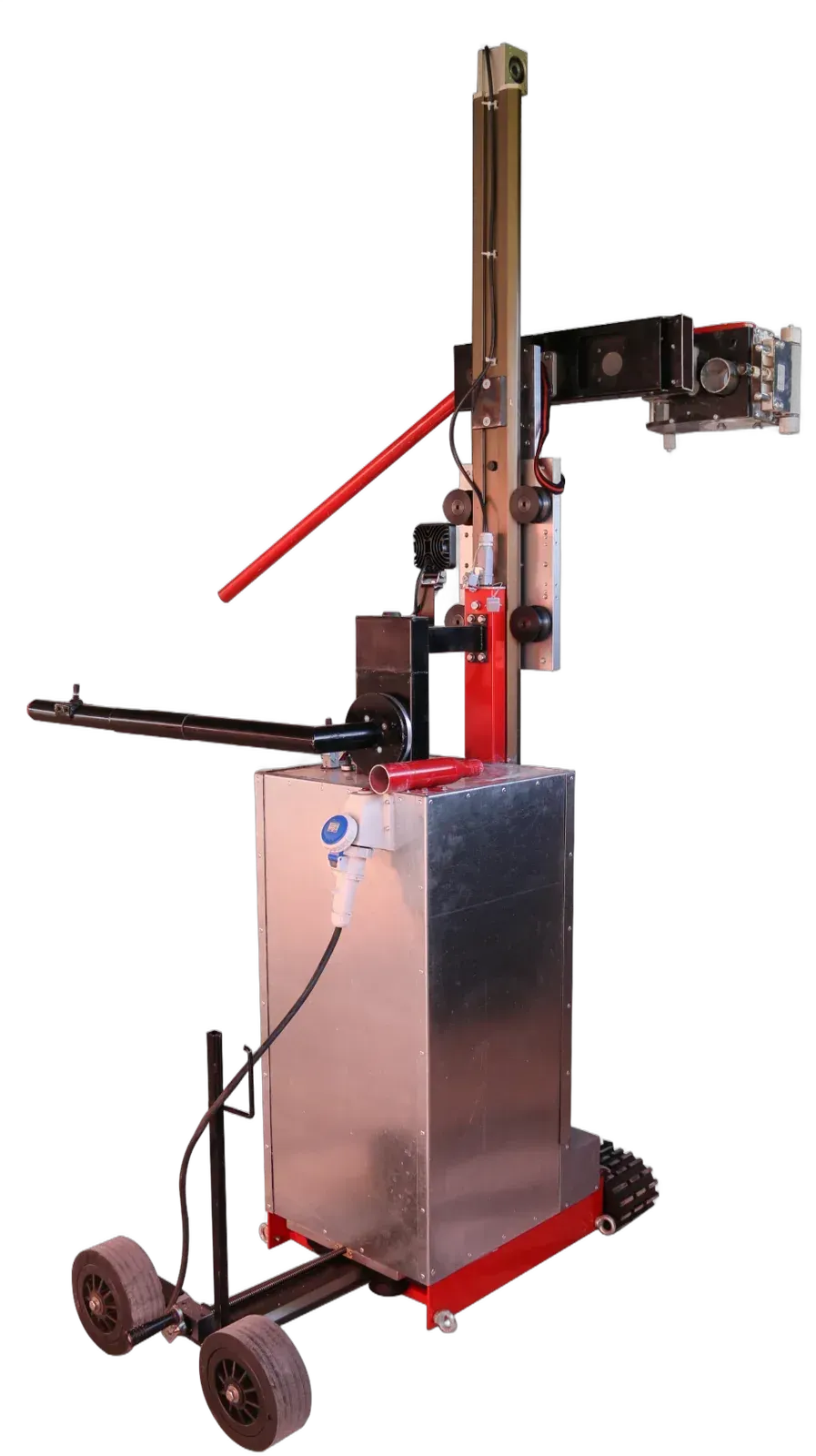
The Gazellomur planer is the Gazellomur carrier fitted with a planing head: a semi-automatic planer that allows you to plane walls, primarily used in demolition, asbestos removal and dismantling.

Écureuil

Écureuil

The Écureuil has been developed with our 700W brushless motors (low noise, low vibration, extended service life and waterproof) for renovation, construction, demolition, asbestos removal and coating stripping. Compact and manoeuvrable, it accesses hard-to-reach areas.

Rabot Plafond

Rabot Plafond

The ceiling planer set has been developed with our brushless motors (low noise, low vibration, extended service life and waterproof) for renovation, construction, demolition, asbestos removal and dismantling. It handles your planing tasks on ceilings in render, resin, bituminous coatings and more. This planer can remove up to 13 mm of material in a single pass. This machine must be used with an IP65 electronic speed controller and an industrial vacuum with a LONGOPAC bag.

Key figures
18 to 27m²/h
Concrete planing output rate

Order of magnitude of the Gazellomur Rabot on concrete, slower on renders and on bitumen.

2 drums
Interchangeable Écureuil

Electrolytic for concrete and reinforced concrete, PCD for renders, resins and bituminous coverings.

20,000h
Brushless motor

No carbon brushes to replace under load from the first to the last m².

59 dB(A)
Sound level

Quiet electric planer, alternative to the petrol engine indoors.

Traditional method vs Sept Tools

×

Conventional petrol planer

  • Exhaust gas: use banned in closed interiors
  • High noise incompatible with an occupied site
  • Carburettor maintenance and carbon-brush motor to replace
  • Silica dust capture optional, often absent
  • A single drum, wear or chatter depending on the material
✓

Sept Tools brushless concrete planer

  • Brushless electric motor: no exhaust, indoors OK
  • 59 dB(A) declared: work in an occupied environment possible
  • 20,000 h with no carbon brushes, IP65 under load
  • Class H vacuum as standard, silica captured at the source
  • Écureuil with two drums, electrolytic and PCD
Why Sept Tools

Why choose French brushless tools?

Two interchangeable Écureuil drums

Electrolytic drum for concrete and reinforced concrete, PCD drum for renders, glues, epoxy resins and bituminous coverings. Drum change with the supplied pin spanner and hex key. A single planer covers most stripping materials.

Gazellomur Rabot, tracked carrier

For long continuous vertical runs, the gantry takes the effort in place of the operator. The concrete planer advances with force, controlled cutting depth, vibration declared in the manual of the mounted machine. Designed for long surfacing and stripping sessions.

Dedicated Ceiling Planer under the slab

Architecture optimised exclusively for overhead vertical planing, with no multi-purpose function. Connection to a class H vacuum to capture silica at the source, where the fines fall directly on the operator in the ceiling position.

French IP65 brushless motor

Designed and assembled in Roanne, the 20,000 h brushless motor withstands concrete dust (IP65). No carbon brushes to replace, no exhaust, no carburettor maintenance. The force of petrol, without its nuisances.

From jobsite diagnosis to getting to grips with your concrete planer

  1. 1

    1. Substrate qualification

    We identify the material (concrete, reinforced concrete, renders, resins, bituminous), the orientation (floor, wall, ceiling) and the surface to plane in order to target the right concrete planer.

  2. 2

    2. Choice of configuration

    Gazellomur Rabot for long runs, Écureuil for targeted stripping, Ceiling Planer for under the slab. Selection of the electrolytic or PCD drum and of the class H vacuum.

  3. 3

    3. Demonstration on your concrete

    Trial of the electric planer on a representative sample of your jobsite, calibration of the cutting depth and measurement of the real output rate in m²/h.

  4. 4

    4. Quote within 1 working day

    Priced proposal according to the chosen configuration, with no public price online. Return on investment calculation; equipment fundable under conditions, subject to prior approval by your insurance fund before purchase.

  5. 5

    5. Delivery and handover

    Machine delivered from Roanne, operator handover and setting advice. Direct technical support from the French manufacturer.

Challenges and solutions

Which challenges, and how to solve them?

Exhaust banned in closed interiors

The problem

A petrol planer emits exhaust gas, which rules out its use in an enclosed space, on an occupied site or in tertiary renovation without forced ventilation.

Sept Tools

The Sept Tools brushless electric planer emits nothing. Gazellomur Rabot, Écureuil and Ceiling Planer plug in and plane concrete indoors, with no ventilation constraint and no CO risk.

Noise incompatible with an occupied site

The problem

The petrol engine imposes a high sound level that disturbs neighbours, occupants and the other trades present on the jobsite.

Sept Tools

At a declared 59 dB(A), the Sept Tools concrete planer works in an occupied environment without emptying the floor. Stripping and surfacing take place in wider time slots, schedule kept.

Crystalline silica when stripping concrete

The problem

Planing concrete releases alpha-quartz crystalline silica, subject to an OEL. A bare planer captures nothing and exposes the operator.

Sept Tools

Class H vacuum connection as standard, source capture. Critical on ceilings where the fines fall on the operator. Capture is built in, not an accessory to add.

Drum that wears or chatters depending on the material

The problem

A single type of drum holds up neither on reinforced concrete nor on bonded renders and abrasive resins: premature wear or chatter.

Sept Tools

The Écureuil offers two interchangeable drums (electrolytic and PCD). Each material has its tool, the planer keeps its cutting depth.

Ceiling planing physically destructive

The problem

Manual planing under the slab, arms raised, becomes untenable beyond 30 to 50 m² and generates MSDs that are costly in absenteeism.

Sept Tools

The Ceiling Planer takes the effort in place of the operator, vibration declared at 0.42 m/s² (Ceiling Planer manual). The dedicated machine makes ceiling surfacing sustainable over the length of a jobsite.

Use cases

For which job sites?

Stripping renders and glues

Removal of cement renders, cracked plaster or tile glues on walls and floors. The Écureuil fitted with the PCD drum attacks the render and the resin without cutting into the sound concrete substrate. Clean planing prepares the surface for a new laying or a levelling coat.

Surfacing and levelling a slab

Concrete surfacing to correct an uneven slab, remove laitance or level off a pour joint. The concrete planer levels high points in controlled passes, without the tear-out risk of a petrol planer pushed too fast.

Ceiling and soffit planing

Removal of intumescent paints, old coverings or formwork fins under the slab. The Ceiling Planer works in the overhead vertical position, a gruelling operation by hand that the dedicated machine makes sustainable over the length of a jobsite.

Removal of bituminous coverings and resins

Stripping of mastic asphalt, epoxy resins or bonded industrial floor coverings. The Écureuil PCD drum and the Gazellomur Rabot cope with these abrasive materials without chatter, where a diamond disc would clog and a petrol planer would overheat.

Frequently asked questions

Your questions, answered

Which concrete planer to choose for stripping a wall or a slab?

The choice depends on the surface and the orientation. For long continuous vertical runs, the Gazellomur Rabot, a tracked carrier, is the best-suited concrete planer. For targeted stripping on small to medium surfaces, the Écureuil with its two interchangeable drums is enough. For work under the slab, the Ceiling Planer is the dedicated machine. All three are brushless electric planers made in Roanne: a professional electric planer that replaces petrol, with no exhaust gas and no excessive noise.

Is an electric planer as good as a petrol planer for concrete?

On concrete stripping and surfacing, the Sept Tools brushless electric planer replaces the petrol planer with no loss of force. It adds three decisive advantages on site: no exhaust gas (work in closed interiors possible), 59 dB(A) instead of the noise of a petrol engine, and declared vibration of 0.42 to 2.2 m/s² (manual values). The brushless motor is rated for 20,000 hours, with no carburettor maintenance.

What planing depth and what output rate on concrete?

The output rate depends on the material and the target depth. On concrete, the Gazellomur Rabot handles an order of magnitude of 18 to 27 m² per hour; the rate is slower on renders and glues (9 to 15 m² per hour) and on bituminous coverings and resins (6 to 12 m² per hour). Planing is positioned for force, not speed: a controlled feed preserves the cutting depth and the service life of the drum. Our teams calibrate the machine to your substrate during the demonstration.

How much does a Sept Tools concrete planer cost?

Our concrete planers are offered by quote, with no public price list. The price depends on the configuration (Gazellomur Rabot, Écureuil, Ceiling Planer), the drums and the associated extraction. Return on investment is calculated on the productivity gained, the longevity of the 20,000 h brushless motor and the reduction in MSD absenteeism. Some equipment may be fundable under conditions, subject to prior approval by your insurance fund before purchase. Request a quote within 1 working day.

Which concrete planer to use on a ceiling or soffit?

The Ceiling Planer is the dedicated machine for overhead vertical planing under the slab. Its architecture is optimised exclusively for this position, where a polyvalent combo would make compromises. It connects to a class H vacuum to capture silica at the source, a critical point on ceilings since the fines fall directly on the operator. It is a brushless electric planer, without the weight and exhaust of a petrol solution.

Need a quote or a demo?

Our sales team will help you choose your professional tools.

Contact us

Free quote, no obligation. Equipment guaranteed 24 months.

04 77 60 60 74 Request a quote