Skip to content
Sept Tools

From grit 16 to grit 3000, from roughing to polishing.

Polished concrete, terrazzo, decorative concrete: a brushless range for each step, from aggressive resurfacing to high-gloss polishing.

Free quote, no obligation, reply within one working day. Equipment guaranteed 24 months.

Polished concrete, decorative concrete and terrazzo share the same finishing logic: a succession of passes with increasing grit that gradually turns raw concrete or cast terrazzo into a high-gloss surface. The approach goes from aggressive resurfacing (grit 16 to 30) to final polishing (grit 800 to 3000) in 6 to 8 steps depending on the gloss level targeted. The choice between diamond disc and resin pad depends on the step: diamond for aggressive and intermediate passes, pad for fine finishing and glossing. Sept Tools supplies the brushless floor range (Tapir, Gazelle) and the dedicated consumables for each step. On heritage or polished concrete jobsites, this family of grinders is often still called a rectifier (French: rectifieuse), the historic term used by slab polishers.

Our solutions

Which machine for your job site?

The machines below are selected for this application: dust captured at the source and anti-MSD design. Quote within one working day.

View all our products
Tapir

Tapir

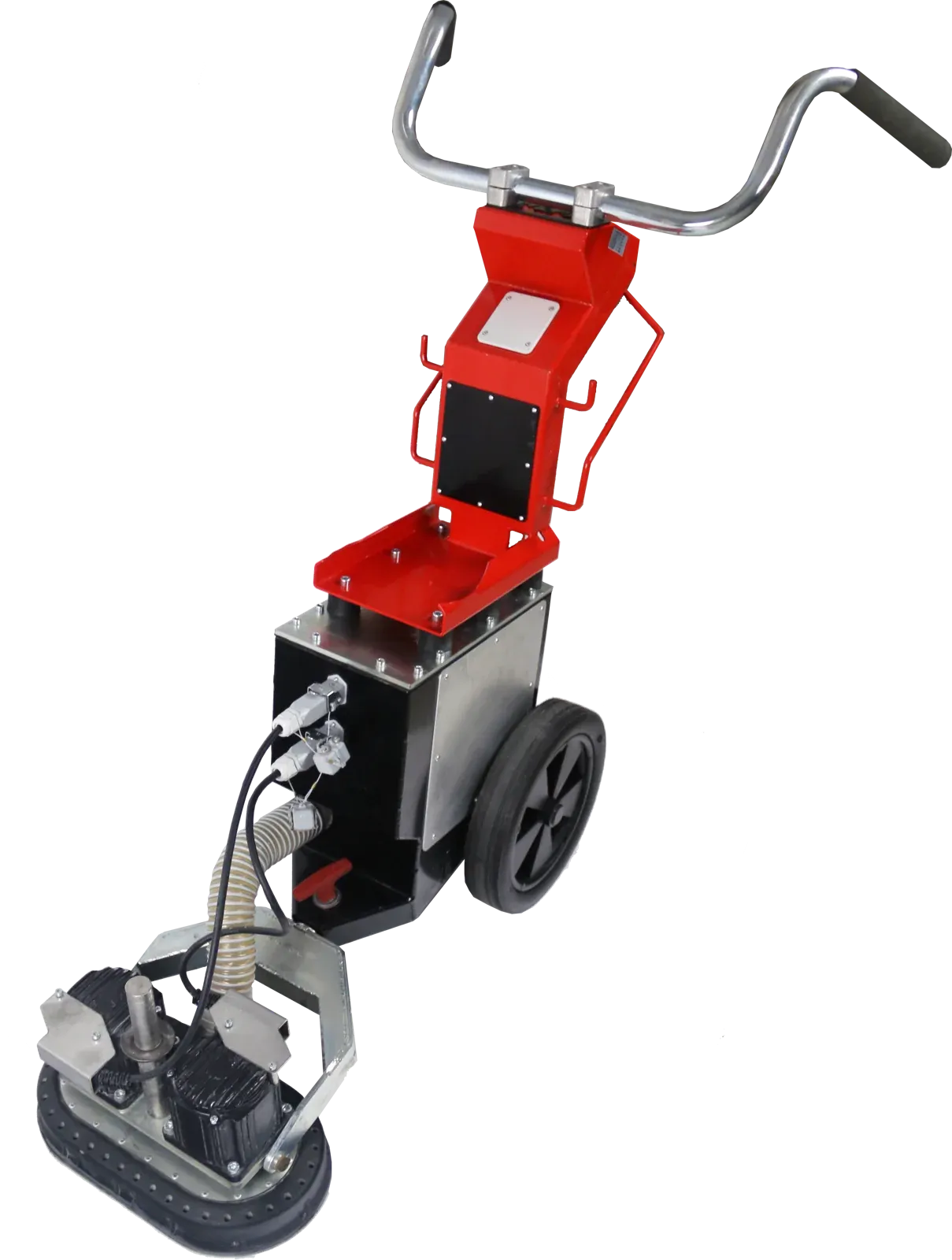
The Tapir XTT330 is our professional concrete floor grinder for screed preparation, industrial surfacing and polished concrete finishing. Two brushless 1,600 W motors, 54 kg, 64 dB(A), vibration 0.27 m/s², IP65. Throughput 19 to 26 m²/h on concrete depending on hardness. Compatible with the class H IU33 Longopac vacuum to capture crystalline silica at the source. x13 motor lifespan vs brushed designs (motor only). After-sales diagnosis within 48 working hours.

Gazelle

Gazelle

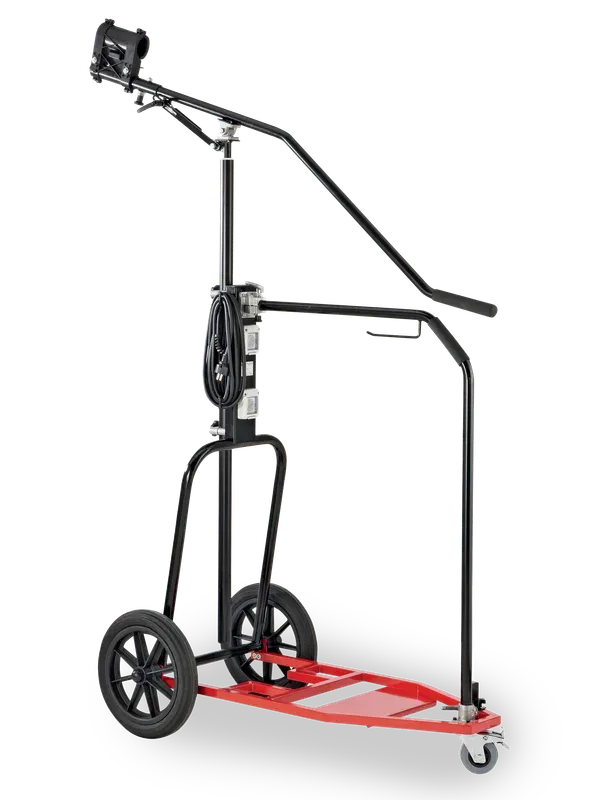
The Gazelle trolley carries the Fouine XB165 (or other compatible machine) for strain-free ceiling grinding. 36.2 kg, working height up to 3.5 m (4 m with the extension arm). Single-operator ceiling sanding throughput: 12 to 16 m²/h on concrete, x5 vs manual pole. Compatible with the class H IU33 Longopac vacuum. Built in Roanne.

IU33 Longopac

IU33 Longopac

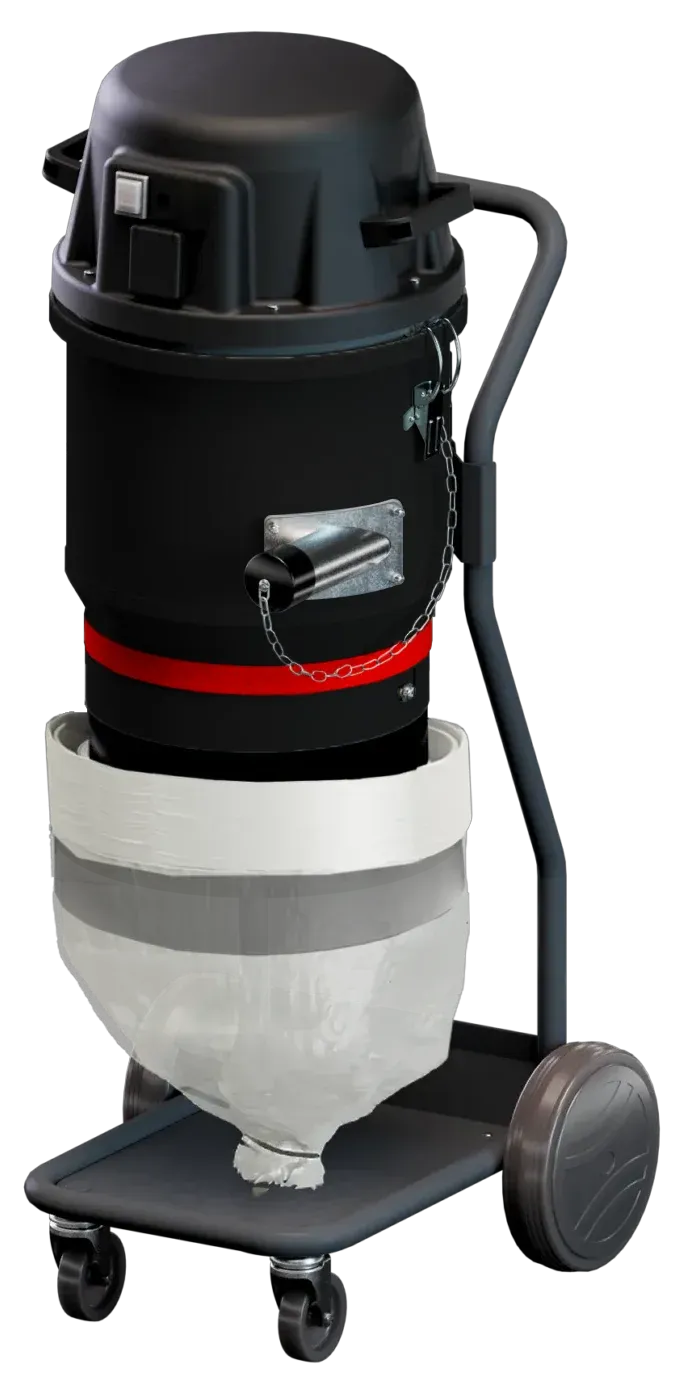
The IU33 Longopac is our class H construction vacuum for HEPA H14 source capture. 1100 W, 25 kg, 200 m³/h flow. Longopac continuous bagging system: the full bag is sealed and separated without exposing the operator to the collected dust. Compatible with all our machines except the Castor and Ceiling Planer planers. Source capture of crystalline silica. EN 60335-2-69 annex AA. Roanne, after-sales diagnosis within 48 working hours.

Turbo7

Turbo7

The Turbo7 is our compact construction vacuum for quick interventions: wall grinding, grooving, drilling. 1600 W, 9.3 kg, easy transport on stairs and floors. Source capture via 38 mm hose; not certified for class H or M hazardous dust, asbestos or crystalline silica. Suited to apartment renovation, offices and sensitive sites where the IU33 Longopac is too bulky. Roanne, after-sales diagnosis within 48 working hours.

Key figures
16-3000
Grit range covered

Resurfacing, grinding, pre-polishing and glossing: a single range.

19-26m²/h
Tapir XTT330 concrete

Measured brushless floor grinding productivity.

6-8
Passes for grit 3000 gloss

Standard sequence for a high-gloss finish.

99.995%
HEPA H14 filtration

No dust re-emission between passes: scratches avoided.

Why Sept Tools

Why choose French brushless tools?

Compatible diamond and pad

Grit 16 to 3000 covered: cutting, levelling, pre-polishing, glossing.

Tapir XTT330 and Gazelle

Large areas or standard jobsites: one solution per output rate.

Class H HEPA extraction

IU33 Longopac: silica captured at the source on every pass.

Made in Roanne, after-sales quote within 1 to 2 working days

After-sales diagnosis within 48 working hours in mainland France.

Our decorative concrete grinding protocol

  1. 1

    Concrete diagnosis

    Hardness, presence of aggregates, gloss target (matt, satin, glossy).

  2. 2

    Diamond passes 16-200

    Cutting and levelling: 3 dry passes with HEPA extraction.

  3. 3

    Lithium impregnator

    Hardener applied between grit 200 and 400: prolonged resistance.

  4. 4

    Pad passes 400-3000

    Progressive polishing: 4 to 5 passes to reach the final gloss.

  5. 5

    Gloss check

    Measurement with a gloss meter (optional) or visual validation by the client.

Use cases

For which job sites?

Diamond disc or pad: how to choose for each pass?

The metal diamond disc attacks the concrete by opening the material: it is used from grit 16 to grit 200. From grit 400, the resin pad (diamond embedded in a flexible matrix) takes over: it polishes the already opened material without attacking it, revealing the progressive gloss. From grit 1500, only the pad is used for final glossing. This simple rule avoids the two classic mistakes: continuing with diamond at the finishing stage (which scratches instead of polishing) or starting with the pad on raw concrete (which wears out to no effect).

Decorative concrete, terrazzo, polished concrete: what is the difference?

Polished concrete is worked on cast-in-place concrete: the aim is to reveal the aggregates and obtain a glossy surface on existing concrete. Terrazzo incorporates chips of marble, quartz or glass in its matrix, ground at the same time to obtain an inlaid pattern. Decorative concrete covers coloured, stamped and formwork-textured concretes, with a more or less advanced ground finish. Three techniques, one range of brushless grinders.

How many passes for a grit 3000 gloss finish?

The standard sequence is 6 to 8 passes: grit 30 (cutting), grit 80 (levelling), grit 200 (diamond pre-polishing), grit 400 (pad transition), grit 800, grit 1500, grit 3000 (final glossing). Between each pass, complete dust removal with a HEPA vacuum is essential to avoid cumulative scratches. Applying a lithium impregnator (hardener) between grit 200 and 400 durably improves resistance.

Which extraction so as not to carry over the previous layer?

The class H HEPA H14 vacuum is the critical tool: it captures 99.995% of particles at 0.12 µm (MPPS). Between each pass, a full pass with the vacuum removes the residues of the previous pass which, if left in place, would create scratches at the next grit. A water rinse between passes is sometimes added depending on the dry or wet method chosen.

Which Sept Tools equipment for each step?

For large areas (industrial floors, shops, hotels), the Tapir XTT330 sustains 19 to 26 m²/h on concrete. For standard jobsites (houses, small shops), the Gazelle is sized for the job. For edges and narrow zones, a manual grinding plate completes the range. The IU33 Longopac is the reference vacuum throughout the protocol.

Finishing corners and edges: the edge grinder

For the corners, wall bases and joints that the main floor grinder or decorative grinder cannot reach, the edge grinder takes care of the narrow zones. It uses the same diamond plates and pads as the main machine, to guarantee continuity of grit and appearance across the whole surface. On high-gloss polished concrete, an undersized edge grinder leaves a matt border visible in raking light: that is the detail that separates a repeatable professional finish from an approximate result.

Real-world conditions

Concrete laitance removal

Construction site video: Concrete laitance removal, smoothed concrete, resin preparation
Laitance removal on smoothed concrete slab, Tapir, prep before resin.

resin preparation · smoothed concrete

Floor grinders: watch all our jobsite videos
Frequently asked questions

Your questions, answered

What is the difference between polished concrete and decorative concrete?

Polished concrete is cast-in-place concrete, ground in a sequence of increasing grit to reveal the aggregates and obtain a high-gloss finish. Decorative concrete covers concretes coloured through the mass, stamped in formwork or textured, with a finishing degree ranging from raw to polished. Polished concrete is therefore a technical sub-category of decorative concrete.

How many passes for grit 3000 polished concrete?

The standard sequence is 6 to 8 passes: grit 30, 80, 200 (diamond), then 400, 800, 1500, 3000 (pad). A lithium impregnator is applied between grit 200 and 400 to harden the surface and improve polish retention. Each pass is made with the Tapir XTT330.

Diamond disc or resin pad: when to switch?

The transition takes place at grit 400. Metal diamond is used from grit 16 to grit 200 (cutting and pre-polishing). The resin pad takes over from grit 400 to 3000 (polishing and glossing). This rule avoids the scratches caused by continuing with diamond at the finishing stage and the needless wear of starting with the pad on raw concrete.

Can an existing terrazzo be ground to renovate it?

Yes, it is one of the main uses. An old warped or scratched terrazzo regains its original shine through a grit 80 to 3000 grinding sequence. The advantage of terrazzo is its matrix rich in hard aggregates (marble, quartz), which holds the polish well.

Which extraction for decorative concrete grinding?

The IU33 Longopac (HEPA H14 class H) is the Sept Tools reference. It captures 99.995% of particles at 0.12 µm (MPPS). Between each pass, complete dust removal avoids cumulative scratches and guarantees the final gloss.

Dry or wet method for decorative concrete grinding?

The dry method with HEPA extraction is preferred in interior renovation (no water on the floor, no moisture rise). Refer to the machine manual for the conditions of use.

Can exposed-aggregate concrete be polished?

Yes, but the sequence is specific: exposed-aggregate concrete already has a marked relief that must be resurfaced at grit 16 to 30 to obtain a flat surface before standard polishing. The final result reveals the aggregates intensely, more than on standard concrete. Plan 1 to 2 additional aggressive passes at the start of the sequence.

Which disc for which type of material?

The rule is material × step. On raw concrete or terrazzo in aggressive cutting (grit 16 to 60), the metal diamond disc opens the material without wearing prematurely. On soft concrete or fluid resin in intermediate passes (grit 80 to 200), the hybrid diamond disc avoids deep scratches. From grit 400, on any material, the resin pad (polishing, grit 800 to 3000) takes over. The choice therefore depends first on the hardness of the substrate, then on the step in the sequence.

Which is the best grinder on the market?

Answering objectively means looking at measurable criteria rather than marketing. A professional grinder is judged on six points: brushless motor (service life 13 times that of a carbon-brush motor), IP65 sealing, sound level below 65 dB(A), declared hand-arm vibration of 0.27 to 0.35 m/s² depending on the grinder (manuals), controlled and traced manufacturing. Each grinder must be weighed against these criteria, then related to your real jobsite: surface, material, output rate, environment. The Sept Tools brushless range made in Roanne ticks these six points; for the rest, your specification decides.

Need a quote or a demo?

Our sales team will help you choose your professional tools.

Contact us

Free quote, no obligation. Equipment guaranteed 24 months.

04 77 60 60 74 Request a quote